THE ADVENTURE COLLECTIVE® · Independent discovery and booking for outdoor travel

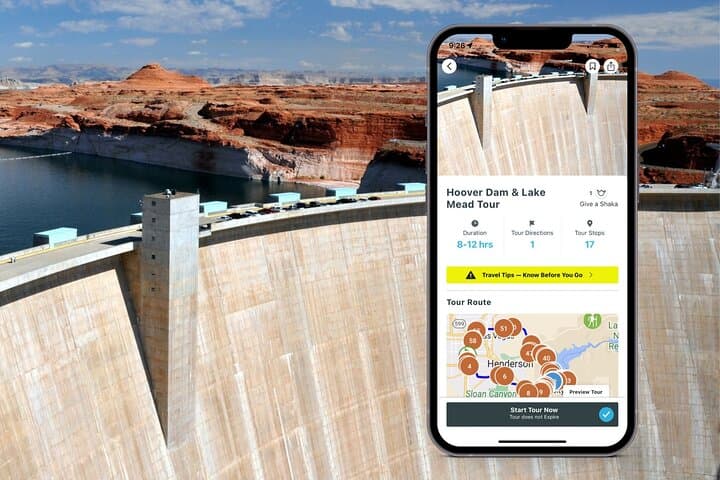
Turn your phone into a private guide on a self-paced driving loop from Las Vegas to Hoover Dam and Lake Mead. Hear construction-era stories, spot bighorn sheep, and stop at overlooks and short trails on your schedule.
Turn your phone into a private guide on a self-paced driving loop from Las Vegas to Hoover Dam and Lake Mead. Hear construction-era stories, spot bighorn sheep, and stop at overlooks and short trails on your schedule.
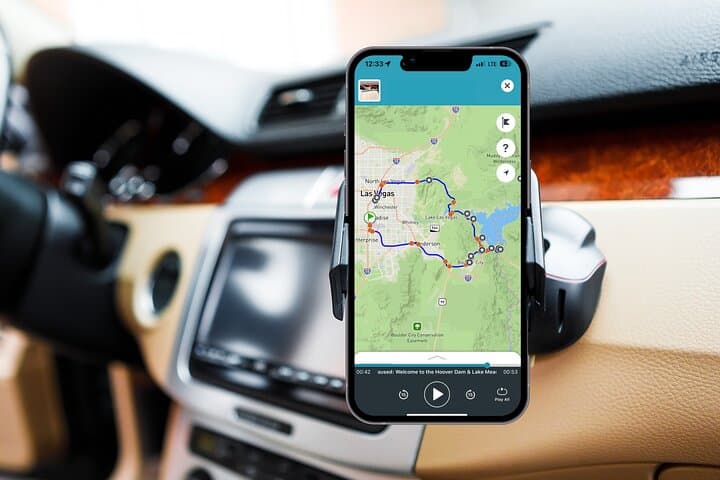
The road unfolds like a promise as you leave the bright glare of Las Vegas and head toward the concrete spine that holds back the Colorado River. In a rented car with a phone propped on the dash, an audio voice cues a turn; the canyon walls lean in, wind plays across the hood, and the dam appears — massive, functional, impossible.
Verified experiences and guided adventures in the surrounding area.
Operated by Shaka Guide Apps · Boulder City, Nevada
The road unfolds like a promise as you leave the bright glare of Las Vegas and head toward the concrete spine that holds back the Colorado River. In a rented car with a phone propped on the dash, an audio voice cues a turn; the canyon walls lean in, wind plays across the hood, and the dam appears — massive, functional, impossible.
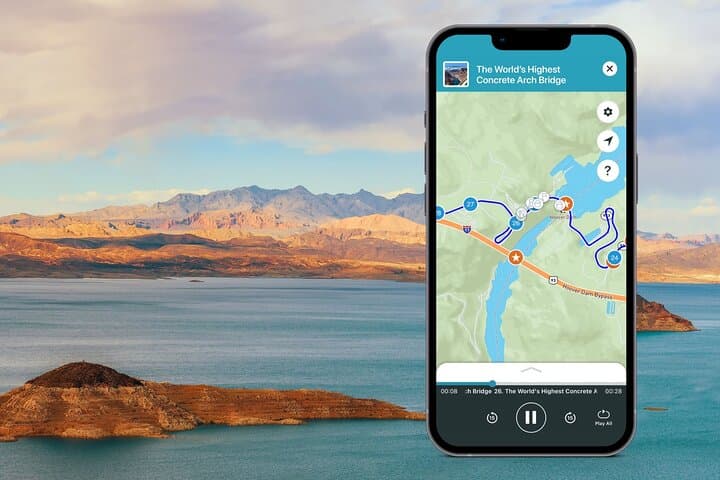
Built between 1931 and 1936, Hoover Dam is both New Deal-era engineering and a cultural landmark that reshaped the Southwest’s water and power map. Lake Mead, the reservoir behind it, reveals geological layers where water once lapped higher on red and volcanic rock. The tour threads history, geology, and local color — miners, construction camps, and the railroad that fed the jobsite — into narrated stops that match what you see out the window.
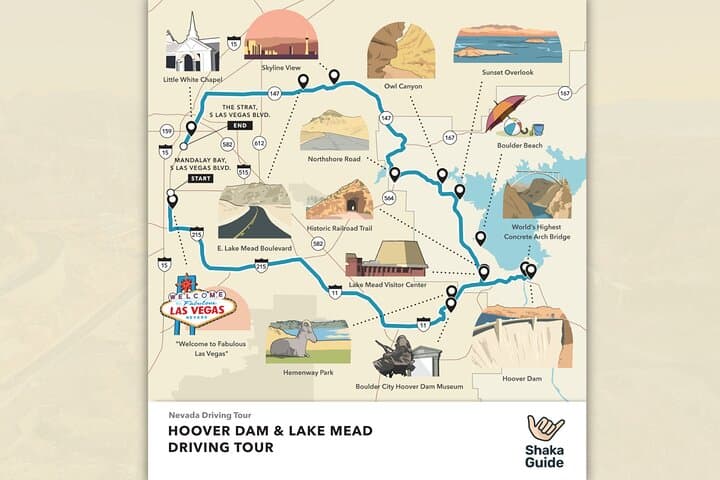
Expect a mix of roadside overlooks, short walks, and flat, easy hikes: the Historic Railroad Trail’s dark tunnels, Boulder Beach’s shoreline, and high viewpoints on Lakeshore Road. Wildlife reads like a desert cast — bighorn sheep picking ledges, coyotes slipping through scrub.
Practically: download the audio and offline map before you go, keep water and sun protection within reach, and plan for variable parking fees and limited shade. Drive at a relaxed pace; the GPS-triggered narration syncs to your route so you can pause and explore at will. Early morning or late afternoon light is best for photos and cooler temperatures. This is a vehicle-first exploration that still rewards sneakers and curiosity — a flexible, informative way to see one of America’s most consequential landscapes.
easy.
6–8 hours.
Minimal fitness required for short walks and viewpoints; moderate fitness if you plan longer hikes like the Railroad Trail.
No — the tour and offline map can be downloaded ahead of time so GPS and audio work without data.
Yes; there are paid and free parking options depending on where you stop—expect a parking fee at the main Dam lot but free parking at some overlooks.
Several overlooks and the Visitor Center area are wheelchair accessible, but some trails like Railroad Trail have uneven surfaces and limited shade.
The suggested driving tour can fill 6–8 hours if you stop at multiple viewpoints and do short walks; you can compress it into a half-day if you skip hikes.
Hoover Dam was constructed during the Great Depression (1931–1936) as a massive federal project that provided hydropower, irrigation water, and a new reservoir — Lake Mead — reshaping settlement and industry across the Southwest.
Lake Mead’s fluctuating water levels reflect long-term drought and water demand; stick to marked roads, pack out trash, and respect fragile shoreline and archaeological sites.
Shaka Guide Apps operates guided outdoor trips and adventures with an emphasis on safety, stewardship, and memorable experiences.
The road unfolds like a promise as you leave the bright glare of Las Vegas and head toward the concrete spine that holds back the Colorado River. In a rented car with a phone propped on the dash, an audio voice cues a turn; the canyon walls lean in, wind plays across the hood, and the dam appears — massive, functional, impossible.
The road unfolds like a promise as you leave the bright glare of Las Vegas and head toward the concrete spine that holds back the Colorado River. In a rented car with a phone propped on the dash, an audio voice cues a turn; the canyon walls lean in, wind plays across the hood, and the dam appears — massive, functional, impossible.
Built between 1931 and 1936, Hoover Dam is both New Deal-era engineering and a cultural landmark that reshaped the Southwest’s water and power map. Lake Mead, the reservoir behind it, reveals geological layers where water once lapped higher on red and volcanic rock. The tour threads history, geology, and local color — miners, construction camps, and the railroad that fed the jobsite — into narrated stops that match what you see out the window.
Expect a mix of roadside overlooks, short walks, and flat, easy hikes: the Historic Railroad Trail’s dark tunnels, Boulder Beach’s shoreline, and high viewpoints on Lakeshore Road. Wildlife reads like a desert cast — bighorn sheep picking ledges, coyotes slipping through scrub.
Practically: download the audio and offline map before you go, keep water and sun protection within reach, and plan for variable parking fees and limited shade. Drive at a relaxed pace; the GPS-triggered narration syncs to your route so you can pause and explore at will. Early morning or late afternoon light is best for photos and cooler temperatures. This is a vehicle-first exploration that still rewards sneakers and curiosity — a flexible, informative way to see one of America’s most consequential landscapes.