THE ADVENTURE COLLECTIVE® · Independent discovery and booking for outdoor travel

See Hoover Dam, Lake Mead and the Las Vegas Strip from a helicopter on a 35-minute daytime flight. This concise guide explains what you’ll see, why the route matters, and practical tips to prepare for the trip.
See Hoover Dam, Lake Mead and the Las Vegas Strip from a helicopter on a 35-minute daytime flight. This concise guide explains what you’ll see, why the route matters, and practical tips to prepare for the trip.
The helicopter lifts and the city unfolds: a grid of glass and neon gives way to the raw geometry of desert and water as the aircraft climbs over Lake Mead. From the cabin the Colorado River narrows, the Hoover Dam’s concrete curve appears like a scar on the canyon wall, and the Strip’s skyline becomes a model of human scale against a pale sky.
Verified experiences and guided adventures in the surrounding area.
Operated by Papillon Helicopters · Boulder City, Nevada
The helicopter lifts and the city unfolds: a grid of glass and neon gives way to the raw geometry of desert and water as the aircraft climbs over Lake Mead. From the cabin the Colorado River narrows, the Hoover Dam’s concrete curve appears like a scar on the canyon wall, and the Strip’s skyline becomes a model of human scale against a pale sky.
Built during the Great Depression, Hoover Dam reshaped the region—storing Colorado River water behind Lake Mead and pushing the Southwest’s development. Geologically the route traces the transition from basin-and-range desert to the volcanic and metamorphic rocks of Black Canyon. Culturally, the flight stitches two stories: the industrial ambition of the 1930s at the dam and the later, nonstop entertainment expansion of Las Vegas.
Expect a compact, sensory trip: wind-swept ridgelines, reflective water planes, and the sudden verticality of the dam and bridge. On return the Strip presents architectural punctuation—pyramids, revolving wheels, and fountains—best photographed on the sunny side of the aircraft.
Practical guidance: arrive early for weight/manifest checks and a safety briefing; dress in layers against gusts on the tarmac; secure cameras to avoid losing small gear. Be prepared for strict baggage limits and follow crew direction on window use and photo framing. Flights are weather-dependent and brief—plan transport and reconfirmation with the operator 24 hours ahead. For first-time flyers, take-off and landing are the most noticeable motions; sit back, orient with local landmarks, and let the pilot’s narration anchor what you see.
easy.
1–2 hours (including check-in).
Minimal physical fitness required; must be able to board and sit unassisted for the duration.
The airborne portion is approximately 35 minutes and includes aerial passes over Lake Mead, Hoover Dam, and the Las Vegas Strip; hotel transfer is optional depending on the booking option.
Passengers weighing 300 lbs or greater may be required to purchase an additional seat for weight-and-balance reasons; this is handled on the day of the tour.
Infants under two are considered lap children and must have proof of age; all passengers must follow operator safety rules and manifest requirements.
Flights are weather-dependent; operators will cancel for unsafe conditions and offer refunds according to their cancellation policy (full refund if cancelled at least 3 days prior by passenger, or if operator cancels due to weather).
Hoover Dam was built in the 1930s during the Great Depression and stands as a major civil-engineering project that enabled water storage and power generation for the Lower Colorado River Basin.
Lake Mead’s water level and regional water management are ongoing concerns; helicopters follow established flight corridors to minimize noise over sensitive areas and operators often limit flights during high-stress wildlife breeding seasons.
Papillon Helicopters operates guided outdoor trips and adventures with an emphasis on safety, stewardship, and memorable experiences.
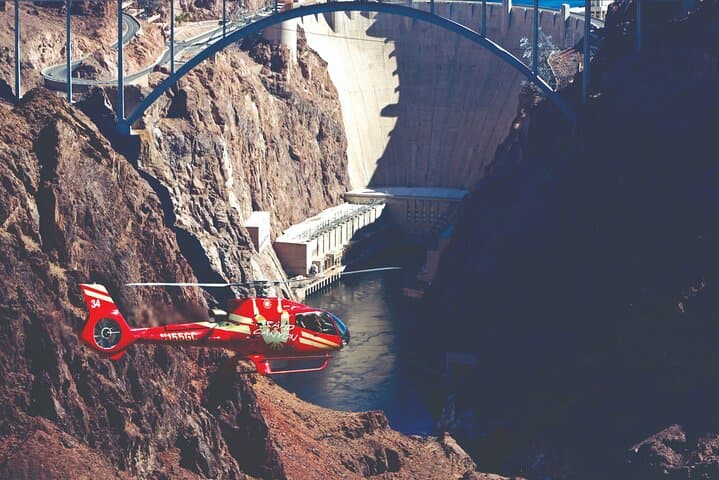
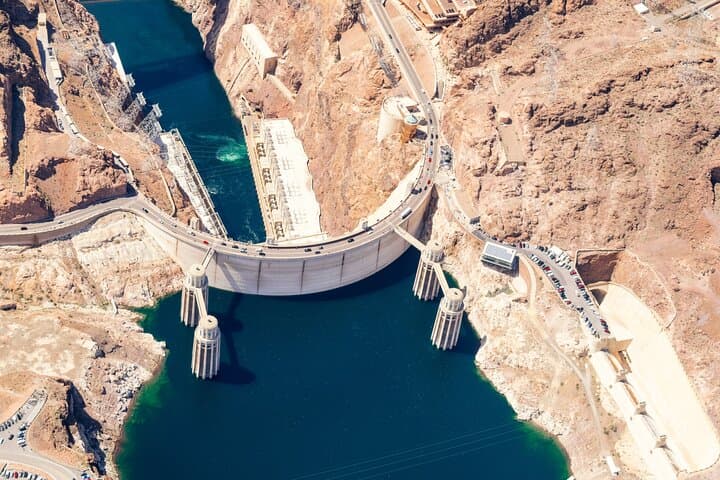
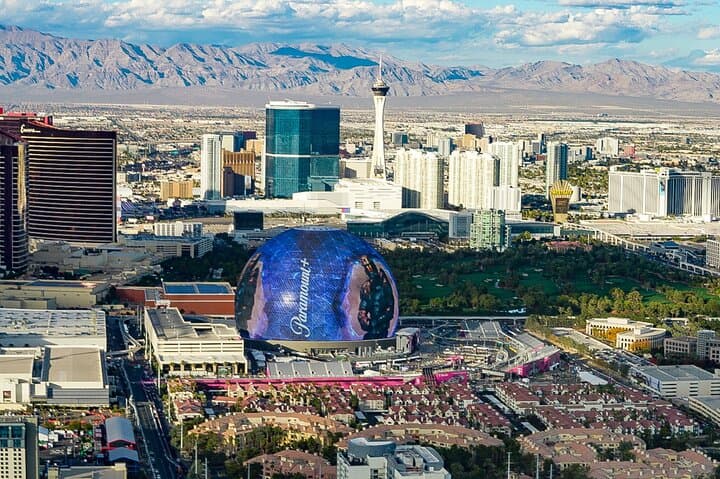
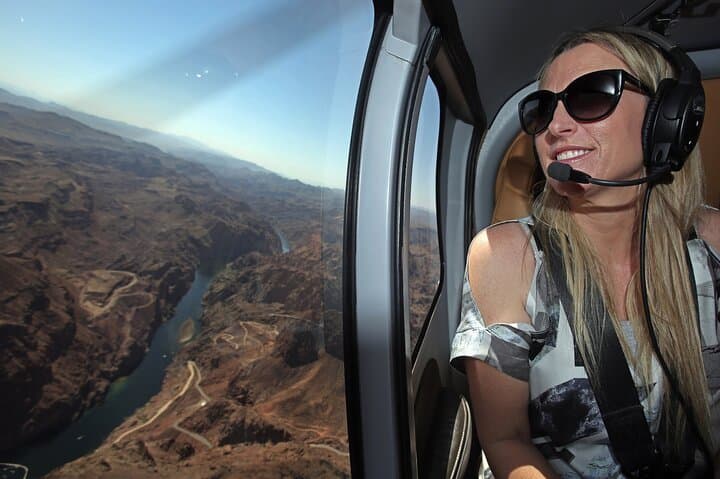
The helicopter lifts and the city unfolds: a grid of glass and neon gives way to the raw geometry of desert and water as the aircraft climbs over Lake Mead. From the cabin the Colorado River narrows, the Hoover Dam’s concrete curve appears like a scar on the canyon wall, and the Strip’s skyline becomes a model of human scale against a pale sky.
The helicopter lifts and the city unfolds: a grid of glass and neon gives way to the raw geometry of desert and water as the aircraft climbs over Lake Mead. From the cabin the Colorado River narrows, the Hoover Dam’s concrete curve appears like a scar on the canyon wall, and the Strip’s skyline becomes a model of human scale against a pale sky.
Built during the Great Depression, Hoover Dam reshaped the region—storing Colorado River water behind Lake Mead and pushing the Southwest’s development. Geologically the route traces the transition from basin-and-range desert to the volcanic and metamorphic rocks of Black Canyon. Culturally, the flight stitches two stories: the industrial ambition of the 1930s at the dam and the later, nonstop entertainment expansion of Las Vegas.
Expect a compact, sensory trip: wind-swept ridgelines, reflective water planes, and the sudden verticality of the dam and bridge. On return the Strip presents architectural punctuation—pyramids, revolving wheels, and fountains—best photographed on the sunny side of the aircraft.
Practical guidance: arrive early for weight/manifest checks and a safety briefing; dress in layers against gusts on the tarmac; secure cameras to avoid losing small gear. Be prepared for strict baggage limits and follow crew direction on window use and photo framing. Flights are weather-dependent and brief—plan transport and reconfirmation with the operator 24 hours ahead. For first-time flyers, take-off and landing are the most noticeable motions; sit back, orient with local landmarks, and let the pilot’s narration anchor what you see.