THE ADVENTURE COLLECTIVE® · Independent discovery and booking for outdoor travel

Spend an hour at Hook-a-Barra in Wonga Beach learning to catch Queensland’s iconic barramundi—no experience required. Family-friendly instruction, stocked ponds, and an onsite Barra Kitchen make this a compact, high-reward stop on the way to the Daintree.
Spend an hour at Hook-a-Barra in Wonga Beach learning to catch Queensland’s iconic barramundi—no experience required. Family-friendly instruction, stocked ponds, and an onsite Barra Kitchen make this a compact, high-reward stop on the way to the Daintree.
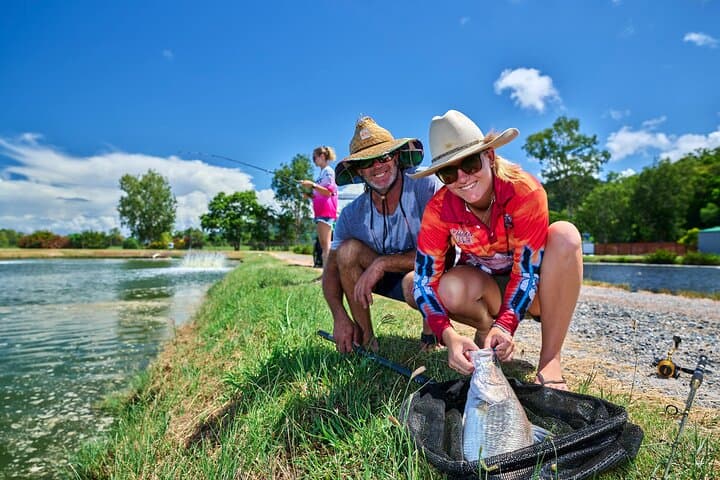
The morning air at Hook-a-Barra tastes of salt and river mud; a line of children and first-time anglers stand at the pond edge as guides loop a rod and hand over the first lure. Water moves with intention here—glassy, dark ponds dotted with silver backs that roll like distant waves, daring you to make the cast that will start the fight. For an hour, the resort’s ponds become a concentrated school of barramundi and instruction: quick demonstrations, patient coaching and the outright joy of a hooked fish brought to hand.
Verified experiences and guided adventures in the surrounding area.
Operated by Hook-A-Barra · Wonga Beach, Queensland
The morning air at Hook-a-Barra tastes of salt and river mud; a line of children and first-time anglers stand at the pond edge as guides loop a rod and hand over the first lure. Water moves with intention here—glassy, dark ponds dotted with silver backs that roll like distant waves, daring you to make the cast that will start the fight. For an hour, the resort’s ponds become a concentrated school of barramundi and instruction: quick demonstrations, patient coaching and the outright joy of a hooked fish brought to hand.
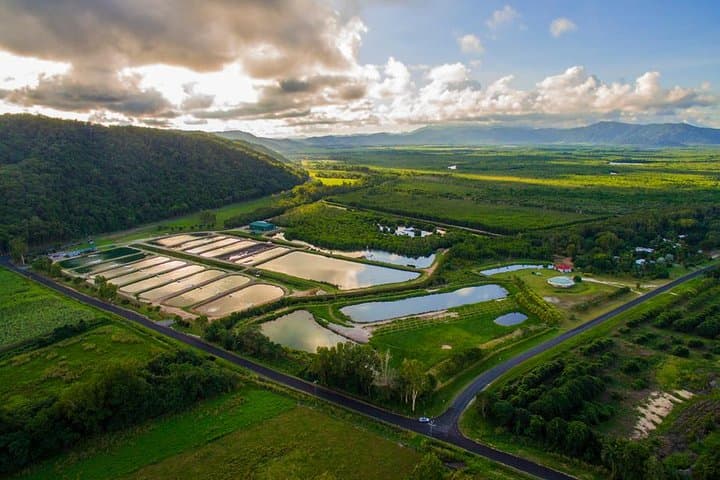
Hook-a-Barra sits on Vixies Road at Wonga Beach, a short drive north of Port Douglas and the gateway to the Daintree. The operation is modern but grounded in the long story of northern Australia’s fisheries: barramundi (Lates calcarifer) have been central to Indigenous diets and coastal economies for millennia, and today FNQ’s aquaculture and recreational fishing meld local tradition with tourism. Geologically, this coast is where the Great Dividing Range drops into a tropical shelf—rivers carve deep estuaries and tidal flats that historically concentrate food for large predatory fish.
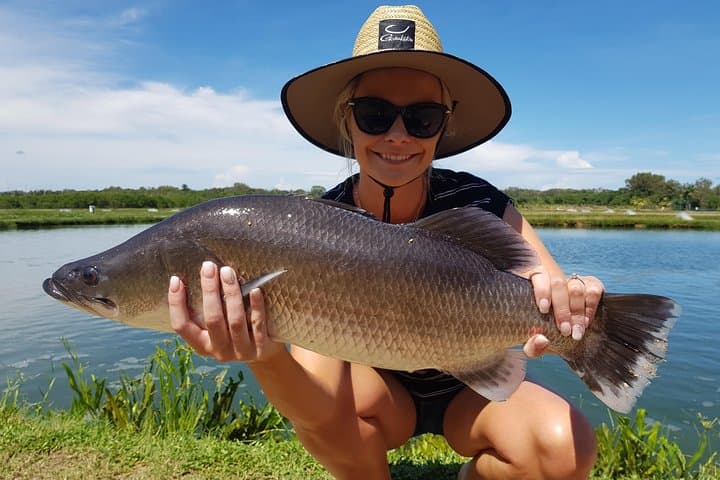
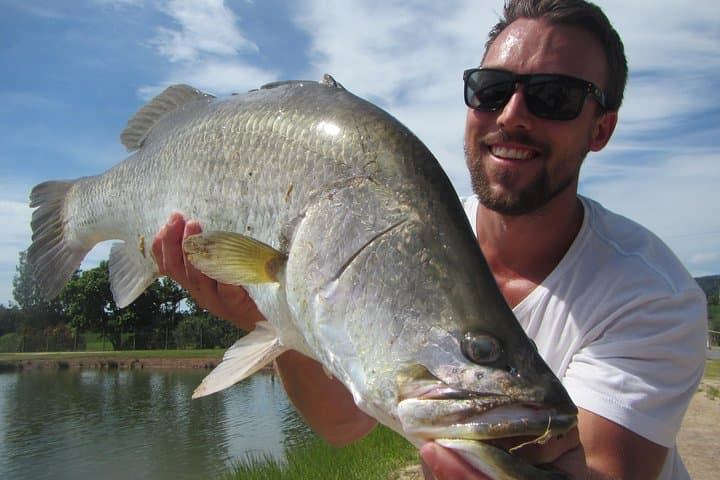
The experience is deliberately hands-on. Ponds are stocked with more than 1,500 barramundi and other species, ranging from 50cm to over a meter, so even a brief session feels abundant. Guides teach casting, hook setting and landing technique; the staff run a catch-and-release program in the main ponds alongside viewing tanks for up-close inspection. A short walk from the ponds, the onsite Barra Kitchen serves ethically sourced barramundi and local flavors—an immediate farm-to-fork close to the action.
Practical info: sessions last about 60 minutes, equipment is supplied, and the company welcomes families, strollers and visitors with mobility needs. Summer brings heat, humidity and afternoon storms; the dry season (May–September) offers cooler mornings and calmer water that make it the ideal time for first-timers. Book ahead during holiday peaks and plan to arrive 10–15 minutes early for a safety briefing and gear fitting.
What to bring: polarized sunglasses for underwater visibility, reef-safe sunscreen, a refillable water bottle and closed-toe shoes. Respect the guides’ catch-and-release rules and be prepared for short bursts of adrenaline—barramundi fight hard and smart. If you’re moving on to the Daintree, plan this as a relaxed stopover; it’s an accessible, immersive piece of FNQ’s fishing culture that punches well above its hour-long duration.
easy.
1 hour.
Suitable for all fitness levels; sessions are largely stationary with short, low-impact movements.
No—sessions include an introduction to barramundi fishing and one-on-one guidance from local instructors.
Yes—Hook-a-Barra is family-friendly and suitable for small children; strollers are allowed and staff assist young anglers.
Pond fishing is primarily catch-and-release, but the facility also operates a nearby kitchen serving sustainably sourced barramundi.
Yes—the venue is listed as wheelchair accessible and staff can accommodate mobility needs.
Tours may be canceled in inclement weather; you can receive a full refund if you cancel at least 24 hours before the scheduled time.
Yes—fishing rods, tackle, lures and bait are supplied as part of the experience.
Barramundi have been a staple food and cultural resource for Indigenous communities of northern Queensland for thousands of years; recreational fisheries grew with coastal settlement and tourism in the 20th century.
Hook-a-Barra emphasizes catch-and-release in the ponds and sources fish for the kitchen sustainably; visitors are encouraged to use reef-safe sunscreen and follow handling guidelines to reduce stress on fish.
Hook-A-Barra operates guided outdoor trips and adventures with an emphasis on safety, stewardship, and memorable experiences.
The morning air at Hook-a-Barra tastes of salt and river mud; a line of children and first-time anglers stand at the pond edge as guides loop a rod and hand over the first lure. Water moves with intention here—glassy, dark ponds dotted with silver backs that roll like distant waves, daring you to make the cast that will start the fight. For an hour, the resort’s ponds become a concentrated school of barramundi and instruction: quick demonstrations, patient coaching and the outright joy of a hooked fish brought to hand.
The morning air at Hook-a-Barra tastes of salt and river mud; a line of children and first-time anglers stand at the pond edge as guides loop a rod and hand over the first lure. Water moves with intention here—glassy, dark ponds dotted with silver backs that roll like distant waves, daring you to make the cast that will start the fight. For an hour, the resort’s ponds become a concentrated school of barramundi and instruction: quick demonstrations, patient coaching and the outright joy of a hooked fish brought to hand.
Hook-a-Barra sits on Vixies Road at Wonga Beach, a short drive north of Port Douglas and the gateway to the Daintree. The operation is modern but grounded in the long story of northern Australia’s fisheries: barramundi (Lates calcarifer) have been central to Indigenous diets and coastal economies for millennia, and today FNQ’s aquaculture and recreational fishing meld local tradition with tourism. Geologically, this coast is where the Great Dividing Range drops into a tropical shelf—rivers carve deep estuaries and tidal flats that historically concentrate food for large predatory fish.
The experience is deliberately hands-on. Ponds are stocked with more than 1,500 barramundi and other species, ranging from 50cm to over a meter, so even a brief session feels abundant. Guides teach casting, hook setting and landing technique; the staff run a catch-and-release program in the main ponds alongside viewing tanks for up-close inspection. A short walk from the ponds, the onsite Barra Kitchen serves ethically sourced barramundi and local flavors—an immediate farm-to-fork close to the action.
Practical info: sessions last about 60 minutes, equipment is supplied, and the company welcomes families, strollers and visitors with mobility needs. Summer brings heat, humidity and afternoon storms; the dry season (May–September) offers cooler mornings and calmer water that make it the ideal time for first-timers. Book ahead during holiday peaks and plan to arrive 10–15 minutes early for a safety briefing and gear fitting.
What to bring: polarized sunglasses for underwater visibility, reef-safe sunscreen, a refillable water bottle and closed-toe shoes. Respect the guides’ catch-and-release rules and be prepared for short bursts of adrenaline—barramundi fight hard and smart. If you’re moving on to the Daintree, plan this as a relaxed stopover; it’s an accessible, immersive piece of FNQ’s fishing culture that punches well above its hour-long duration.