THE ADVENTURE COLLECTIVE® · Independent discovery and booking for outdoor travel

Spend 2.5 hours on a hands-on farm tour that pairs barramundi feeding and harvesting demonstrations with a pond-to-plate tasting. Perfect for families and first-time anglers, this Daintree experience blends practical aquaculture insight with real fishing action.
Spend 2.5 hours on a hands-on farm tour that pairs barramundi feeding and harvesting demonstrations with a pond-to-plate tasting. Perfect for families and first-time anglers, this Daintree experience blends practical aquaculture insight with real fishing action.
The first thing that hits you is the gleam — silver flashes arcing in the sunlight as barramundi shift beneath the glassy surface of a purpose-built pond. You stand at the edge with guides who move like farmers and anglers at once, instructing a small group on how to coax a powerful, ancient fish from calm water. Nearby, younger ponds murmur with the soft slaps of feeding fish; behind them, the rainforest presses close, its green canopy a constant, humid presence.
Verified experiences and guided adventures in the surrounding area.
Operated by Hook-A-Barra · Daintree, Queensland
The first thing that hits you is the gleam — silver flashes arcing in the sunlight as barramundi shift beneath the glassy surface of a purpose-built pond. You stand at the edge with guides who move like farmers and anglers at once, instructing a small group on how to coax a powerful, ancient fish from calm water. Nearby, younger ponds murmur with the soft slaps of feeding fish; behind them, the rainforest presses close, its green canopy a constant, humid presence.
This is the Daintree Saltwater Barramundi Farm experience: a compact 2.5-hour loop that stitches together a behind-the-scenes farm tour, hands-on feeding and health checks, live harvesting demonstrations, and a pond-to-plate tasting of barra prepared with local flair. Barramundi (Lates calcarifer) are as much a part of northern Queensland’s culinary identity as its reef and rainforest are to its tourism. Indigenous saltwater fishing traditions informed early European efforts; today, farms like this bridge traditional knowledge and modern aquaculture techniques to supply restaurants across the state.
Geologically the site sits in the Wet Tropics bioregion where rivers, mangroves and monsoonal rains shape estuaries that once supported wild barra runs. The farm reproduces those conditions in managed ponds, monitoring salinity, weight and health — and demonstrating how selective farming reduces pressure on wild populations. Culturally, the region mixes Kuku Yalanji history with frontier farming, and the staff will often point out local foodways and sustainable sourcing practices that protect both reef and river.
Practicalities matter: the tour is rated easy and wheelchair accessible, suited to families and first-time anglers. Expect mostly flat walking between ponds, standing room at demonstration decks and an informal, instructive vibe. Morning sessions are best for active fish and cooler temperatures; summer brings heat, humidity and the occasional tropical shower, so timing and sun protection are key.
On the practical side, arrive with closed-toe shoes, a hat and insect repellent. The crew supplies rods, bait and step-by-step coaching, so no angling experience is necessary. The tasting board caps the visit — small, freshly cooked portions that showcase the farm’s produce and regional flavors. Remember: this is working aquaculture, not a theme park — follow biosecurity rules, listen to staff, and you’ll leave with a better sense of where your dinner comes from and a likely photo of a silver fish mid-air.
For travelers based in Port Douglas or Daintree Village, the experience makes for a half-day outing that pairs neatly with rainforest walks, river cruises or a slow coastal drive. If you want an approachable, informative and decidedly hands-on way to meet one of Australia’s iconic fish, Hook-A-Barra delivers with practical care and unmistakable local character.
easy.
2.5 hours.
Suitable for most fitness levels; mostly standing and short, flat walks between ponds
Yes — facilities and paths around the main viewing and tasting areas are wheelchair accessible; inform the operator of special requirements when booking.
No — guides provide rods, bait and step-by-step instruction suitable for first-time anglers.
This farm demonstrates hand-harvest methods and allows catch attempts, but policies on keeping fish vary; the tour includes a tasting platter rather than a take-home fish.
Yes — the activity is family-friendly and suitable for all ages, with stroller access noted for younger children.
The farm is a short drive north of Port Douglas; most visitors arrive by private car or organized transfer — check pickup options at booking.
Light, breathable clothing, closed-toe shoes, sun protection and insect repellent; bring a light rain layer in summer.
Barramundi have been a food and cultural resource for Indigenous peoples of the Wet Tropics for millennia; commercial farming in Queensland developed to meet demand while reducing pressure on wild stocks.
The farm emphasizes sustainable aquaculture practices — controlled salinity, health monitoring and limited stocking densities — and asks visitors to respect biosecurity rules to protect wild populations.
Hook-A-Barra operates guided outdoor trips and adventures with an emphasis on safety, stewardship, and memorable experiences.

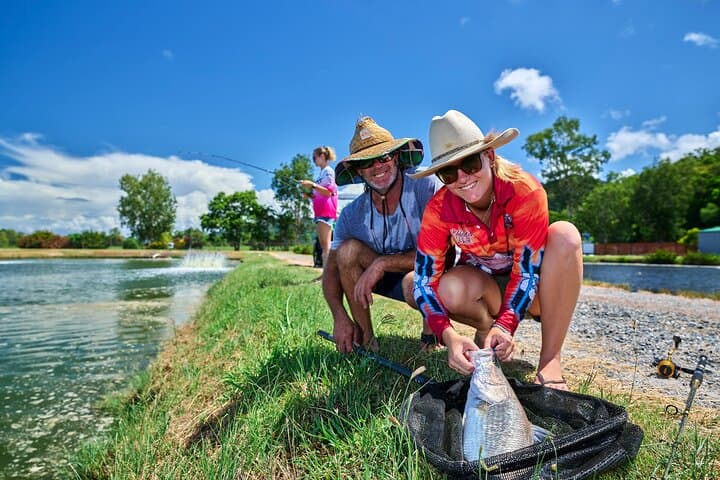


The first thing that hits you is the gleam — silver flashes arcing in the sunlight as barramundi shift beneath the glassy surface of a purpose-built pond. You stand at the edge with guides who move like farmers and anglers at once, instructing a small group on how to coax a powerful, ancient fish from calm water. Nearby, younger ponds murmur with the soft slaps of feeding fish; behind them, the rainforest presses close, its green canopy a constant, humid presence.
The first thing that hits you is the gleam — silver flashes arcing in the sunlight as barramundi shift beneath the glassy surface of a purpose-built pond. You stand at the edge with guides who move like farmers and anglers at once, instructing a small group on how to coax a powerful, ancient fish from calm water. Nearby, younger ponds murmur with the soft slaps of feeding fish; behind them, the rainforest presses close, its green canopy a constant, humid presence.
This is the Daintree Saltwater Barramundi Farm experience: a compact 2.5-hour loop that stitches together a behind-the-scenes farm tour, hands-on feeding and health checks, live harvesting demonstrations, and a pond-to-plate tasting of barra prepared with local flair. Barramundi (Lates calcarifer) are as much a part of northern Queensland’s culinary identity as its reef and rainforest are to its tourism. Indigenous saltwater fishing traditions informed early European efforts; today, farms like this bridge traditional knowledge and modern aquaculture techniques to supply restaurants across the state.
Geologically the site sits in the Wet Tropics bioregion where rivers, mangroves and monsoonal rains shape estuaries that once supported wild barra runs. The farm reproduces those conditions in managed ponds, monitoring salinity, weight and health — and demonstrating how selective farming reduces pressure on wild populations. Culturally, the region mixes Kuku Yalanji history with frontier farming, and the staff will often point out local foodways and sustainable sourcing practices that protect both reef and river.
Practicalities matter: the tour is rated easy and wheelchair accessible, suited to families and first-time anglers. Expect mostly flat walking between ponds, standing room at demonstration decks and an informal, instructive vibe. Morning sessions are best for active fish and cooler temperatures; summer brings heat, humidity and the occasional tropical shower, so timing and sun protection are key.
On the practical side, arrive with closed-toe shoes, a hat and insect repellent. The crew supplies rods, bait and step-by-step coaching, so no angling experience is necessary. The tasting board caps the visit — small, freshly cooked portions that showcase the farm’s produce and regional flavors. Remember: this is working aquaculture, not a theme park — follow biosecurity rules, listen to staff, and you’ll leave with a better sense of where your dinner comes from and a likely photo of a silver fish mid-air.
For travelers based in Port Douglas or Daintree Village, the experience makes for a half-day outing that pairs neatly with rainforest walks, river cruises or a slow coastal drive. If you want an approachable, informative and decidedly hands-on way to meet one of Australia’s iconic fish, Hook-A-Barra delivers with practical care and unmistakable local character.