THE ADVENTURE COLLECTIVE® · Independent discovery and booking for outdoor travel

A single-day loop that pairs Timberline Lodge’s alpine drama with Hood River orchards and the basalt cliffs and waterfalls of the Columbia River Gorge. Expect glacier views, orchard stops, and the thunder of Multnomah Falls on an 8-hour guided route.
A single-day loop that pairs Timberline Lodge’s alpine drama with Hood River orchards and the basalt cliffs and waterfalls of the Columbia River Gorge. Expect glacier views, orchard stops, and the thunder of Multnomah Falls on an 8-hour guided route.
Wind scours the ridge above Timberline Lodge, and the air tastes like snow even in late spring. You step off the shuttle into a fir-brittle light and Mt. Hood fills the sky—a white crown rising from basalt shoulders—while the guide points out lines of moraine, the Palmer Glacier, and the old ski runs that keep this resort open year-round. The day unfolds like a geological cross-section: alpine pumice and ice above, orchards and tasting rooms on the warm lee of Hood River, and a carved-out river corridor where the Columbia River dares you to look downstream.
Verified experiences and guided adventures in the surrounding area.
Operated by Terran Travels · Government Camp, Oregon
Wind scours the ridge above Timberline Lodge, and the air tastes like snow even in late spring. You step off the shuttle into a fir-brittle light and Mt. Hood fills the sky—a white crown rising from basalt shoulders—while the guide points out lines of moraine, the Palmer Glacier, and the old ski runs that keep this resort open year-round. The day unfolds like a geological cross-section: alpine pumice and ice above, orchards and tasting rooms on the warm lee of Hood River, and a carved-out river corridor where the Columbia River dares you to look downstream.
The loop stitches together different eras. Timberline Lodge itself is a 1937 Works Progress Administration project, a handcrafted stone-and-timber structure completed as public-work relief during the Great Depression. Below, the Hood River Valley has been shaped by settlers who planted apples, pears and cherries in volcanic soils washed down from the mountain. The Columbia River Gorge is older—an 85-mile chasm cut by ice-age floods and later sculpted into basalt terraces and hanging waterfalls, including Multnomah Falls, Oregon’s tallest at a combined 620 feet.
Your guide—trained in ecology and natural resources—frames each stop with clear detail: how Mt. Hood is an active stratovolcano with a summit at 11,249 feet; why the east and west Gorge host different plant communities; the role of salmon in local culture and the history of Bonneville Dam and the region’s hatcheries. In Hood River, wind and current have made an international center for windsurfing and kiteboarding; it’s also a craft-beer and orchard-food scene where a quick lunch can become a tasting tour.
Practicalities shape the day. The full loop is a roughly 8-hour outing with multiple short walks and one moderate uphill at Timberline; expect elevations near 6,000 feet there and sea-level conditions along the Columbia. Weather can change fast—sun at Hood River can turn to sleet on the mountain—so layered clothing is essential. The tour includes bottled water, snacks, parking fees and pickup from hotels; vehicles are air-conditioned with a PA system so the guide can speak clearly to every seat.
Plan logistics around light and crowds: arrive early for clearer mountain views and quieter waterfalls, or reserve an afternoon slot for better light on the western Gorge cliffs. Footwear should handle gravel and short stairways. Bring a camera with a polarizer for waterfall shots and a small daypack for layers and souvenirs from orchard stands. This loop is an efficient way to sample Mt. Hood’s alpine drama, Hood River’s produce-driven culture, and the Gorge’s basalt theater in a single, well-paced day.
moderate.
8 hours.
Suitable for travelers who can walk short uphill stretches and stand at viewpoints; no intense fitness required but be comfortable with occasional stairs and uneven ground.
The tour runs about 8 hours with multiple short stops; most stops include 15–60 minute breaks with one longer 1–2 hour visit at Timberline Lodge.
The tour provides bottled water and snacks; lunch in Hood River is on your own so you can choose a cafe or tasting room.
Many viewpoints and some areas are wheelchair accessible, but access at certain historic sites or short trail viewpoints may be limited—check with the operator in advance.
Yes, the itinerary includes a stop at Multnomah Falls with time to view and photograph; closer trail access is optional depending on time and weather.
Yes—Timberline sits near 6,000 feet and can be significantly colder than the valley, so layered clothing is recommended any season.
The operator requests special requirements at booking and provides infant seats and wheelchair-accessible vehicles when alerted in advance.
Timberline Lodge was built as a WPA project in 1937 and features hand-carved woodwork and local stone; the Historic Columbia River Highway was one of the first engineered scenic roads in the U.S.
The Gorge balances heavy visitation with active restoration and salmon-recovery projects; stick to trails and support local orchards and businesses that practice sustainable farming.
Terran Travels operates guided outdoor trips and adventures with an emphasis on safety, stewardship, and memorable experiences.

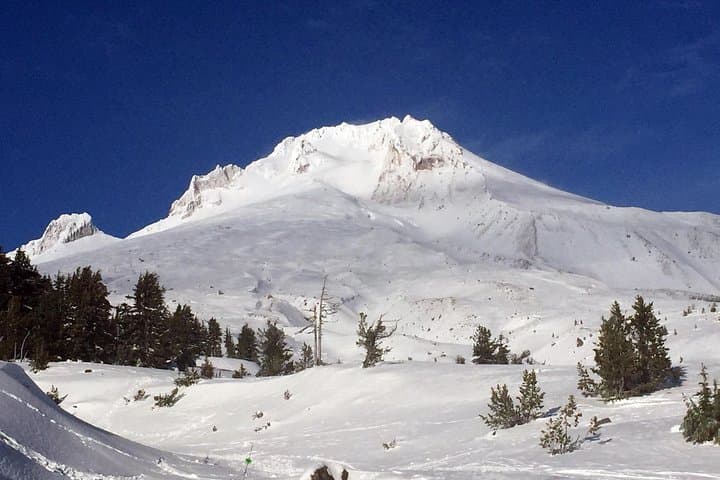


Wind scours the ridge above Timberline Lodge, and the air tastes like snow even in late spring. You step off the shuttle into a fir-brittle light and Mt. Hood fills the sky—a white crown rising from basalt shoulders—while the guide points out lines of moraine, the Palmer Glacier, and the old ski runs that keep this resort open year-round. The day unfolds like a geological cross-section: alpine pumice and ice above, orchards and tasting rooms on the warm lee of Hood River, and a carved-out river corridor where the Columbia River dares you to look downstream.
Wind scours the ridge above Timberline Lodge, and the air tastes like snow even in late spring. You step off the shuttle into a fir-brittle light and Mt. Hood fills the sky—a white crown rising from basalt shoulders—while the guide points out lines of moraine, the Palmer Glacier, and the old ski runs that keep this resort open year-round. The day unfolds like a geological cross-section: alpine pumice and ice above, orchards and tasting rooms on the warm lee of Hood River, and a carved-out river corridor where the Columbia River dares you to look downstream.
The loop stitches together different eras. Timberline Lodge itself is a 1937 Works Progress Administration project, a handcrafted stone-and-timber structure completed as public-work relief during the Great Depression. Below, the Hood River Valley has been shaped by settlers who planted apples, pears and cherries in volcanic soils washed down from the mountain. The Columbia River Gorge is older—an 85-mile chasm cut by ice-age floods and later sculpted into basalt terraces and hanging waterfalls, including Multnomah Falls, Oregon’s tallest at a combined 620 feet.
Your guide—trained in ecology and natural resources—frames each stop with clear detail: how Mt. Hood is an active stratovolcano with a summit at 11,249 feet; why the east and west Gorge host different plant communities; the role of salmon in local culture and the history of Bonneville Dam and the region’s hatcheries. In Hood River, wind and current have made an international center for windsurfing and kiteboarding; it’s also a craft-beer and orchard-food scene where a quick lunch can become a tasting tour.
Practicalities shape the day. The full loop is a roughly 8-hour outing with multiple short walks and one moderate uphill at Timberline; expect elevations near 6,000 feet there and sea-level conditions along the Columbia. Weather can change fast—sun at Hood River can turn to sleet on the mountain—so layered clothing is essential. The tour includes bottled water, snacks, parking fees and pickup from hotels; vehicles are air-conditioned with a PA system so the guide can speak clearly to every seat.
Plan logistics around light and crowds: arrive early for clearer mountain views and quieter waterfalls, or reserve an afternoon slot for better light on the western Gorge cliffs. Footwear should handle gravel and short stairways. Bring a camera with a polarizer for waterfall shots and a small daypack for layers and souvenirs from orchard stands. This loop is an efficient way to sample Mt. Hood’s alpine drama, Hood River’s produce-driven culture, and the Gorge’s basalt theater in a single, well-paced day.