THE ADVENTURE COLLECTIVE® · Independent discovery and booking for outdoor travel

Spend 90 minutes with a storyteller guide as downtown Honolulu unfolds its lesser-known chapters: conquest, missionary influence, the overthrow of the monarchy, and the city’s rapid modern transformation. This walking tour stitches architecture and politics into a sharp, readable history.
Spend 90 minutes with a storyteller guide as downtown Honolulu unfolds its lesser-known chapters: conquest, missionary influence, the overthrow of the monarchy, and the city’s rapid modern transformation. This walking tour stitches architecture and politics into a sharp, readable history.
The meeting point is a figure on horseback—King Kamehameha, lantern tucked under his arm, bronze eyes fixed on S. King Street. You stand there with a small group, the city press of buses and palms humming around you, while the guide—a storyteller who calls himself the big guy with a walking stick—begins to untangle a history that refuses to be cheerful.
Verified experiences and guided adventures in the surrounding area.
Operated by Dark Side Adventure Tours · Honolulu, Hawaii
The meeting point is a figure on horseback—King Kamehameha, lantern tucked under his arm, bronze eyes fixed on S. King Street. You stand there with a small group, the city press of buses and palms humming around you, while the guide—a storyteller who calls himself the big guy with a walking stick—begins to untangle a history that refuses to be cheerful.
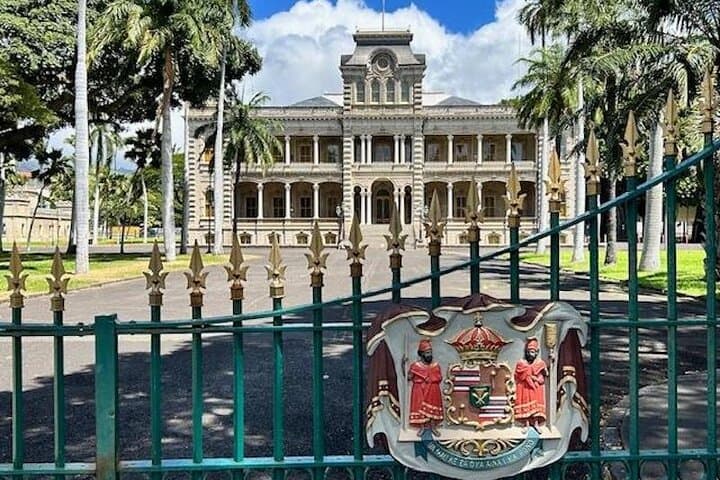
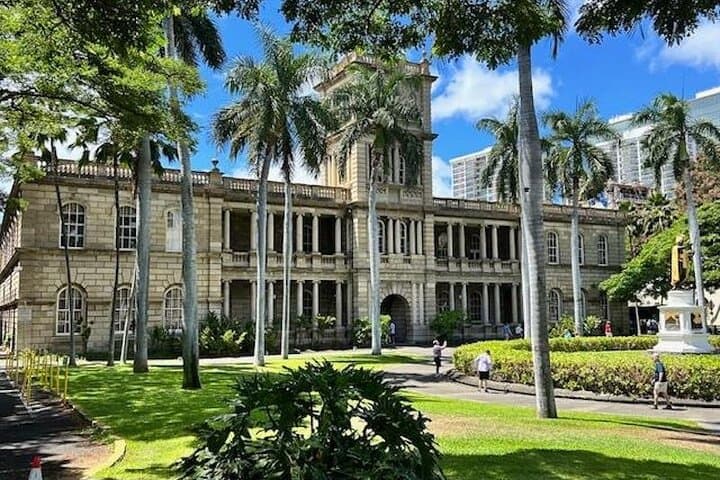
In ninety minutes the walk moves fast: from the royal angles of Iolani Palace to the stone façade of the missionary-built church, across to Aliiolani Hale where the judiciary now sits and where the past’s power plays were made public. The narrative stitches Captain Cook’s first violent contact, the brutal campaign of Kamehameha, and the missionaries’ moral certainty to the later influx of immigrant labor for sugar plantations. You hear how a monarchy gave way to corporate and military interests, how a shopping oasis called Waikiki grew from an older geography, and how Pearl Harbor shortened a century of political arguments into a single, catastrophic day.
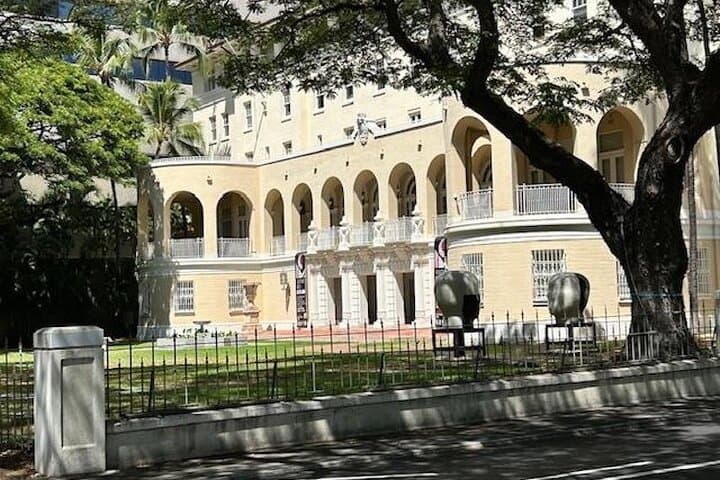
Geology and culture hover in the background: Oahu’s lowland plains are the eroded apron of the Ko‘olau Range, reef limestone underlaid by volcanic basalt—land that made hospitality, agriculture, and foreign desire both possible and contested. The buildings you pass—an Italianate courthouse, a stained-glass church shipped stone-by-stone from abroad, the State Art Museum that began life as the Royal Hawaiian Hotel—are material clues to shifting power and borrowed styles.
Local insights come easily from a guide raised here; his voice blends gossip with classroom precision. He points out quieter chapters: the Massie Affair at the Judiciary Building, Queen Liliuokalani’s return to Washington Place, and the layers of meaning residents attach to these blocks.
Practicalities are straightforward. This is an urban walking tour—easy terrain, pavement underfoot, minimal elevation. It runs about 90 minutes and moves at a conversational pace; expect stops of five to ten minutes at key sites. Bring sun protection and a refillable bottle: midday heat in Honolulu can be sharp even when trade winds stir. The tour is wheelchair accessible and family friendly, but organizers note it’s not advised for those with acute cardiac issues. Book early—slots are small and the walk often sells out.
If you want context before you go, read a concise history of the 1893 overthrow and glance at archival photos of Iolani Palace. On the street, listen more than photograph at first; the stories landscape the city in ways a camera can’t capture. By the end you’ll see Honolulu not just as a beach city but as a place where global forces—religion, commerce, and war—left visible marks on the stones and the stories.
easy.
1.5 hours.
Suitable for most fitness levels; mostly standing and short walks on flat pavement.
Meet at the King Kamehameha statue on S. King St., directly across from Iolani Palace; guides arrive 10 minutes before start.
Yes—routes and surfaces are wheelchair accessible and assistance is available for stairs or inclines.
Yes—content covers sensitive historical events but the guide adapts tone for family groups; infants and small children can be accommodated.
Group size is capped (usually under 20) to keep the walk conversational and manageable.
No—this is an exterior walking tour; some sites are viewed from outside and do not require admission.
Special requirements are requested at booking; check the operator’s booking questions for options and notify them in advance.
This route compresses key events: initial contact with Captain Cook, missionary influence in the 1820s, Kamehameha’s conquests, waves of immigrant labor for sugar, and the 1893 overthrow leading to annexation and statehood.
Respect cultural sites and private property, avoid touching artifacts or leaning on monuments, and support local museums and guides who practice sustainable tourism.
Dark Side Adventure Tours operates guided outdoor trips and adventures with an emphasis on safety, stewardship, and memorable experiences.
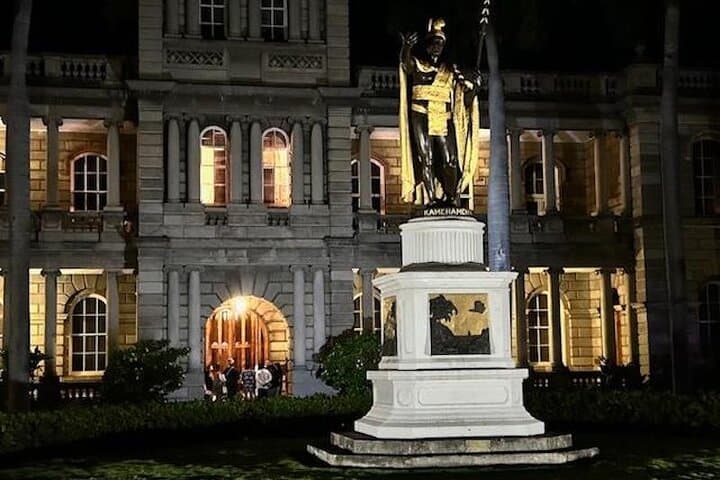
The meeting point is a figure on horseback—King Kamehameha, lantern tucked under his arm, bronze eyes fixed on S. King Street. You stand there with a small group, the city press of buses and palms humming around you, while the guide—a storyteller who calls himself the big guy with a walking stick—begins to untangle a history that refuses to be cheerful.
The meeting point is a figure on horseback—King Kamehameha, lantern tucked under his arm, bronze eyes fixed on S. King Street. You stand there with a small group, the city press of buses and palms humming around you, while the guide—a storyteller who calls himself the big guy with a walking stick—begins to untangle a history that refuses to be cheerful.
In ninety minutes the walk moves fast: from the royal angles of Iolani Palace to the stone façade of the missionary-built church, across to Aliiolani Hale where the judiciary now sits and where the past’s power plays were made public. The narrative stitches Captain Cook’s first violent contact, the brutal campaign of Kamehameha, and the missionaries’ moral certainty to the later influx of immigrant labor for sugar plantations. You hear how a monarchy gave way to corporate and military interests, how a shopping oasis called Waikiki grew from an older geography, and how Pearl Harbor shortened a century of political arguments into a single, catastrophic day.
Geology and culture hover in the background: Oahu’s lowland plains are the eroded apron of the Ko‘olau Range, reef limestone underlaid by volcanic basalt—land that made hospitality, agriculture, and foreign desire both possible and contested. The buildings you pass—an Italianate courthouse, a stained-glass church shipped stone-by-stone from abroad, the State Art Museum that began life as the Royal Hawaiian Hotel—are material clues to shifting power and borrowed styles.
Local insights come easily from a guide raised here; his voice blends gossip with classroom precision. He points out quieter chapters: the Massie Affair at the Judiciary Building, Queen Liliuokalani’s return to Washington Place, and the layers of meaning residents attach to these blocks.
Practicalities are straightforward. This is an urban walking tour—easy terrain, pavement underfoot, minimal elevation. It runs about 90 minutes and moves at a conversational pace; expect stops of five to ten minutes at key sites. Bring sun protection and a refillable bottle: midday heat in Honolulu can be sharp even when trade winds stir. The tour is wheelchair accessible and family friendly, but organizers note it’s not advised for those with acute cardiac issues. Book early—slots are small and the walk often sells out.
If you want context before you go, read a concise history of the 1893 overthrow and glance at archival photos of Iolani Palace. On the street, listen more than photograph at first; the stories landscape the city in ways a camera can’t capture. By the end you’ll see Honolulu not just as a beach city but as a place where global forces—religion, commerce, and war—left visible marks on the stones and the stories.