THE ADVENTURE COLLECTIVE® · Independent discovery and booking for outdoor travel

Explore Honolulu’s royal, missionary and civic landmarks on a private two-hour walking tour that starts at Iolani Palace and ends on S King Street. Ideal for small groups wanting a focused history lesson with a local guide.
Explore Honolulu’s royal, missionary and civic landmarks on a private two-hour walking tour that starts at Iolani Palace and ends on S King Street. Ideal for small groups wanting a focused history lesson with a local guide.
A warm trade wind threads between koa and banyan as a small group steps through the iron gates of Iolani Palace—Honolulu’s royal heart. On a private two-hour walk, the city’s stone façades, mission-era churches and shaded courthouse lawns reveal chapters of power, religion and daily life that shaped modern Hawaiʻi.
Verified experiences and guided adventures in the surrounding area.
Operated by Opatrip.com USA · Honolulu, Hawaii
A warm trade wind threads between koa and banyan as a small group steps through the iron gates of Iolani Palace—Honolulu’s royal heart. On a private two-hour walk, the city’s stone façades, mission-era churches and shaded courthouse lawns reveal chapters of power, religion and daily life that shaped modern Hawaiʻi.
The route traces a compact slice of Honolulu history: Iolani Palace, built in the late 19th century and the only royal residence on U.S. soil; the Hawaiian Mission Houses, which document 19th-century missionary influence and literacy programs; and Kawaiahaʻo Church with its coral-block construction and central role in early Hawaiian governance and education. Beneath the city’s grid, volcanic substrate and coral reefs tell a deeper geological story—sea cliffs and reef ecosystems once dictated settlement patterns and trade routes.
Culturally the tour pivots between monarchy-era protocol and missionary-era change, showing how language, law and land use evolved. Local guides often point out subtler city features: plantation-era architecture, public art honoring kanaka maoli, and rowhouses that housed Honolulu’s mixed communities.
Practical pointers: expect flat sidewalks and about two hours of steady walking with frequent stops for storytelling and photo opportunities. Mornings offer cooler temperatures and clearer light; afternoons can be gusty with passing showers. Comfortable shoes, sun protection and a refillable bottle keep the focus on history rather than discomfort. Because this is a private experience, groups can ask the guide to emphasize genealogy, architecture or the political history behind each site.
easy.
2 hours.
Light walking ability; comfortable standing for short guided stops and gentle urban terrain
No—this tour provides an exterior visit and historical commentary; palace admission must be purchased separately if you want to tour inside.
This product is private for your group only, allowing customization of pacing and focus areas depending on guide availability and municipal access.
Much of downtown Honolulu is accessible, but guests should notify the operator of specific needs so the route can be adjusted and timing confirmed.
English is standard; request other language guides at booking—availability varies and may affect price or confirmation time.
Honolulu evolved rapidly in the 19th century as monarchy governance met foreign missionaries and merchants, creating today’s layered civic landscape.
Respect cultural sites by staying on sidewalks and observing signage; support local conservation by choosing refillable water and local guides who follow site-preservation rules.
Opatrip.com USA operates guided outdoor trips and adventures with an emphasis on safety, stewardship, and memorable experiences.

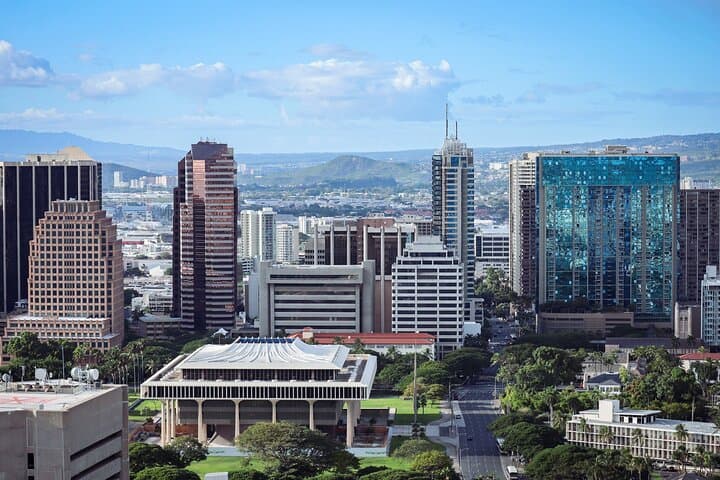

A warm trade wind threads between koa and banyan as a small group steps through the iron gates of Iolani Palace—Honolulu’s royal heart. On a private two-hour walk, the city’s stone façades, mission-era churches and shaded courthouse lawns reveal chapters of power, religion and daily life that shaped modern Hawaiʻi.
A warm trade wind threads between koa and banyan as a small group steps through the iron gates of Iolani Palace—Honolulu’s royal heart. On a private two-hour walk, the city’s stone façades, mission-era churches and shaded courthouse lawns reveal chapters of power, religion and daily life that shaped modern Hawaiʻi.
The route traces a compact slice of Honolulu history: Iolani Palace, built in the late 19th century and the only royal residence on U.S. soil; the Hawaiian Mission Houses, which document 19th-century missionary influence and literacy programs; and Kawaiahaʻo Church with its coral-block construction and central role in early Hawaiian governance and education. Beneath the city’s grid, volcanic substrate and coral reefs tell a deeper geological story—sea cliffs and reef ecosystems once dictated settlement patterns and trade routes.
Culturally the tour pivots between monarchy-era protocol and missionary-era change, showing how language, law and land use evolved. Local guides often point out subtler city features: plantation-era architecture, public art honoring kanaka maoli, and rowhouses that housed Honolulu’s mixed communities.
Practical pointers: expect flat sidewalks and about two hours of steady walking with frequent stops for storytelling and photo opportunities. Mornings offer cooler temperatures and clearer light; afternoons can be gusty with passing showers. Comfortable shoes, sun protection and a refillable bottle keep the focus on history rather than discomfort. Because this is a private experience, groups can ask the guide to emphasize genealogy, architecture or the political history behind each site.