THE ADVENTURE COLLECTIVE® · Independent discovery and booking for outdoor travel

See Hollywood’s landmarks after dark and finish with a luminous stop at Griffith Observatory. This 90-minute evening tour pairs city lights with elevated views—ideal for travelers who want a quick, accessible introduction to LA’s nocturnal face.
See Hollywood’s landmarks after dark and finish with a luminous stop at Griffith Observatory. This 90-minute evening tour pairs city lights with elevated views—ideal for travelers who want a quick, accessible introduction to LA’s nocturnal face.
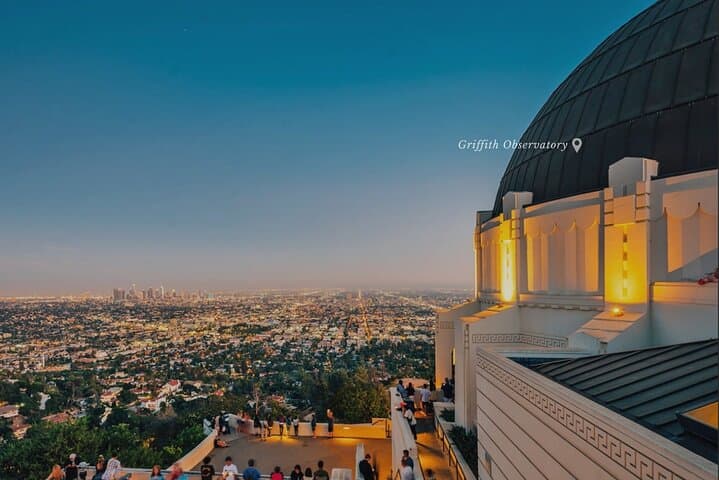
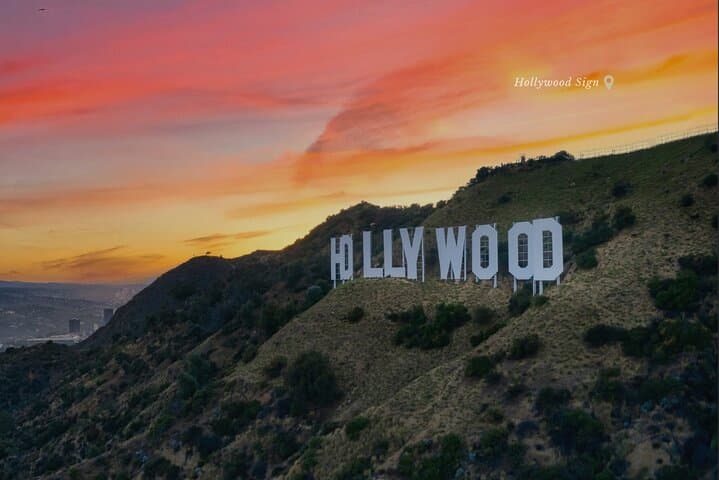
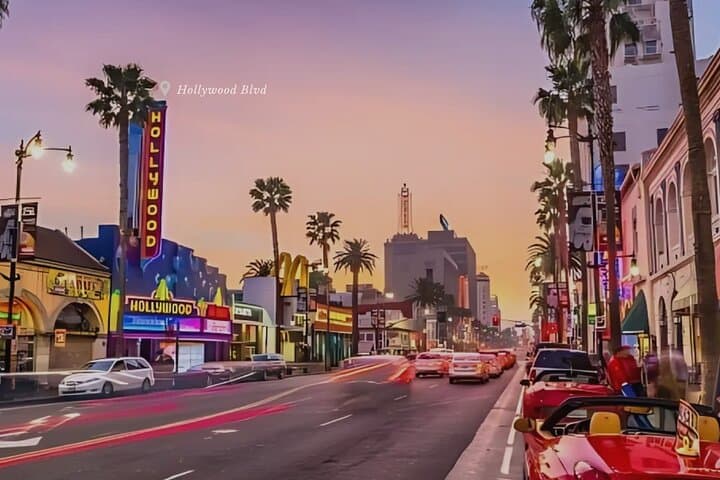
The bus slips away from the neon spill of Hollywood Boulevard and the sidewalks thin out as the city converts to a grid of distant lights. You pass the Dolby and El Capitan, the courtyard of Chinese Theatre frozen in shadow, then climb toward Griffith Observatory where the skyline unfolds—streets become veins of light and the Pacific hides beyond the glow.
Verified experiences and guided adventures in the surrounding area.
Operated by Starline Tours of Hollywood · Los Angeles, California
The bus slips away from the neon spill of Hollywood Boulevard and the sidewalks thin out as the city converts to a grid of distant lights. You pass the Dolby and El Capitan, the courtyard of Chinese Theatre frozen in shadow, then climb toward Griffith Observatory where the skyline unfolds—streets become veins of light and the Pacific hides beyond the glow.
Los Angeles grew from mission-era outposts into a 20th-century entertainment engine; the Observatory, built in 1935, is both a civic observatory and a movie-set backdrop. Geologically you’re on the southern slope of the Santa Monica Mountains, a chaparral-scoured ridge that frames the LA Basin and offers seismic reminders of the nearby active faults. Culturally, the route threads film history, music shops, and late-night diners—this is a city that never quite goes to sleep.
Practical guidance: the 90-minute loop starts at Ovation Hollywood (6801 Hollywood Blvd); redeem tickets at Starline Tours on the 2nd floor. Plan for a 30-minute stop at Griffith Observatory—enough for views and quick photos but not for long exhibits. Expect light walking up paved paths and stairs; the Observatory is wheelchair accessible. Arrive 15 minutes early to board, wear layers (coastal nights cool quickly), and budget extra time for Hollywood traffic when returning to central LA.
Bring a charged camera, ID, and small flashlight for uneven curbs. If you want clearer skies, check the moon phase; bright nights wash out the Milky Way but emphasize city spectacle. The tour is an efficient way to sample Hollywood after dark with the Observatory as a luminous high point.
easy.
1.5 hours.
Minimal fitness required; able to board a coach and walk short paved paths and stairs.
Redeem and meet at Starline Tours’ Visitor Center inside Ovation Hollywood (6801 Hollywood Blvd., 2nd floor, suite #203) — arrive 15 minutes early.
The tour provides a 30-minute stop focused on views and exterior photo opportunities; entry to exhibits may require additional time and separate admission during busy periods.
Yes—transportation and the Observatory stop are wheelchair accessible; notify the operator of special requirements when booking.
Infants are allowed but must sit on laps; only service animals are permitted on board per operator policy.
Griffith Observatory opened in 1935 as a public observatory donated by Griffith J. Griffith; it has since been a cultural landmark in both science outreach and cinema.
Griffith Park is an urban preserve under pressure from foot traffic and light pollution—stick to paved paths, pack out trash, and avoid flash photography that disturbs wildlife.
Starline Tours of Hollywood operates guided outdoor trips and adventures with an emphasis on safety, stewardship, and memorable experiences.
The bus slips away from the neon spill of Hollywood Boulevard and the sidewalks thin out as the city converts to a grid of distant lights. You pass the Dolby and El Capitan, the courtyard of Chinese Theatre frozen in shadow, then climb toward Griffith Observatory where the skyline unfolds—streets become veins of light and the Pacific hides beyond the glow.
The bus slips away from the neon spill of Hollywood Boulevard and the sidewalks thin out as the city converts to a grid of distant lights. You pass the Dolby and El Capitan, the courtyard of Chinese Theatre frozen in shadow, then climb toward Griffith Observatory where the skyline unfolds—streets become veins of light and the Pacific hides beyond the glow.
Los Angeles grew from mission-era outposts into a 20th-century entertainment engine; the Observatory, built in 1935, is both a civic observatory and a movie-set backdrop. Geologically you’re on the southern slope of the Santa Monica Mountains, a chaparral-scoured ridge that frames the LA Basin and offers seismic reminders of the nearby active faults. Culturally, the route threads film history, music shops, and late-night diners—this is a city that never quite goes to sleep.
Practical guidance: the 90-minute loop starts at Ovation Hollywood (6801 Hollywood Blvd); redeem tickets at Starline Tours on the 2nd floor. Plan for a 30-minute stop at Griffith Observatory—enough for views and quick photos but not for long exhibits. Expect light walking up paved paths and stairs; the Observatory is wheelchair accessible. Arrive 15 minutes early to board, wear layers (coastal nights cool quickly), and budget extra time for Hollywood traffic when returning to central LA.
Bring a charged camera, ID, and small flashlight for uneven curbs. If you want clearer skies, check the moon phase; bright nights wash out the Milky Way but emphasize city spectacle. The tour is an efficient way to sample Hollywood after dark with the Observatory as a luminous high point.