THE ADVENTURE COLLECTIVE® · Independent discovery and booking for outdoor travel

Walk the boulevards where Hollywood made itself. This 2.5‑hour guided tour combines marquee architecture, cinematic lore, and insider anecdotes to map the rise of the entertainment capital.
Walk the boulevards where Hollywood made itself. This 2.5‑hour guided tour combines marquee architecture, cinematic lore, and insider anecdotes to map the rise of the entertainment capital.
The tour begins on a sun-warmed stretch of Hollywood Boulevard, where the Pantages Theatre’s Art Deco façade watches over a steady flow of locals and tourists. Footsteps echo on the Walk of Fame as the guide threads stories of premieres, scandals, and studio powerhouses into the fabric of the street, the city’s energy nudging you forward.
Verified experiences and guided adventures in the surrounding area.
Operated by Hollywood A La Carte · Los Angeles, California
The tour begins on a sun-warmed stretch of Hollywood Boulevard, where the Pantages Theatre’s Art Deco façade watches over a steady flow of locals and tourists. Footsteps echo on the Walk of Fame as the guide threads stories of premieres, scandals, and studio powerhouses into the fabric of the street, the city’s energy nudging you forward.
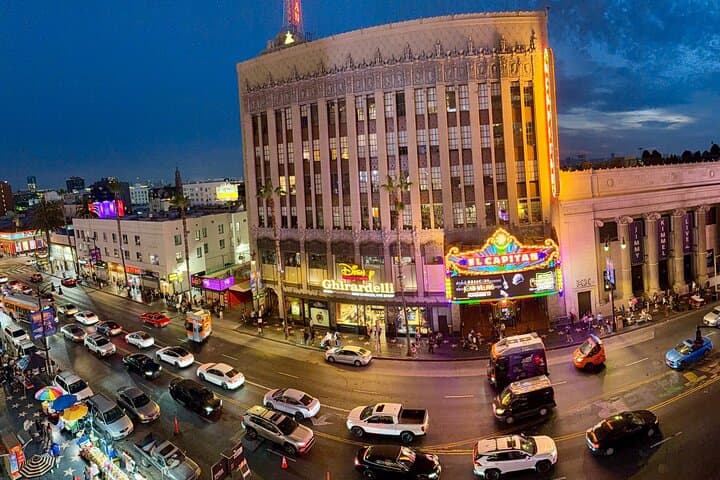
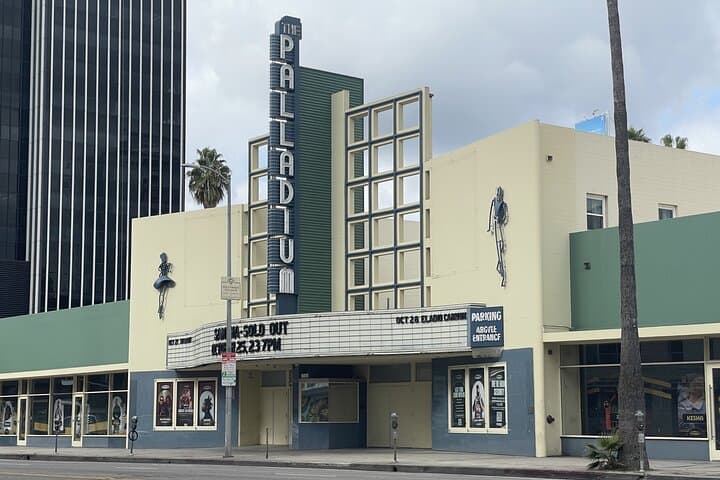
This route moves through the physical history of cinema — from the Egyptian Theatre’s 1922 premiere to Grauman’s Chinese Theatre and the evolution of Ovation Hollywood — revealing how geology, transport corridors, and 20th‑century urban planning shaped an entertainment district. Historic theaters, recording studios, and former radio hubs tell a cultural story of immigration, capitalism, and evolving tastes that turned a once-sparse foothill into an international stage.
Expect close-up views of marquee architecture, sidewalk plaques, and the occasional costumed character. Guides typically point out the Capitol Records tower, the Roosevelt Hotel, and the sites where premieres and industry deals changed film history. There’s little elevation but substantial walking—streets, sidewalks, and occasional steps—through a dense urban landscape.
Practical guidance: wear supportive shoes for roughly 2.5 hours on pavement, bring water and sun protection, and travel light—bags are checked visually in crowded areas. Arrive 10–15 minutes early for check-in at the Pantages, and carry a charged phone for maps and photos. The tour is accessible to most moderately fit visitors but not recommended for those with serious spinal, cardiac, or pregnancy-related travel restrictions.
easy.
2–3 hours.
Moderate level of fitness for sustained walking on pavement; brief standing periods.
The tour runs about 150 minutes and covers roughly 1.5–2 miles of mostly flat urban streets.
It starts in front of the Pantages Theatre and finishes at the Roosevelt Hotel on Hollywood Boulevard.
Children are welcome, but infants must sit on a lap; parents should assess stroller navigation through crowds and sidewalks.
Yes—several bus lines and the Metro Red Line stops within walking distance; the guide notes nearby transit options.
Hollywood’s transformation from agricultural land to an entertainment hub accelerated in the 1910s–1930s as studios moved west to exploit light, varied terrain, and distance from patent‑clamping east coast trusts.
Heavy foot traffic and promotional events strain sidewalks and local sanitation—travelers can help by using bins, staying on sidewalks, and supporting historic preservation efforts.
Hollywood A La Carte operates guided outdoor trips and adventures with an emphasis on safety, stewardship, and memorable experiences.
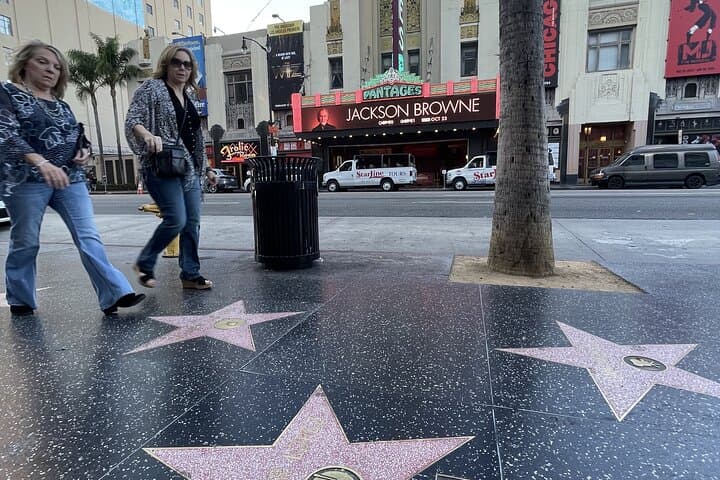
The tour begins on a sun-warmed stretch of Hollywood Boulevard, where the Pantages Theatre’s Art Deco façade watches over a steady flow of locals and tourists. Footsteps echo on the Walk of Fame as the guide threads stories of premieres, scandals, and studio powerhouses into the fabric of the street, the city’s energy nudging you forward.
The tour begins on a sun-warmed stretch of Hollywood Boulevard, where the Pantages Theatre’s Art Deco façade watches over a steady flow of locals and tourists. Footsteps echo on the Walk of Fame as the guide threads stories of premieres, scandals, and studio powerhouses into the fabric of the street, the city’s energy nudging you forward.
This route moves through the physical history of cinema — from the Egyptian Theatre’s 1922 premiere to Grauman’s Chinese Theatre and the evolution of Ovation Hollywood — revealing how geology, transport corridors, and 20th‑century urban planning shaped an entertainment district. Historic theaters, recording studios, and former radio hubs tell a cultural story of immigration, capitalism, and evolving tastes that turned a once-sparse foothill into an international stage.
Expect close-up views of marquee architecture, sidewalk plaques, and the occasional costumed character. Guides typically point out the Capitol Records tower, the Roosevelt Hotel, and the sites where premieres and industry deals changed film history. There’s little elevation but substantial walking—streets, sidewalks, and occasional steps—through a dense urban landscape.
Practical guidance: wear supportive shoes for roughly 2.5 hours on pavement, bring water and sun protection, and travel light—bags are checked visually in crowded areas. Arrive 10–15 minutes early for check-in at the Pantages, and carry a charged phone for maps and photos. The tour is accessible to most moderately fit visitors but not recommended for those with serious spinal, cardiac, or pregnancy-related travel restrictions.