THE ADVENTURE COLLECTIVE® · Independent discovery and booking for outdoor travel

Leave the Riviera Maya before sunrise for a full-day escape to Holbox: a ferry crossing, two-hour golf cart or bike exploration through sandy streets, lunch at a beachfront palapa and a walk across the ethereal sandbar at Punta Mosquitos. Expect shallow turquoise waters, colorful murals and practical tips to make the most of the day.
Leave the Riviera Maya before sunrise for a full-day escape to Holbox: a ferry crossing, two-hour golf cart or bike exploration through sandy streets, lunch at a beachfront palapa and a walk across the ethereal sandbar at Punta Mosquitos. Expect shallow turquoise waters, colorful murals and practical tips to make the most of the day.
The day starts before dawn: headlamps dim on sleepy hotel lobbies, vans hum through the Yucatán night and the road unspools toward Chiquilá. By the time the first light slices the horizon, the ferry is cutting a clean wake toward Holbox, and the island’s low-slung houses and painted murals come into view like a welcome flag.
Verified experiences and guided adventures in the surrounding area.
Operated by Caribe Páradise Tours · Holbox, Quintana Roo
The day starts before dawn: headlamps dim on sleepy hotel lobbies, vans hum through the Yucatán night and the road unspools toward Chiquilá. By the time the first light slices the horizon, the ferry is cutting a clean wake toward Holbox, and the island’s low-slung houses and painted murals come into view like a welcome flag.
You have a long day measured in shoreline—ferry crossing, two hours of golf cart or bike time across soft sand avenues, and a slow walk across the sandbar at Punta Mosquitos where the sea flattens into a mirror.
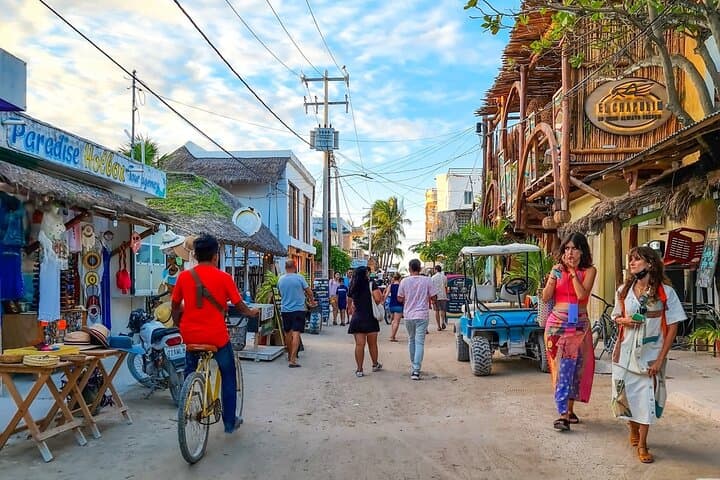
Holbox sits on the shallow continental shelf off the northern tip of the Yucatán Peninsula. Geologically it’s recent sand and sediment piled over coral and limestone; ecologically it’s a blend of mangrove, lagoon and beach. Historically, the island was a small Maya fishing settlement and later a refuge for pirate-runaways and fishermen. Today its culture leans local and low-tech—palapa restaurants, fishermen hauling nets at dusk, and a bohemian street art scene that brightens the pedestrian-only center.
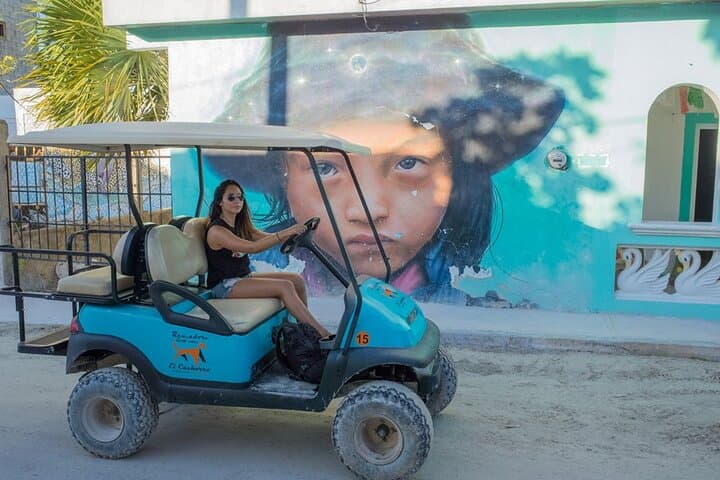
Your guide navigates murals and sandy tracks while telling small local stories: how the island’s lobster and octopus fisheries shaped families, or how the migratory whale sharks pass offshore in summer. Nature here acts with intent—the wind sculpts dunes, the tide decides beach width, and the shallow currents dare you to wade waist-deep into impossibly clear water.
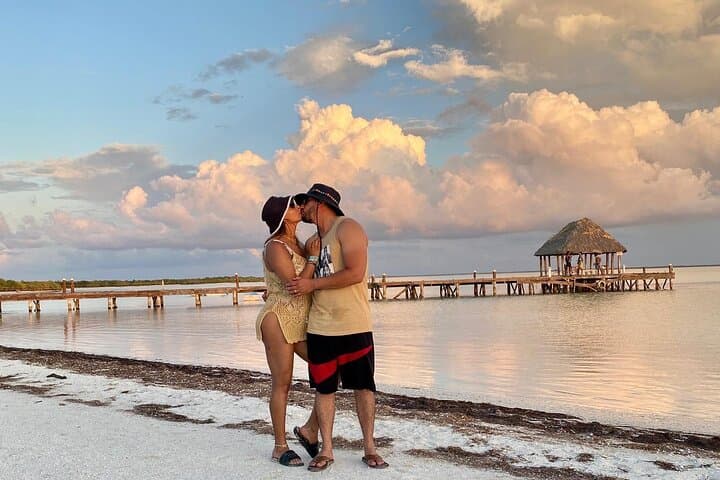
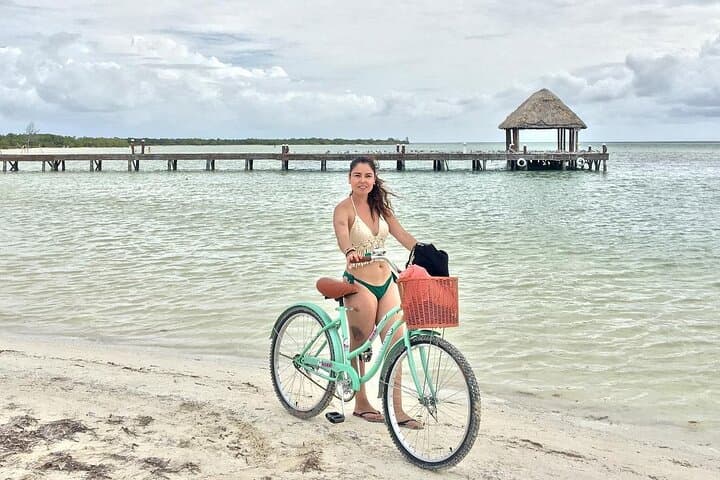
Punta Mosquitos is the day’s visual high point. When tides and light align, a narrow sandbar extends into the sea; walking it feels like crossing a floating ribbon. Waters are often ankle-to-knee deep across wide expanses, so expect reflective, turquoise vistas and photo ops that flatten the horizon.
Practicalities: the tour begins early—pickups commonly start around 06:00—allowing 11–12 hours total for ground transfer, ferry crossing, exploring, lunch and return. Bring biodegradable sunscreen, a wide-brim hat, reef-safe insect repellent and cash for a small dock fee (about $6 USD). Wear sandals or water shoes for sandbar walks and loose shoes for island streets—most surfaces are soft sand, with short paved stretches.
Logistics to note: golf carts require a minimum of three riders (or a $30 USD surcharge for two), box breakfast and an included lunch with beverage are provided, and bilingual guides handle transfers and local orientation. Hydration matters: the sun can be relentless even in a gentle breeze, so carry 1–2 liters of water and a light, quick-dry layer for the ferry. If you want clear, reflective waters at Punta Mosquitos aim for calm days and low wind—your guide can advise on tide timing.
This is a day built around slow movement: boat, cart, foot. It’s not a sprint but a sequence of careful reveals—colorful streets, fresh ceviche, and a sandbar that asks you to walk out and see how far the sea will follow.
easy.
11–12 hours.
Light stamina required for standing, short walks on soft sand and boarding ferries; suitable for most fitness levels.
The ferry ride typically takes around 20–30 minutes each way, depending on sea conditions.
Carts are shared unless you pay an extra charge; a minimum of three people is required to avoid a single-pair surcharge ($30 USD).
The tour includes a box breakfast and lunch (dish and one beverage—soda or beer).
Punta Mosquitos is shallow and ideal for wading; deeper swimming is limited—always check conditions with your guide.
Yes—terrain is easy, but the long day and early start mean you should consider comfort and mobility; consult the operator for special needs.
Yes—there are public restrooms and restaurant facilities in town, though some may charge a small fee; bring hand sanitizer.
Holbox began as a small Maya and fishing community; its modern economy revolves around sustainable fishing and eco-tourism.
Holbox is part of a fragile coastal ecosystem—operators encourage reef-safe products, limited plastic use and careful interaction with wildlife.
Caribe Páradise Tours operates guided outdoor trips and adventures with an emphasis on safety, stewardship, and memorable experiences.
The day starts before dawn: headlamps dim on sleepy hotel lobbies, vans hum through the Yucatán night and the road unspools toward Chiquilá. By the time the first light slices the horizon, the ferry is cutting a clean wake toward Holbox, and the island’s low-slung houses and painted murals come into view like a welcome flag.
The day starts before dawn: headlamps dim on sleepy hotel lobbies, vans hum through the Yucatán night and the road unspools toward Chiquilá. By the time the first light slices the horizon, the ferry is cutting a clean wake toward Holbox, and the island’s low-slung houses and painted murals come into view like a welcome flag.
You have a long day measured in shoreline—ferry crossing, two hours of golf cart or bike time across soft sand avenues, and a slow walk across the sandbar at Punta Mosquitos where the sea flattens into a mirror.
Holbox sits on the shallow continental shelf off the northern tip of the Yucatán Peninsula. Geologically it’s recent sand and sediment piled over coral and limestone; ecologically it’s a blend of mangrove, lagoon and beach. Historically, the island was a small Maya fishing settlement and later a refuge for pirate-runaways and fishermen. Today its culture leans local and low-tech—palapa restaurants, fishermen hauling nets at dusk, and a bohemian street art scene that brightens the pedestrian-only center.
Your guide navigates murals and sandy tracks while telling small local stories: how the island’s lobster and octopus fisheries shaped families, or how the migratory whale sharks pass offshore in summer. Nature here acts with intent—the wind sculpts dunes, the tide decides beach width, and the shallow currents dare you to wade waist-deep into impossibly clear water.
Punta Mosquitos is the day’s visual high point. When tides and light align, a narrow sandbar extends into the sea; walking it feels like crossing a floating ribbon. Waters are often ankle-to-knee deep across wide expanses, so expect reflective, turquoise vistas and photo ops that flatten the horizon.
Practicalities: the tour begins early—pickups commonly start around 06:00—allowing 11–12 hours total for ground transfer, ferry crossing, exploring, lunch and return. Bring biodegradable sunscreen, a wide-brim hat, reef-safe insect repellent and cash for a small dock fee (about $6 USD). Wear sandals or water shoes for sandbar walks and loose shoes for island streets—most surfaces are soft sand, with short paved stretches.
Logistics to note: golf carts require a minimum of three riders (or a $30 USD surcharge for two), box breakfast and an included lunch with beverage are provided, and bilingual guides handle transfers and local orientation. Hydration matters: the sun can be relentless even in a gentle breeze, so carry 1–2 liters of water and a light, quick-dry layer for the ferry. If you want clear, reflective waters at Punta Mosquitos aim for calm days and low wind—your guide can advise on tide timing.
This is a day built around slow movement: boat, cart, foot. It’s not a sprint but a sequence of careful reveals—colorful streets, fresh ceviche, and a sandbar that asks you to walk out and see how far the sea will follow.