THE ADVENTURE COLLECTIVE® · Independent discovery and booking for outdoor travel

Try Hok Ski — a cross between cross-country skis and snowshoes — for a guided winter trek through Jacques-Cartier National Park. Learn technique, enjoy a refuge lunch, and move through glacial valleys with an experienced guide.
Try Hok Ski — a cross between cross-country skis and snowshoes — for a guided winter trek through Jacques-Cartier National Park. Learn technique, enjoy a refuge lunch, and move through glacial valleys with an experienced guide.
You step off the van into a hush of cold air and a pine forest that pushes its branches low with snow. The river valley ahead seems to dare you forward; tracks crunch as your guide tightens bindings and hands over Hok Ski gear — a hybrid between cross-country skis and snowshoes that changes how you read the winter landscape.
Verified experiences and guided adventures in the surrounding area.
Operated by Quatre Natures · Quebec City, Quebec
You step off the van into a hush of cold air and a pine forest that pushes its branches low with snow. The river valley ahead seems to dare you forward; tracks crunch as your guide tightens bindings and hands over Hok Ski gear — a hybrid between cross-country skis and snowshoes that changes how you read the winter landscape.
Jacques-Cartier National Park sits in a glacial-carved valley of the Laurentian plateau: steep-sided ridges, exposed bedrock, and a river that once carried ice down to the St. Lawrence. The area's Indigenous and settler histories surface in place names and old logging routes now reclaimed by spruce and fir. Local culture still orients around winter travel — know-how passed between guides who teach techniques like telemark-style rises and controlled descents.
On this guided outing you’ll spend roughly 3–4 hours moving across 6–8 km of varied terrain with intermittent climbs (expect ~200–300 m cumulative elevation gain). The first kilometres are instructional: fitting skis, basic stride and stopping, then a warming stop at a refuge for lunch. Later sections get a little technical, asking for balance on rises and confident weight shifts on descents.
Practical notes: dress in layers, carry water in an insulated bottle, and protect eyes from reflected snow. The activity is weather-dependent and best in stable cold with consolidated snow. Guides supply equipment and instruction, making this one of the most accessible ways to explore Quebec’s winter wilds while learning a new, efficient way to travel on snow.
moderate.
3–4 hours on-snow (4 hours including transport).
Suitable for people with moderate fitness — expect sustained aerobic effort and repeated short climbs
No — the guide teaches Hok Ski technique on the first kilometres; basic balance and mobility are the main requirements.
Yes — Hok Ski equipment and poles are supplied, along with a hot beverage and lunch included in the tour.
The park is about a 30–45 minute drive from downtown Quebec City depending on traffic and pickup point.
The operator may reschedule or offer a full refund if snow conditions are unsuitable; always check weather and confirmations before departure.
The valley was shaped by glaciers and later used for timber extraction; the park preserves old logging routes now repurposed as trails and cultural reference points.
Park rules emphasize staying on trails to protect delicate winter vegetation and reduce disturbance to wildlife; pack out all waste and follow Leave No Trace principles.
Quatre Natures operates guided outdoor trips and adventures with an emphasis on safety, stewardship, and memorable experiences.
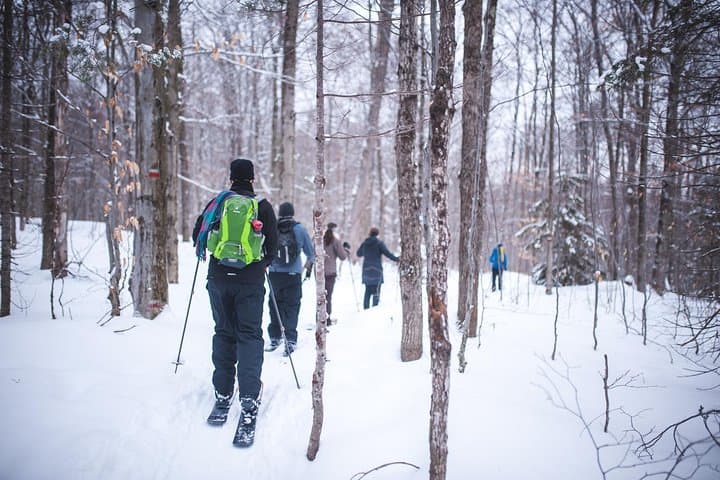
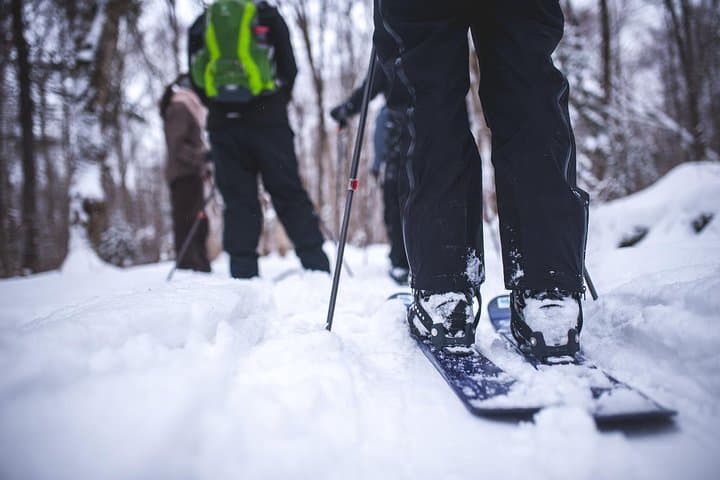


You step off the van into a hush of cold air and a pine forest that pushes its branches low with snow. The river valley ahead seems to dare you forward; tracks crunch as your guide tightens bindings and hands over Hok Ski gear — a hybrid between cross-country skis and snowshoes that changes how you read the winter landscape.
You step off the van into a hush of cold air and a pine forest that pushes its branches low with snow. The river valley ahead seems to dare you forward; tracks crunch as your guide tightens bindings and hands over Hok Ski gear — a hybrid between cross-country skis and snowshoes that changes how you read the winter landscape.
Jacques-Cartier National Park sits in a glacial-carved valley of the Laurentian plateau: steep-sided ridges, exposed bedrock, and a river that once carried ice down to the St. Lawrence. The area's Indigenous and settler histories surface in place names and old logging routes now reclaimed by spruce and fir. Local culture still orients around winter travel — know-how passed between guides who teach techniques like telemark-style rises and controlled descents.
On this guided outing you’ll spend roughly 3–4 hours moving across 6–8 km of varied terrain with intermittent climbs (expect ~200–300 m cumulative elevation gain). The first kilometres are instructional: fitting skis, basic stride and stopping, then a warming stop at a refuge for lunch. Later sections get a little technical, asking for balance on rises and confident weight shifts on descents.
Practical notes: dress in layers, carry water in an insulated bottle, and protect eyes from reflected snow. The activity is weather-dependent and best in stable cold with consolidated snow. Guides supply equipment and instruction, making this one of the most accessible ways to explore Quebec’s winter wilds while learning a new, efficient way to travel on snow.