THE ADVENTURE COLLECTIVE® · Independent discovery and booking for outdoor travel

Pedal through rice fields, help plant vegetables in Tra Que, ride a water buffalo, then glide in a basket boat through Cam Thanh’s water coconut channels. This half-day private tour blends hands-on farm work with relaxed cycling and local encounters.
Pedal through rice fields, help plant vegetables in Tra Que, ride a water buffalo, then glide in a basket boat through Cam Thanh’s water coconut channels. This half-day private tour blends hands-on farm work with relaxed cycling and local encounters.
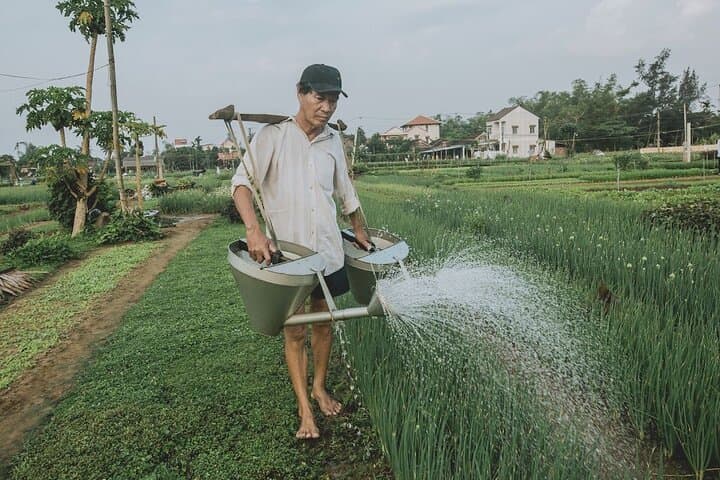
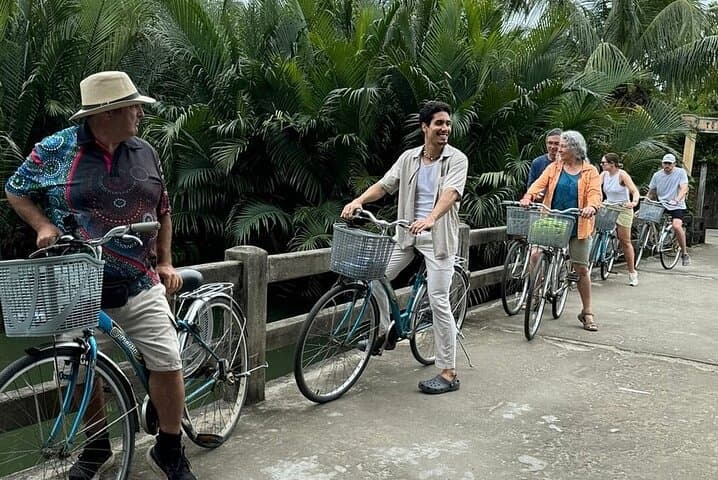
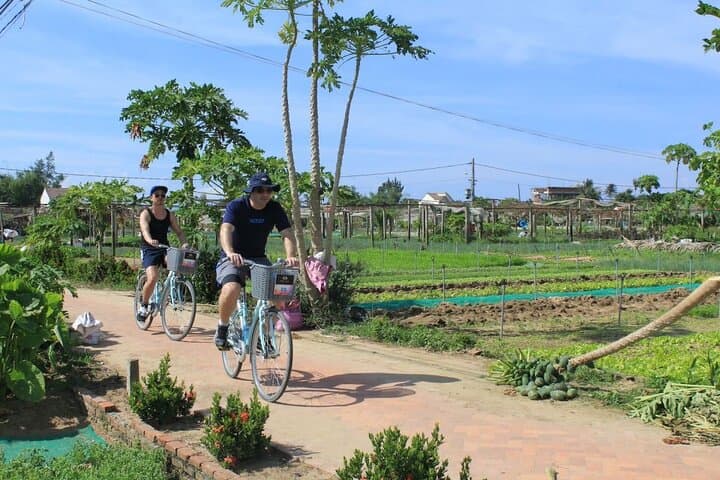
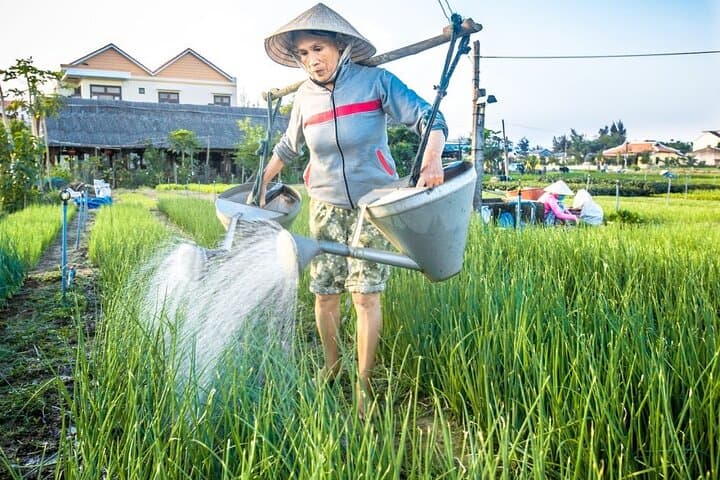
You start on a narrow lane where early light washes the rice paddies, bicycles lined up like patient companions. The air smells of wet earth and mint from Tra Que Village; the guide points to a low hand-tilled patch where families still plant by rhythm rather than machine. Cycling here feels like being pulled forward by the place itself—the fields urging you along the flat canals and tiny bridges.
Verified experiences and guided adventures in the surrounding area.
Operated by Happy Tour · Hoi An, Quang Nam
You start on a narrow lane where early light washes the rice paddies, bicycles lined up like patient companions. The air smells of wet earth and mint from Tra Que Village; the guide points to a low hand-tilled patch where families still plant by rhythm rather than machine. Cycling here feels like being pulled forward by the place itself—the fields urging you along the flat canals and tiny bridges.
This route threads together living history: Tra Que’s vegetable gardens cultivated by the same techniques for generations, rice paddies that reflect centuries of Son-Vietnamese irrigation practice, and Cam Thanh’s water coconut village where palm roots brace the tidal edge. Geology is gentle—sedimentary plains, soft alluvial soil—so the landscape shifts slowly, mostly in color and use rather than form.
You’ll meet farmers, try hand-planting, and laugh while riding a water buffalo alongside its keeper, which highlights the deep human-animal relationship in rural Vietnam. The basket boat ride is small-scale and intimate; the round coracles cut through mangrove channels, offering a close-up of local fishing methods and crab-catching.
Practical guidance: expect three to four hours on mostly flat terrain, light pedaling between stops, and short periods of standing or kneeling for village activities. Wear grip-friendly shoes, bring sun protection and insect repellent, and plan the trip in early morning or late afternoon to avoid peak heat.
This is a low-technical, high-context day that rewards curiosity: bring a camera, respect private family spaces, and be ready to get your hands muddy—this is village life, not a show.
easy.
3–3.5 hours.
Suitable for most fitness levels — basic cycling ability and the ability to mount a low buffalo or step into a basket boat are required.
The private experience runs about 3 to 3.5 hours from the meeting point and includes cycling, village stops, a buffalo ride, and a basket boat ride.
Yes — infant seats are available and the tour is labeled physically easy, but parental supervision is required for activities like the buffalo ride and boat boarding.
No advanced cycling skills needed; the route is mostly flat and the guide adjusts pace for the group.
Light, breathable clothing, closed-toe shoes, and a hat; bring a change of clothes if you plan to participate in planting or get close to the water.
Hoi An grew as a regional trading port from the 15th to 19th centuries; surrounding villages preserved rice-growing and vegetable farming methods passed down through generations.
Cam Thanh’s mangrove channels are sensitive; opt for operators who avoid trampling nurseries and who support local livelihoods to reduce pressure on coastal ecosystems.
Happy Tour operates guided outdoor trips and adventures with an emphasis on safety, stewardship, and memorable experiences.
You start on a narrow lane where early light washes the rice paddies, bicycles lined up like patient companions. The air smells of wet earth and mint from Tra Que Village; the guide points to a low hand-tilled patch where families still plant by rhythm rather than machine. Cycling here feels like being pulled forward by the place itself—the fields urging you along the flat canals and tiny bridges.
You start on a narrow lane where early light washes the rice paddies, bicycles lined up like patient companions. The air smells of wet earth and mint from Tra Que Village; the guide points to a low hand-tilled patch where families still plant by rhythm rather than machine. Cycling here feels like being pulled forward by the place itself—the fields urging you along the flat canals and tiny bridges.
This route threads together living history: Tra Que’s vegetable gardens cultivated by the same techniques for generations, rice paddies that reflect centuries of Son-Vietnamese irrigation practice, and Cam Thanh’s water coconut village where palm roots brace the tidal edge. Geology is gentle—sedimentary plains, soft alluvial soil—so the landscape shifts slowly, mostly in color and use rather than form.
You’ll meet farmers, try hand-planting, and laugh while riding a water buffalo alongside its keeper, which highlights the deep human-animal relationship in rural Vietnam. The basket boat ride is small-scale and intimate; the round coracles cut through mangrove channels, offering a close-up of local fishing methods and crab-catching.
Practical guidance: expect three to four hours on mostly flat terrain, light pedaling between stops, and short periods of standing or kneeling for village activities. Wear grip-friendly shoes, bring sun protection and insect repellent, and plan the trip in early morning or late afternoon to avoid peak heat.
This is a low-technical, high-context day that rewards curiosity: bring a camera, respect private family spaces, and be ready to get your hands muddy—this is village life, not a show.