THE ADVENTURE COLLECTIVE® · Independent discovery and booking for outdoor travel

Trade lantern-lit streets for green rice paddies on a half-day Vespa tour from Hoi An. Visit working farms and craft homes, learn culinary and weaving traditions, and finish with a home-cooked meal in a village setting.
Trade lantern-lit streets for green rice paddies on a half-day Vespa tour from Hoi An. Visit working farms and craft homes, learn culinary and weaving traditions, and finish with a home-cooked meal in a village setting.
The tour opens with the soft rumble of a vintage Vespa and the Old Town receding in the rearview—yellow houses and lantern-lit streets give way to green rice paddies and slow-moving canals. The air carries the scent of wet earth and frying shallots; water buffalo graze at the field edges, and narrow lanes thread between family plots where daily life is on display.
Verified experiences and guided adventures in the surrounding area.
Operated by Authentic Hanoi Homestay & Travel · Hoi An, Quang Nam
The tour opens with the soft rumble of a vintage Vespa and the Old Town receding in the rearview—yellow houses and lantern-lit streets give way to green rice paddies and slow-moving canals. The air carries the scent of wet earth and frying shallots; water buffalo graze at the field edges, and narrow lanes thread between family plots where daily life is on display.
Hoi An’s countryside has been shaped by river sediments from the Thu Bon River and centuries of coastal trade. Once a major trading port between the 15th and 19th centuries, the region blends Cham, Chinese and Japanese influences visible in village temples and communal houses. Tra Nhieu’s Whale Temple reflects the fishing communities’ reverence for the sea, while local crafts—mat weaving, rice-wine distilling, bird’s-nest farming—preserve techniques passed down through generations.
Expect hands-on village visits: learning rice noodle making, watching traditional mat weaving, and sharing a home-cooked set menu with a local family. The route is flat and low-elevation, mainly paved and compact dirt lanes; an experienced, licensed driver handles navigation and safety, so guests can focus on photos and conversation.
Practical notes: plan for four to five hours, bring sun protection and a light rain layer for sudden tropical showers, and wear closed-toe shoes for farm stops. Stay hydrated—the lowland heat builds quickly—and be prepared to remove shoes when entering private homes as a cultural courtesy. This half-day ride balances sensory immersion with accessible logistics, making rural Hoi An immediate, tangible and easy to explore.
easy.
4–5 hours.
Suitable for most travelers who can sit on a scooter for several hours; not recommended for those with serious back or spinal issues.
Experienced licensed drivers are provided to operate the vintage scooters on this tour; most guests ride as passengers unless otherwise arranged.
Yes for well-supervised children, but advise the operator in advance; lap-sitting rules and local safety considerations apply.
An authentic Vietnamese set menu is provided with options for common dietary requests if notified before the tour.
Not recommended for pregnant travelers or those with serious cardiovascular or spinal injuries due to seated travel and occasional bumpy surfaces.
Hoi An grew as an international trading port from the 15th to 19th centuries; rural villages retain craft traditions tied to coastal and river economies.
Visitors should respect private homes and agricultural plots, avoid littering, and minimize single-use plastics to support sustainable village tourism.
Authentic Hanoi Homestay & Travel operates guided outdoor trips and adventures with an emphasis on safety, stewardship, and memorable experiences.
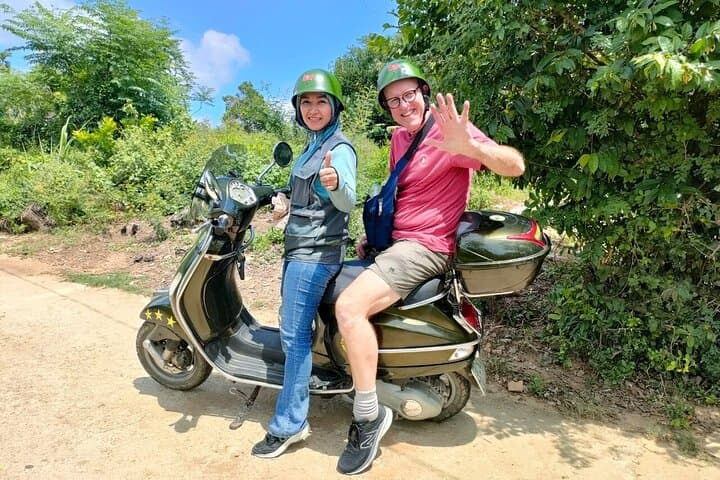
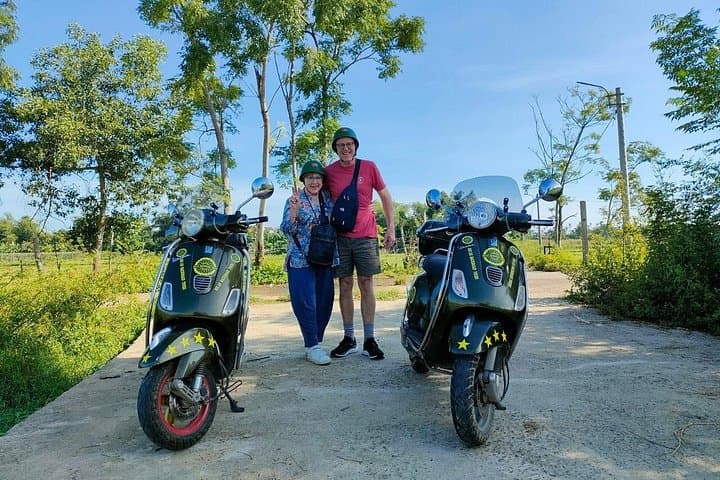

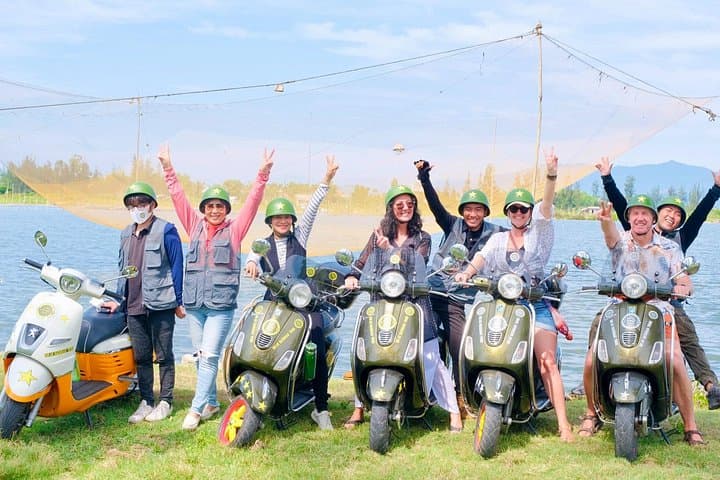
The tour opens with the soft rumble of a vintage Vespa and the Old Town receding in the rearview—yellow houses and lantern-lit streets give way to green rice paddies and slow-moving canals. The air carries the scent of wet earth and frying shallots; water buffalo graze at the field edges, and narrow lanes thread between family plots where daily life is on display.
The tour opens with the soft rumble of a vintage Vespa and the Old Town receding in the rearview—yellow houses and lantern-lit streets give way to green rice paddies and slow-moving canals. The air carries the scent of wet earth and frying shallots; water buffalo graze at the field edges, and narrow lanes thread between family plots where daily life is on display.
Hoi An’s countryside has been shaped by river sediments from the Thu Bon River and centuries of coastal trade. Once a major trading port between the 15th and 19th centuries, the region blends Cham, Chinese and Japanese influences visible in village temples and communal houses. Tra Nhieu’s Whale Temple reflects the fishing communities’ reverence for the sea, while local crafts—mat weaving, rice-wine distilling, bird’s-nest farming—preserve techniques passed down through generations.
Expect hands-on village visits: learning rice noodle making, watching traditional mat weaving, and sharing a home-cooked set menu with a local family. The route is flat and low-elevation, mainly paved and compact dirt lanes; an experienced, licensed driver handles navigation and safety, so guests can focus on photos and conversation.
Practical notes: plan for four to five hours, bring sun protection and a light rain layer for sudden tropical showers, and wear closed-toe shoes for farm stops. Stay hydrated—the lowland heat builds quickly—and be prepared to remove shoes when entering private homes as a cultural courtesy. This half-day ride balances sensory immersion with accessible logistics, making rural Hoi An immediate, tangible and easy to explore.