THE ADVENTURE COLLECTIVE® · Independent discovery and booking for outdoor travel

Drive the dramatic Hai Van Pass, explore Hue’s Imperial City, then float into Phong Nha’s subterranean rivers on a two-day World Heritage route. This compact itinerary pairs historic sites with spectacular karst caves—ideal for travelers who want big scenery without an extended trek.
Drive the dramatic Hai Van Pass, explore Hue’s Imperial City, then float into Phong Nha’s subterranean rivers on a two-day World Heritage route. This compact itinerary pairs historic sites with spectacular karst caves—ideal for travelers who want big scenery without an extended trek.
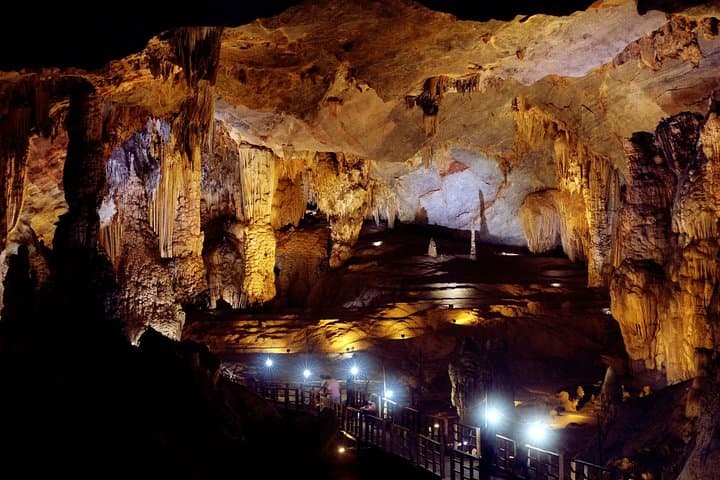
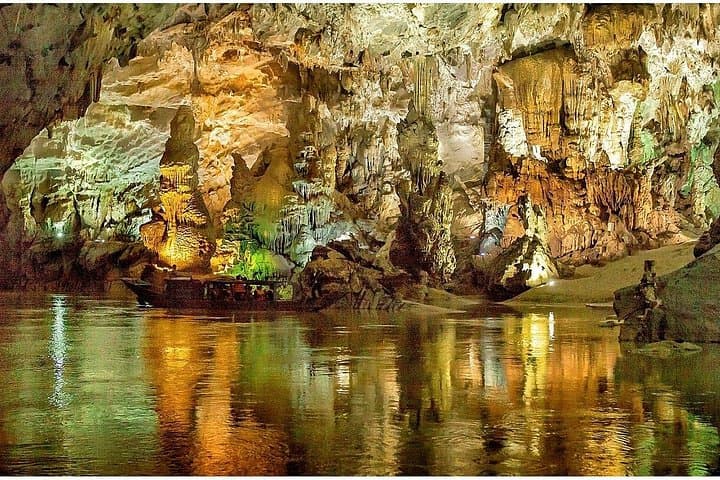
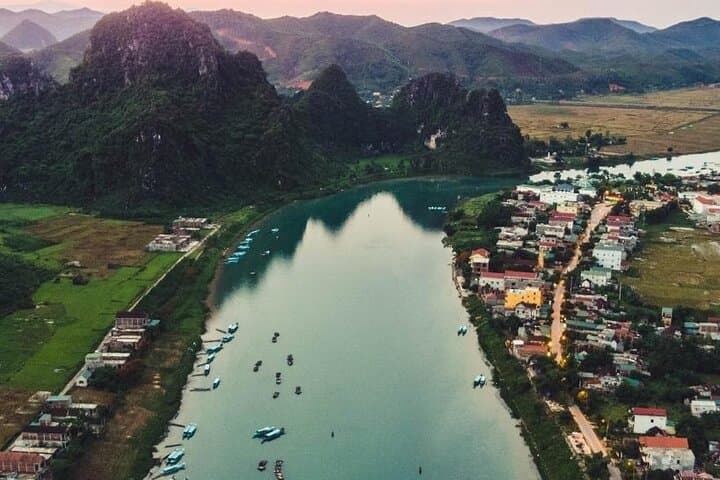
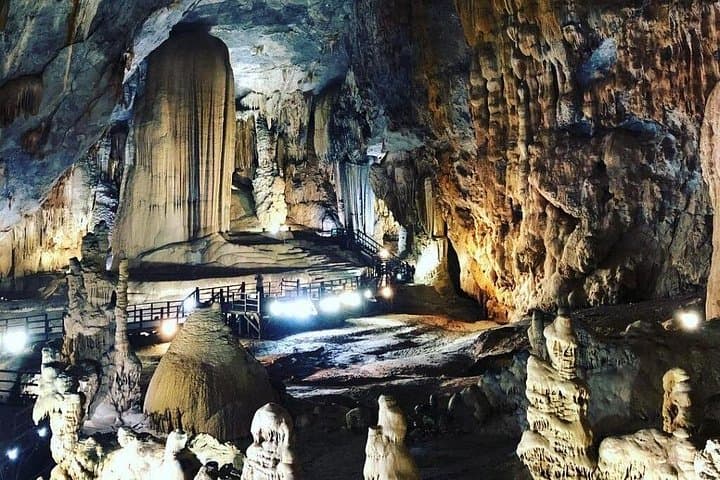
The road unfurls north from Hoi An—sea on one side, limestone spines on the other—before climbing the Hai Van Pass and dropping into the imperial hues of Hue. By late afternoon the tour reaches Phong Nha-Kẻ Bàng, where a dark river slips from the throat of the karst and a boat eases into a cave mouth lined with curtains of calcite.
Verified experiences and guided adventures in the surrounding area.
Operated by Dragon Travel Viet · Phong Nha, Quảng Bình Province
The road unfurls north from Hoi An—sea on one side, limestone spines on the other—before climbing the Hai Van Pass and dropping into the imperial hues of Hue. By late afternoon the tour reaches Phong Nha-Kẻ Bàng, where a dark river slips from the throat of the karst and a boat eases into a cave mouth lined with curtains of calcite.
This two-day route threads history and geology. Hai Van Pass (peak ~496 m) has long been a climatic and political divide along Vietnam’s central coast. Hue’s Imperial City preserves Nguyen dynasty architecture and the layered histories of the region. Phong Nha-Kẻ Bàng is a UNESCO World Heritage site whose karst began forming in the Palaeozoic; explorers have documented extensive cave systems and underground rivers, including cave mouths where the Sơn River runs inland for nearly 19 km.
Expect a mix of highway driving and short walks—boardwalks and damp cave stone—plus a guided boat through the show caves. Rooms are typically in a 3-star Phong Nha hotel overnight; meals are included per the itinerary.
Practical notes: plan for humidity and slippery surfaces—good traction footwear matters. Morning light gives the best cave photography and cooler travel between stops. Bookings generally include entrance fees, private transport, and guide; bring local currency for small purchases and tips. Respect cave formations—do not touch stalactites—and follow your guide’s safety briefings. This itinerary is well suited to travelers seeking geological spectacle with manageable physical strain.
easy.
2 days.
Minimal fitness required—short moderate walks, boarding small boats, and some stairs; suitable for most travelers
Expect several hours of driving across two days—most transfers use private vehicles with scenic stops like Hai Van Pass and Hue en route.
Guides run the short cave boat tours; children should sit with an adult and follow life-jacket requirements—check operator age rules when booking.
Standard Vietnam entry rules apply; cave and park entrances are included in most tour prices—no extra permits are usually required for visitor caves.
This tour is offered as a private transfer with included accommodations and meals—ask the operator about timing adjustments or adding excursions like Dark Cave adventure options.
Phong Nha-Kẻ Bàng’s karst landscape has evolved since the Palaeozoic and the area links central Vietnamese coastal history to imperial Hue, which served as the Nguyen capital.
Cave formations and subterranean rivers are fragile—stay on marked paths, avoid touching formations, pack out waste, and follow local guide rules to reduce impact.
Dragon Travel Viet operates guided outdoor trips and adventures with an emphasis on safety, stewardship, and memorable experiences.
The road unfurls north from Hoi An—sea on one side, limestone spines on the other—before climbing the Hai Van Pass and dropping into the imperial hues of Hue. By late afternoon the tour reaches Phong Nha-Kẻ Bàng, where a dark river slips from the throat of the karst and a boat eases into a cave mouth lined with curtains of calcite.
The road unfurls north from Hoi An—sea on one side, limestone spines on the other—before climbing the Hai Van Pass and dropping into the imperial hues of Hue. By late afternoon the tour reaches Phong Nha-Kẻ Bàng, where a dark river slips from the throat of the karst and a boat eases into a cave mouth lined with curtains of calcite.
This two-day route threads history and geology. Hai Van Pass (peak ~496 m) has long been a climatic and political divide along Vietnam’s central coast. Hue’s Imperial City preserves Nguyen dynasty architecture and the layered histories of the region. Phong Nha-Kẻ Bàng is a UNESCO World Heritage site whose karst began forming in the Palaeozoic; explorers have documented extensive cave systems and underground rivers, including cave mouths where the Sơn River runs inland for nearly 19 km.
Expect a mix of highway driving and short walks—boardwalks and damp cave stone—plus a guided boat through the show caves. Rooms are typically in a 3-star Phong Nha hotel overnight; meals are included per the itinerary.
Practical notes: plan for humidity and slippery surfaces—good traction footwear matters. Morning light gives the best cave photography and cooler travel between stops. Bookings generally include entrance fees, private transport, and guide; bring local currency for small purchases and tips. Respect cave formations—do not touch stalactites—and follow your guide’s safety briefings. This itinerary is well suited to travelers seeking geological spectacle with manageable physical strain.