THE ADVENTURE COLLECTIVE® · Independent discovery and booking for outdoor travel

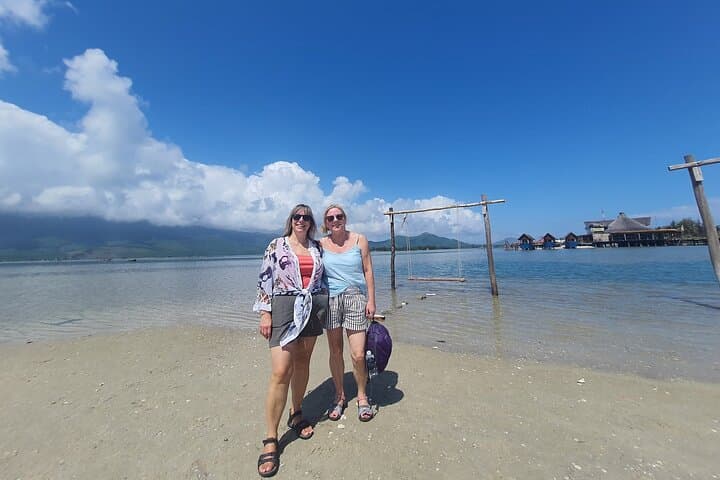
Drive the storied Hai Van Pass between Hoi An and Hue and stop at Marble Mountains, Lang Co Beach and Lap An Lagoon on a private transfer. Expect dramatic coastal views, short temple walks and artisan workshops along a 4–5 hour route.
Drive the storied Hai Van Pass between Hoi An and Hue and stop at Marble Mountains, Lang Co Beach and Lap An Lagoon on a private transfer. Expect dramatic coastal views, short temple walks and artisan workshops along a 4–5 hour route.
You leave Hoi An before dawn, the town’s low roofs shrinking behind you as the road skims rice paddies and neon-green orchards.
Verified experiences and guided adventures in the surrounding area.
Operated by Northern Vietnam Tours · Hue, Thừa Thiên–Huế
You leave Hoi An before dawn, the town’s low roofs shrinking behind you as the road skims rice paddies and neon-green orchards.
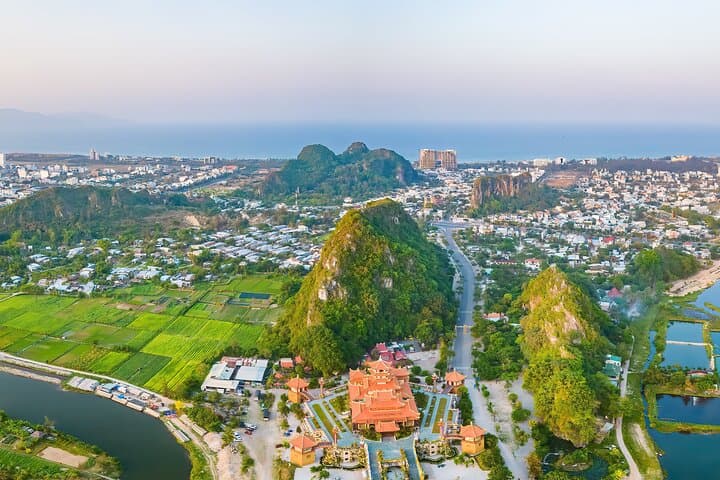
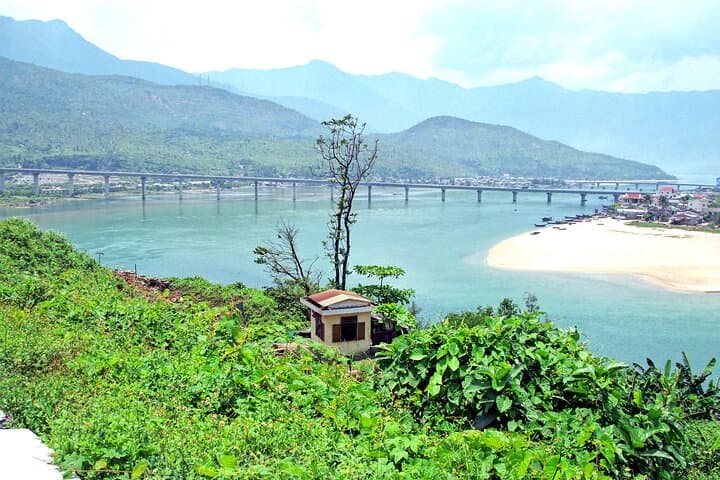
The drive climbs toward Hai Van Pass, where the highway tightens and the sea drops away in a sequence of surf-streaked coves. At lookouts the ocean seems to dare you: blue, restless, and far below. On the way down, Marble Mountains rise like carved islands of limestone—five peaks pocked with caves, small pagodas and workshops where artisans chisel white and gray stone into figures and household pieces.
This corridor between Da Nang and Hue has long been a geographical seam—Truong Son ridgelines meeting the South China Sea—shaping local fishing cultures, Cham and Vietnamese histories, and battlefield logistics in the modern era. Geologically, the limestone hummocks are fossil-rich and honeycombed by small caves that became meditation shrines centuries ago.
Practical edge: the transfer is private, 4–5 hours door-to-door, with planned stops at Marble Mountains, Hai Van Pass vistas, Lang Co Beach, Lap An Lagoon and Hue’s Thanh Toan Bridge. Admission to pagodas and caves is usually pay-as-you-go; stone workshops accept cash. Expect short walks of uneven steps at viewpoints and temple entrances—comfortable shoes and steady footing are essential.
Timing matters: aim for early-morning passages to avoid midday haze on the pass and late-afternoon traffic. Bring sun protection, a light layer for breezy ridgelines and a compact daypack for water and camera gear. The route rewards curiosity—each stop is compact but full of texture: fishing boats, salt flats, sculptors’ benches and a sea that never quits.
easy.
4–5 hours.
Suitable for most fitness levels; expect short, easy uphill/downhill walks and steps at viewpoints and caves.
The private transfer and stops take about 4–5 hours door-to-door, depending on traffic and time spent at each stop.
No—pagoda and cave admissions and any guided cave access are typically paid on site and are not included in the transfer price.
Yes; pickups are arranged from Hoi An accommodations—confirm the specific pickup point when booking.
Yes; the highway is well-traveled and maintained, but it’s winding with drop-offs—drivers experienced on the route handle the road and weather can affect visibility.
Hai Van Pass has long been a natural boundary between imperial regions, and Marble Mountains have been a Buddhist and artisan center for centuries.
Coastal development pressures Lang Co and Lap An—choose local eateries and avoid disturbing fragile lagoon habitats and temple relics.
Northern Vietnam Tours operates guided outdoor trips and adventures with an emphasis on safety, stewardship, and memorable experiences.
You leave Hoi An before dawn, the town’s low roofs shrinking behind you as the road skims rice paddies and neon-green orchards.
You leave Hoi An before dawn, the town’s low roofs shrinking behind you as the road skims rice paddies and neon-green orchards.
The drive climbs toward Hai Van Pass, where the highway tightens and the sea drops away in a sequence of surf-streaked coves. At lookouts the ocean seems to dare you: blue, restless, and far below. On the way down, Marble Mountains rise like carved islands of limestone—five peaks pocked with caves, small pagodas and workshops where artisans chisel white and gray stone into figures and household pieces.
This corridor between Da Nang and Hue has long been a geographical seam—Truong Son ridgelines meeting the South China Sea—shaping local fishing cultures, Cham and Vietnamese histories, and battlefield logistics in the modern era. Geologically, the limestone hummocks are fossil-rich and honeycombed by small caves that became meditation shrines centuries ago.
Practical edge: the transfer is private, 4–5 hours door-to-door, with planned stops at Marble Mountains, Hai Van Pass vistas, Lang Co Beach, Lap An Lagoon and Hue’s Thanh Toan Bridge. Admission to pagodas and caves is usually pay-as-you-go; stone workshops accept cash. Expect short walks of uneven steps at viewpoints and temple entrances—comfortable shoes and steady footing are essential.
Timing matters: aim for early-morning passages to avoid midday haze on the pass and late-afternoon traffic. Bring sun protection, a light layer for breezy ridgelines and a compact daypack for water and camera gear. The route rewards curiosity—each stop is compact but full of texture: fishing boats, salt flats, sculptors’ benches and a sea that never quits.