THE ADVENTURE COLLECTIVE® · Independent discovery and booking for outdoor travel

Walk Hoi An’s Old Town at sunset on a 2.5-hour guided food crawl that samples banh mi, cao lầu, grilled pork rolls and sweets. Small groups, local stops, and a guide who explains the town’s food history make this a compact, authentic evening out.
Walk Hoi An’s Old Town at sunset on a 2.5-hour guided food crawl that samples banh mi, cao lầu, grilled pork rolls and sweets. Small groups, local stops, and a guide who explains the town’s food history make this a compact, authentic evening out.
The lantern-lit alleys of Hoi An breathe with the smell of charcoal and soy as the sun slides behind the low-roofed shophouses. On this 2.5-hour walking tour you move with the current of locals—past a generational bakery, narrow market stalls and the riverside where the Thu Bồn River seems to push its reflection of lamps toward the bridge.
Verified experiences and guided adventures in the surrounding area.
Operated by Intrepid Urban Adventures - Vietnam · Hoi An, Quang Nam
The lantern-lit alleys of Hoi An breathe with the smell of charcoal and soy as the sun slides behind the low-roofed shophouses. On this 2.5-hour walking tour you move with the current of locals—past a generational bakery, narrow market stalls and the riverside where the Thu Bồn River seems to push its reflection of lamps toward the bridge.
Hoi An was a major trading port from the 15th to 19th centuries; the town’s layered architecture—Chinese assembly halls, a Japanese-covered bridge, and French colonial facades—frames a food culture built from cross-cultural exchange. The region’s alluvial soils around the Thu Bồn plain feed rice and herbs that give dishes like cao lầu and fresh rice-paper rolls their distinct texture and aroma.
Your guide points out family-run stalls where recipes are passed down the same way as the town’s carpentry and lantern-making traditions. Between bites you’ll hear about Hoi An’s UNESCO status and the municipal ticket that helps preserve the Old Town.
Practical: the tour covers short stretches on flat pedestrian streets—expect frequent stops at low plastic stools. Bring small bills for entrance and extra snacks; vendors are cash-first. Wear closed-toe shoes for crowded alleys and a light layer for waterfront breezes. If you travel in monsoon months, carry a compact umbrella and be ready for menu changes as small vendors adjust to the day’s catch and produce.
This tour suits anyone wanting an immediate taste of Hoi An’s food scene—hands-on, social, and rooted in local rhythms.
easy.
2–3 hours.
Suitable for all fitness levels; involves standing and short, flat walks between stops.
Yes—the municipal entrance ticket (120,000 VND) is required to enter the Old Town; buy it before the tour to avoid delays.
This specific tour states it cannot cater to dietary requirements, though guides can advise which dishes contain common allergens.
Yes; the tour is rated easy with short, flat walking sections and frequent seating at food stops—minimum age is 6.
Expect four food stops and two drinks across the 2.5-hour route, with portions sized to share as a dinner.
Hoi An grew as an international trading port from the 15th–19th centuries; its preserved Old Town reflects Chinese, Japanese and European influences and is a UNESCO World Heritage Site.
Visitor fees support preservation of the Old Town’s historic buildings; choose vendors who use reusable containers or recycle where possible to reduce plastic waste.
Intrepid Urban Adventures - Vietnam operates guided outdoor trips and adventures with an emphasis on safety, stewardship, and memorable experiences.
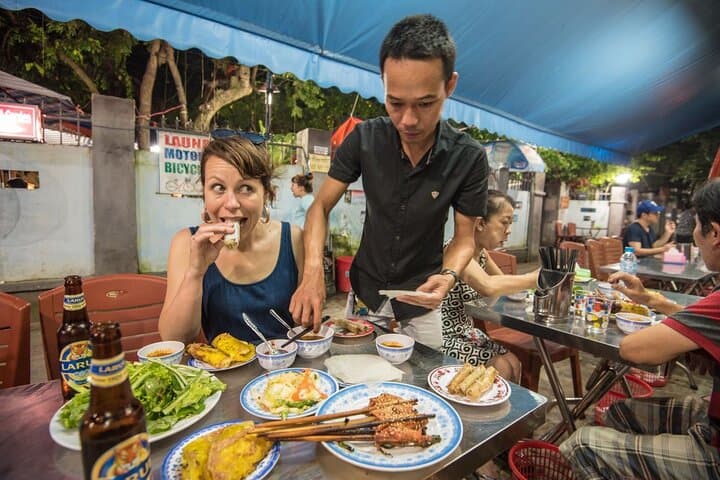


The lantern-lit alleys of Hoi An breathe with the smell of charcoal and soy as the sun slides behind the low-roofed shophouses. On this 2.5-hour walking tour you move with the current of locals—past a generational bakery, narrow market stalls and the riverside where the Thu Bồn River seems to push its reflection of lamps toward the bridge.
The lantern-lit alleys of Hoi An breathe with the smell of charcoal and soy as the sun slides behind the low-roofed shophouses. On this 2.5-hour walking tour you move with the current of locals—past a generational bakery, narrow market stalls and the riverside where the Thu Bồn River seems to push its reflection of lamps toward the bridge.
Hoi An was a major trading port from the 15th to 19th centuries; the town’s layered architecture—Chinese assembly halls, a Japanese-covered bridge, and French colonial facades—frames a food culture built from cross-cultural exchange. The region’s alluvial soils around the Thu Bồn plain feed rice and herbs that give dishes like cao lầu and fresh rice-paper rolls their distinct texture and aroma.
Your guide points out family-run stalls where recipes are passed down the same way as the town’s carpentry and lantern-making traditions. Between bites you’ll hear about Hoi An’s UNESCO status and the municipal ticket that helps preserve the Old Town.
Practical: the tour covers short stretches on flat pedestrian streets—expect frequent stops at low plastic stools. Bring small bills for entrance and extra snacks; vendors are cash-first. Wear closed-toe shoes for crowded alleys and a light layer for waterfront breezes. If you travel in monsoon months, carry a compact umbrella and be ready for menu changes as small vendors adjust to the day’s catch and produce.
This tour suits anyone wanting an immediate taste of Hoi An’s food scene—hands-on, social, and rooted in local rhythms.