THE ADVENTURE COLLECTIVE® · Independent discovery and booking for outdoor travel

Taste Hoi An’s famous street foods on a 2–3 hour guided walking tour through the old quarter. Sample white rose dumplings, Cao Lầu noodles, Bánh Mì and finish with herbal tea while learning about the town’s trading-port history.
Taste Hoi An’s famous street foods on a 2–3 hour guided walking tour through the old quarter. Sample white rose dumplings, Cao Lầu noodles, Bánh Mì and finish with herbal tea while learning about the town’s trading-port history.
Lantern light bounces off wet cobbles as the group moves from a narrow alley to the riverfront, the air threaded with lemongrass, grilled pork, and frying rice batter. A guide points out a workshop doorway where translucent white rose dumplings steam in bamboo baskets; nearby, a vendor flips crispy rice pancakes on a charcoal skillet.
Verified experiences and guided adventures in the surrounding area.
Operated by Asia Tour Booking · Hoi An, Quang Nam
Lantern light bounces off wet cobbles as the group moves from a narrow alley to the riverfront, the air threaded with lemongrass, grilled pork, and frying rice batter. A guide points out a workshop doorway where translucent white rose dumplings steam in bamboo baskets; nearby, a vendor flips crispy rice pancakes on a charcoal skillet.
Hoi An grew wealthy as a 15th–19th century trading port on the Thu Bồn River, where alluvial soils and river bends shaped a compact town of wooden shop-houses and tiled roofs. The town’s architecture reflects Chinese, Japanese and later French influences, and even local dishes tell that cultural story—Cao Lầu noodles use a local well’s alkaline water and rice cakes recall Cham-era traditions.
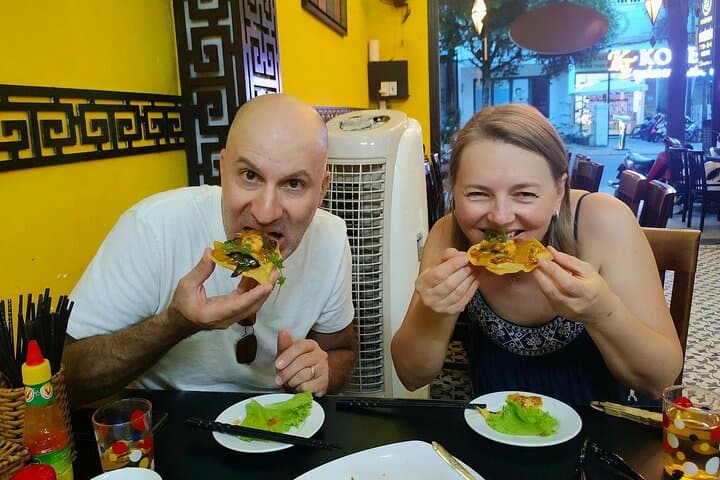
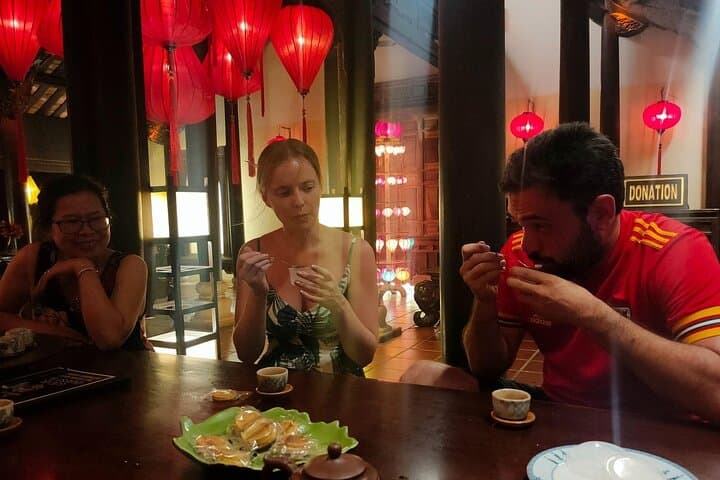
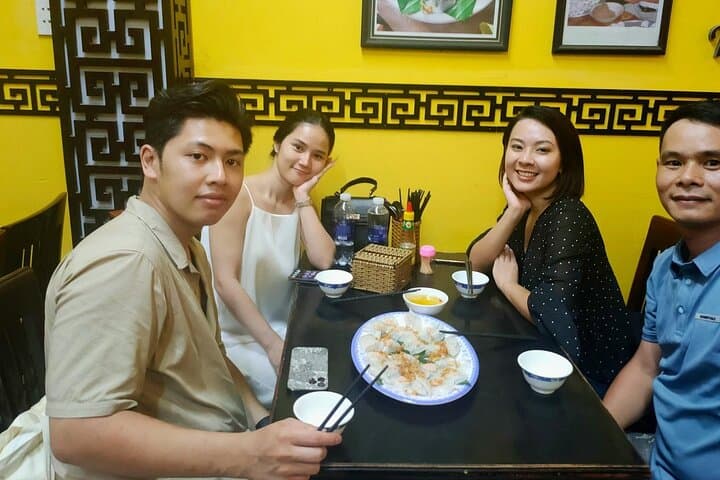
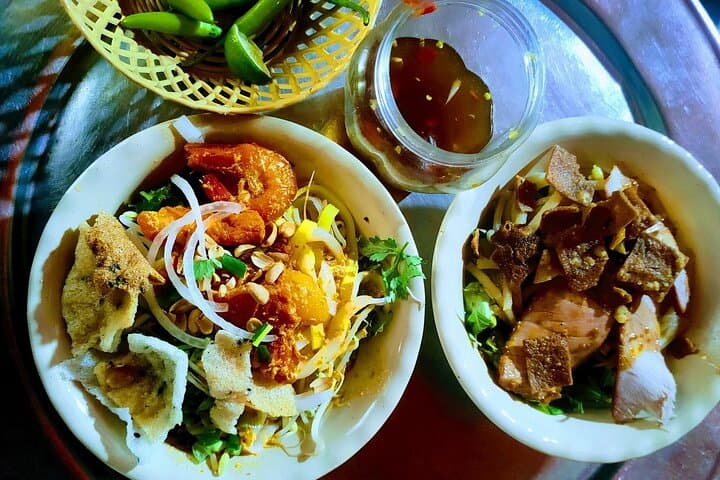
On this 2–3 hour walking tour, participants sample water-fern cake, white rose, Bánh Mì, Cao Lầu and grilled pork, and end with a cooling herbal tea in the old quarter. Stops include a small workshop demonstration and frequent street-side tastings; groups are small and paced for easy walking, with bottled water provided.
Practical note: bring small bills for extra snacks and souvenirs, wear comfortable walking shoes for uneven cobbles, and expect compact crowds in the evening. If you have allergies or dietary preferences, notify the operator before booking so the menu can be adjusted. The route is flat but involves standing while sampling; plan to continue exploring Hoi An’s lantern-lit streets on your own after the tour.
easy.
2–3 hours.
Suitable for most fitness levels; involves walking on flat, cobbled streets and brief standing at food stalls.
The tour runs about 2–3 hours at a relaxed walking pace with frequent food stops and short demonstrations.
Yes—vegetarian, vegan and gluten-free requests can be handled if you notify the operator when booking.
The route is flat and family-friendly, but it involves standing at stalls; infants must sit on an adult’s lap per the provider’s policy.
Most street vendors accept cash; bring small Vietnamese dong for purchases beyond what’s included.
Hoi An was a major Southeast Asian trading port from the 15th to 19th centuries; its mix of Chinese, Japanese and European merchant houses shaped its cuisine and streetscapes.
Tour operators encourage reduced plastic use and support small family-run workshops; opt for reusable containers and buy from local artisans to keep tourism benefits local.
Asia Tour Booking operates guided outdoor trips and adventures with an emphasis on safety, stewardship, and memorable experiences.
Lantern light bounces off wet cobbles as the group moves from a narrow alley to the riverfront, the air threaded with lemongrass, grilled pork, and frying rice batter. A guide points out a workshop doorway where translucent white rose dumplings steam in bamboo baskets; nearby, a vendor flips crispy rice pancakes on a charcoal skillet.
Lantern light bounces off wet cobbles as the group moves from a narrow alley to the riverfront, the air threaded with lemongrass, grilled pork, and frying rice batter. A guide points out a workshop doorway where translucent white rose dumplings steam in bamboo baskets; nearby, a vendor flips crispy rice pancakes on a charcoal skillet.
Hoi An grew wealthy as a 15th–19th century trading port on the Thu Bồn River, where alluvial soils and river bends shaped a compact town of wooden shop-houses and tiled roofs. The town’s architecture reflects Chinese, Japanese and later French influences, and even local dishes tell that cultural story—Cao Lầu noodles use a local well’s alkaline water and rice cakes recall Cham-era traditions.
On this 2–3 hour walking tour, participants sample water-fern cake, white rose, Bánh Mì, Cao Lầu and grilled pork, and end with a cooling herbal tea in the old quarter. Stops include a small workshop demonstration and frequent street-side tastings; groups are small and paced for easy walking, with bottled water provided.
Practical note: bring small bills for extra snacks and souvenirs, wear comfortable walking shoes for uneven cobbles, and expect compact crowds in the evening. If you have allergies or dietary preferences, notify the operator before booking so the menu can be adjusted. The route is flat but involves standing while sampling; plan to continue exploring Hoi An’s lantern-lit streets on your own after the tour.