THE ADVENTURE COLLECTIVE® · Independent discovery and booking for outdoor travel

Get hands-on with sericulture in Hoi An: visit mulberry gardens, feed silkworms, watch cocoons become thread, and learn Cham weaving on traditional looms. This three-hour experience blends agricultural practice, living history, and a chance to shop or tailor real silk.
Get hands-on with sericulture in Hoi An: visit mulberry gardens, feed silkworms, watch cocoons become thread, and learn Cham weaving on traditional looms. This three-hour experience blends agricultural practice, living history, and a chance to shop or tailor real silk.
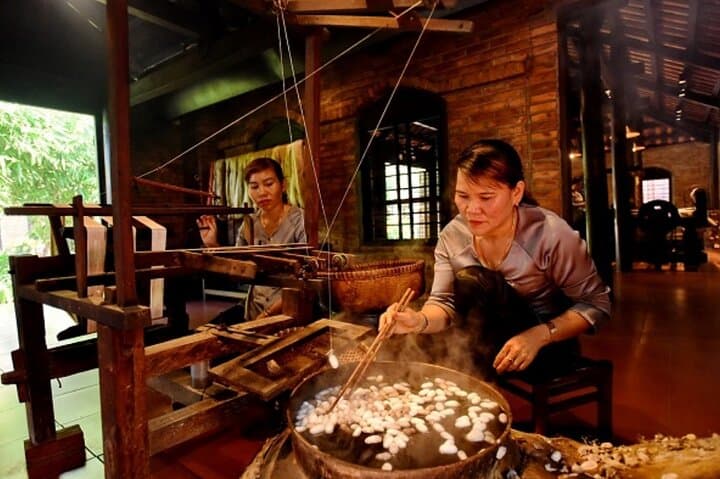
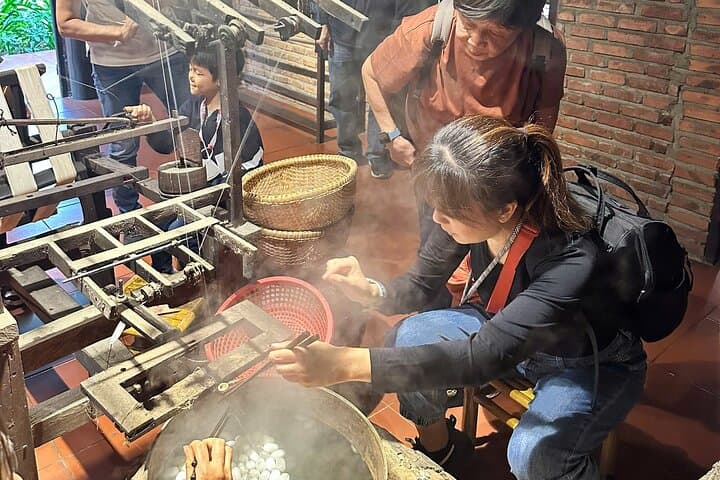
You step off the motorbike into the scent of mulberry leaves and warm steam rising from a cauldron of cocoons — Hoi An’s countryside opens like a working page of craft history.
Verified experiences and guided adventures in the surrounding area.
Operated by Sanna Tour JSC · Hoi An, Quang Nam
You step off the motorbike into the scent of mulberry leaves and warm steam rising from a cauldron of cocoons — Hoi An’s countryside opens like a working page of craft history.
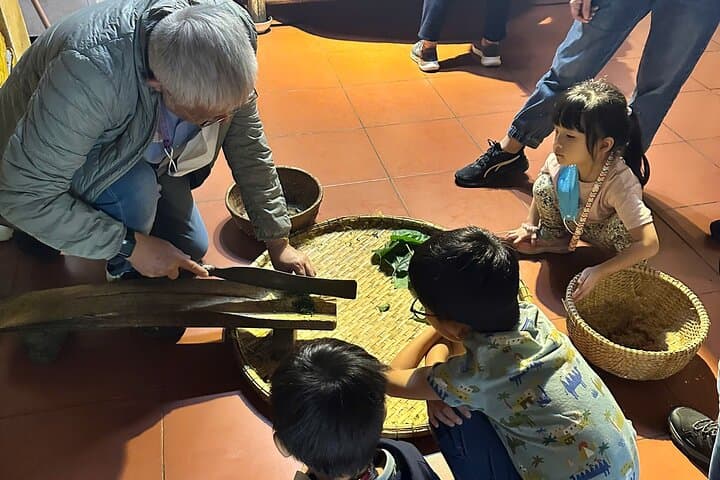
The morning moves at a human pace: mulberry gardens where leaves are chosen by hand, silkworm houses where larvae crowd their trays and respond to your outstretched fingers, then the quiet scrape of wooden looms at Cuu Dien House. This is both agricultural labor and living museum. Hoi An’s role as a trading port brought silk to its market centuries ago; the Cham people refined patterns and techniques from the 5th–15th centuries that still guide looms today.
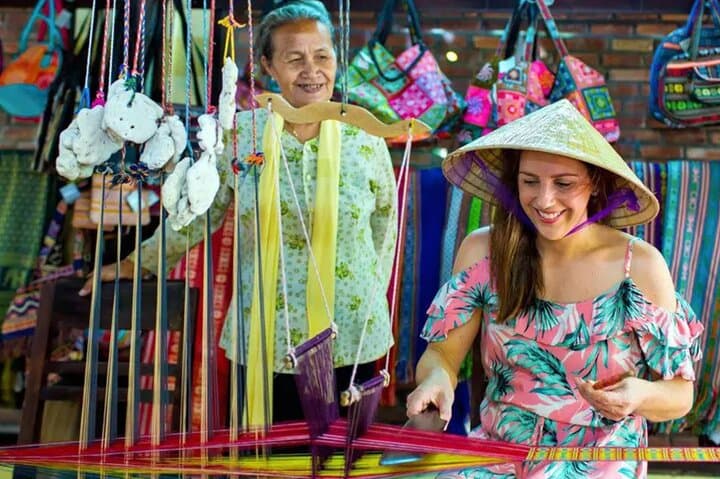
Geology is subtle here — alluvial plains and irrigation canals shape small farms and support mulberry cultivation. Culture shows in the rhythm of tasks: feeding silkworms, boiling cocoons to release threads, and the careful tensioning of warp and weft. Guides explain how to tell pure silk from synthetic and why weaving remains a labor-intensive economy.
Practical details are straightforward. The experience runs about three hours with round-trip transfers and a local lunch included. Expect short walks on flat, sometimes muddy paths and hands-on stations where you’ll try feeding larvae and operating a shuttle on a loom. Bring sun protection and modest attire for village visits, and carry cash for small purchases. If you want a quieter visit, choose a morning slot to avoid midday humidity and crowds; the guide will field questions and help with tailoring or shopping after the demonstration.
easy.
3 hours.
Suitable for most visitors; minimal walking on flat terrain and short standing periods during demonstrations
Yes — the tour is family-friendly and rated easy; children should be supervised around boiling stations and loom equipment.
No — round-trip transfers from central Hoi An hotels are included; if outside the pick-up zone you may be asked to meet at a designated location.
Yes — the workshop offers tailoring and sales of handmade silk; expect a range of prices and the option to order custom pieces after measurements.
Casual, modest clothing that can get dusty; closed-toe shoes and a hat are recommended, and bring a light layer for cooler mornings.
Hoi An flourished as a maritime trading port from the 15th century; Cham weaving traditions predate Vietnamese control and influenced local textile motifs for centuries.
The experience supports small-scale artisans and encourages buying handwoven silk; visitors should avoid mass-produced imitations and minimize waste by declining plastic bags.
Sanna Tour JSC operates guided outdoor trips and adventures with an emphasis on safety, stewardship, and memorable experiences.
You step off the motorbike into the scent of mulberry leaves and warm steam rising from a cauldron of cocoons — Hoi An’s countryside opens like a working page of craft history.
You step off the motorbike into the scent of mulberry leaves and warm steam rising from a cauldron of cocoons — Hoi An’s countryside opens like a working page of craft history.
The morning moves at a human pace: mulberry gardens where leaves are chosen by hand, silkworm houses where larvae crowd their trays and respond to your outstretched fingers, then the quiet scrape of wooden looms at Cuu Dien House. This is both agricultural labor and living museum. Hoi An’s role as a trading port brought silk to its market centuries ago; the Cham people refined patterns and techniques from the 5th–15th centuries that still guide looms today.
Geology is subtle here — alluvial plains and irrigation canals shape small farms and support mulberry cultivation. Culture shows in the rhythm of tasks: feeding silkworms, boiling cocoons to release threads, and the careful tensioning of warp and weft. Guides explain how to tell pure silk from synthetic and why weaving remains a labor-intensive economy.
Practical details are straightforward. The experience runs about three hours with round-trip transfers and a local lunch included. Expect short walks on flat, sometimes muddy paths and hands-on stations where you’ll try feeding larvae and operating a shuttle on a loom. Bring sun protection and modest attire for village visits, and carry cash for small purchases. If you want a quieter visit, choose a morning slot to avoid midday humidity and crowds; the guide will field questions and help with tailoring or shopping after the demonstration.