THE ADVENTURE COLLECTIVE® · Independent discovery and booking for outdoor travel

Cycle out of Hoi An’s old quarter into flat, irrigated rice paddies, ride a water buffalo in a shallow pond, and share a home-cooked meal with a rice-farming family. This five-hour tour mixes hands-on farming, local conversation, and uncomplicated outdoor activity.
Cycle out of Hoi An’s old quarter into flat, irrigated rice paddies, ride a water buffalo in a shallow pond, and share a home-cooked meal with a rice-farming family. This five-hour tour mixes hands-on farming, local conversation, and uncomplicated outdoor activity.
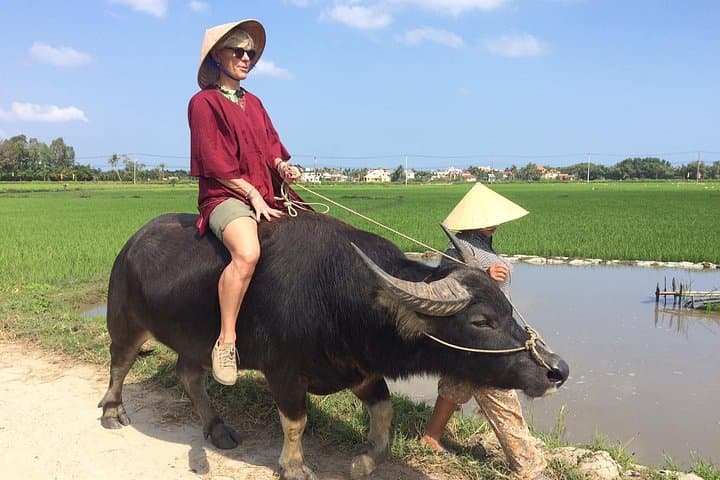
You push a bike down a narrow mud-slick track and the world opens into fields of bright green—water wicking across shallow paddies, a distant hand guiding a slow-moving water buffalo that seems almost amused at your arrival.
Verified experiences and guided adventures in the surrounding area.
Operated by Hoi An Eco Tourism · Hoi An, Quang Nam Province
You push a bike down a narrow mud-slick track and the world opens into fields of bright green—water wicking across shallow paddies, a distant hand guiding a slow-moving water buffalo that seems almost amused at your arrival.
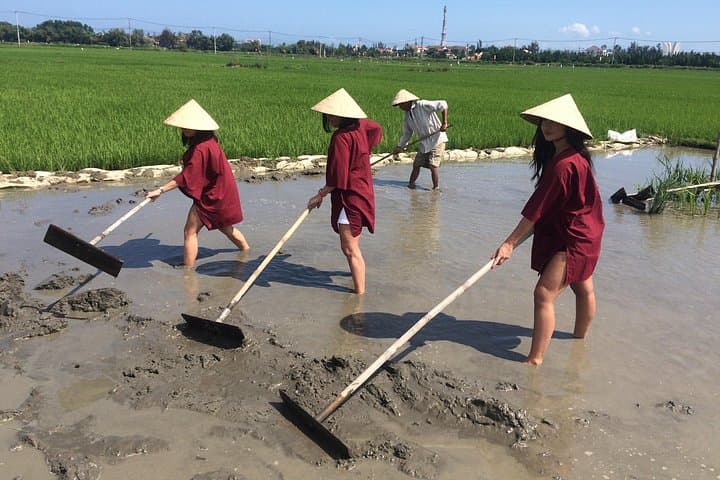
This half-day tour moves out of Hoi An’s lantern-lit streets and into the low Thu Bon River plain, where centuries of alluvial deposits have made some of central Vietnam’s most productive rice paddies. You’ll pedal past nipa palms and shrimp ponds, meet farmers whose routines follow tidal irrigation, and try traditional farmer clothes before stepping into the wet rice to learn ploughing techniques.
Rice farming here ties directly to Hoi An’s trading past: surplus grain fed the port that once linked Vietnam to merchants from Japan and Portugal. Geology—river-borne silt and a flat coastal plain—creates the saturated fields that make buffalo work effective and rice cultivation resilient.
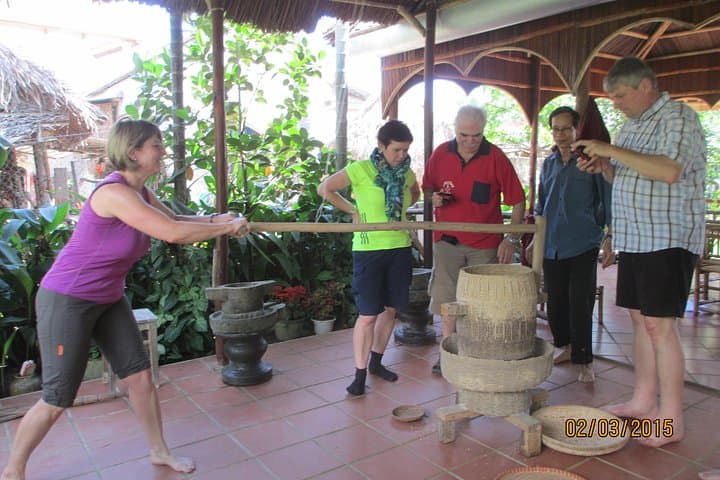
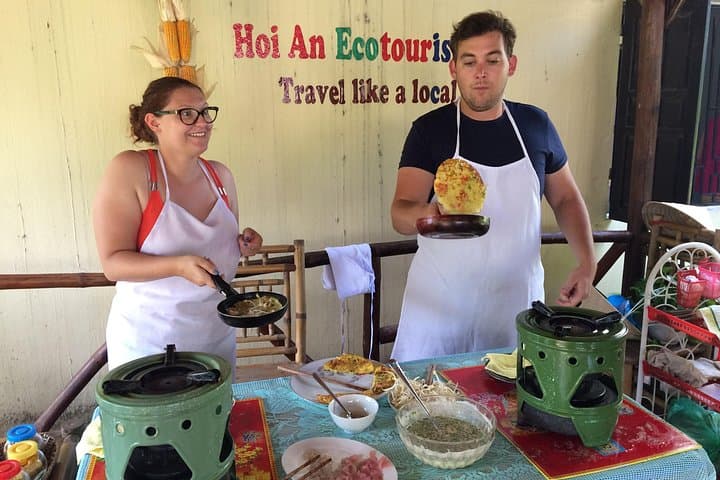
Practicalities are straightforward: the trip runs about five hours, includes hotel pickup, an English guide, bicycles, a hands-on rice farming session, buffalo riding at a small pond, and a home-cooked lunch with a local family that includes a live cooking demonstration.
Bring sturdy shoes you don’t mind getting muddy and sun protection; expect onion-skin humidity in summer and cooler, drier air in winter mornings. Respect farm routines, follow your guide around livestock, and keep camera gear in waterproof bags when you move into paddies.
This is as much cultural exchange as it is outdoor activity—simple mechanics of planting and water control meet the tactile memory of a buffalo’s slow pull and the taste of rice still warm from the family’s stove.
easy.
5 hours.
Suitable for most fitness levels; basic cycling ability and ability to walk in mud recommended
Yes—riding takes place at a small, controlled pond under guide supervision; follow instructions and keep movements slow to avoid startling the animal.
Children are allowed but must be supervised; infants typically sit with an adult during transport and activities vary by age and comfort with animals and mud.
No—basic cycling competence is enough; routes are flat and bikes are provided, but expect some short, uneven rural tracks.
The host family can often accommodate dietary preferences if informed at booking; notify any restrictions when you book.
Hoi An’s rice plains are part of the Thu Bon River delta system that historically supported the port town’s trade economy and sustained its communities.
Tour operators encourage low-impact visits—stay on paths, rinse gear off-site, and support family meals and local products to keep benefits flowing to farmers.
Hoi An Eco Tourism operates guided outdoor trips and adventures with an emphasis on safety, stewardship, and memorable experiences.
You push a bike down a narrow mud-slick track and the world opens into fields of bright green—water wicking across shallow paddies, a distant hand guiding a slow-moving water buffalo that seems almost amused at your arrival.
You push a bike down a narrow mud-slick track and the world opens into fields of bright green—water wicking across shallow paddies, a distant hand guiding a slow-moving water buffalo that seems almost amused at your arrival.
This half-day tour moves out of Hoi An’s lantern-lit streets and into the low Thu Bon River plain, where centuries of alluvial deposits have made some of central Vietnam’s most productive rice paddies. You’ll pedal past nipa palms and shrimp ponds, meet farmers whose routines follow tidal irrigation, and try traditional farmer clothes before stepping into the wet rice to learn ploughing techniques.
Rice farming here ties directly to Hoi An’s trading past: surplus grain fed the port that once linked Vietnam to merchants from Japan and Portugal. Geology—river-borne silt and a flat coastal plain—creates the saturated fields that make buffalo work effective and rice cultivation resilient.
Practicalities are straightforward: the trip runs about five hours, includes hotel pickup, an English guide, bicycles, a hands-on rice farming session, buffalo riding at a small pond, and a home-cooked lunch with a local family that includes a live cooking demonstration.
Bring sturdy shoes you don’t mind getting muddy and sun protection; expect onion-skin humidity in summer and cooler, drier air in winter mornings. Respect farm routines, follow your guide around livestock, and keep camera gear in waterproof bags when you move into paddies.
This is as much cultural exchange as it is outdoor activity—simple mechanics of planting and water control meet the tactile memory of a buffalo’s slow pull and the taste of rice still warm from the family’s stove.