THE ADVENTURE COLLECTIVE® · Independent discovery and booking for outdoor travel

Cycle through rice lanes, ride a basket boat down Cam Thanh’s channels, then learn to cook four classic Vietnamese dishes in Tra Que organic gardens. This private, six-hour experience combines easy cycling with hands-on farming and a professional cooking lesson.
Cycle through rice lanes, ride a basket boat down Cam Thanh’s channels, then learn to cook four classic Vietnamese dishes in Tra Que organic gardens. This private, six-hour experience combines easy cycling with hands-on farming and a professional cooking lesson.
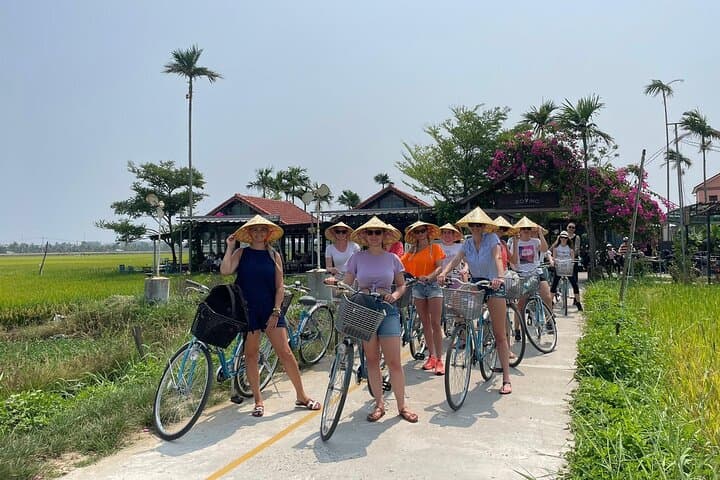
You start on a narrow lane where rice paddies stretch like a green promise and the air smells faintly of river mud and cilantro.
Verified experiences and guided adventures in the surrounding area.
Operated by Cooking Class in Tra Que Organic Vegetable Village · Hoi An, Quang Nam
You start on a narrow lane where rice paddies stretch like a green promise and the air smells faintly of river mud and cilantro.
A local guide fits you to a bicycle and the group moves at the steady pace of the countryside—flat lanes, patched cement, and the occasional water buffalo crossing. The ride takes you to Cam Thanh coconut village for a basket-boat glide through braided channels, then to Tra Que organic gardens where farmers show seed, soil, and seasonal care.
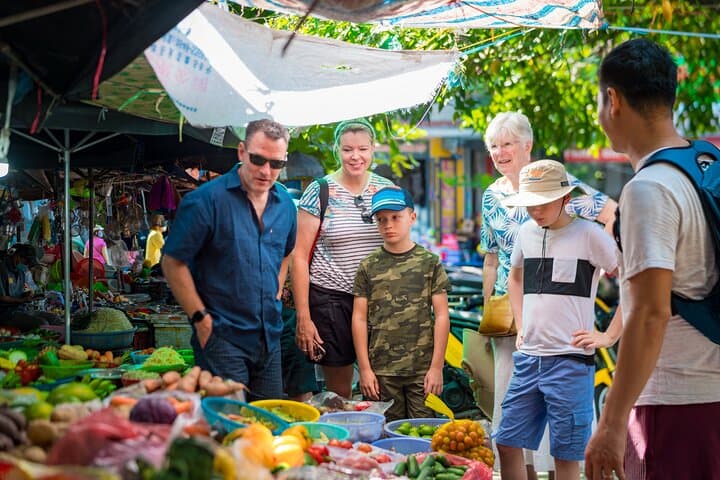
Hoi An’s trading history as a 15th–19th-century port still shapes the food: spices and techniques arrived by sea and mixed with local herbs to form dishes you’ll learn to prepare—green papaya salad, bánh xèo, spring rolls, and clay-pot fish.
Geologically, the low coastal plain here is alluvial—slow rivers and tidal flats that keep soils fertile and support the wet-rice system visible from the road.
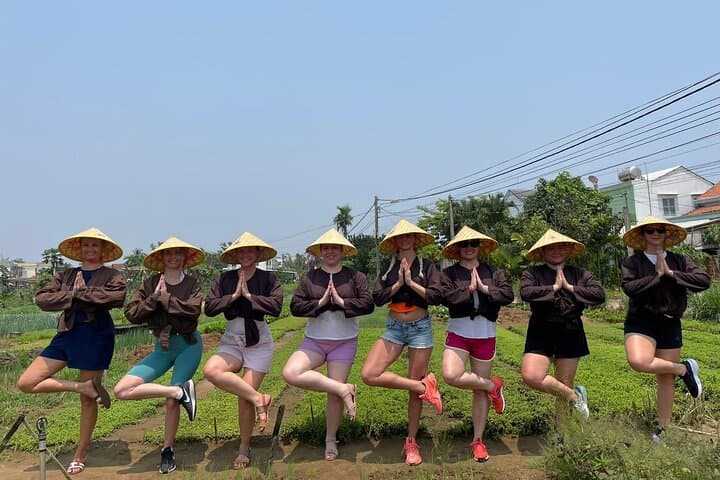
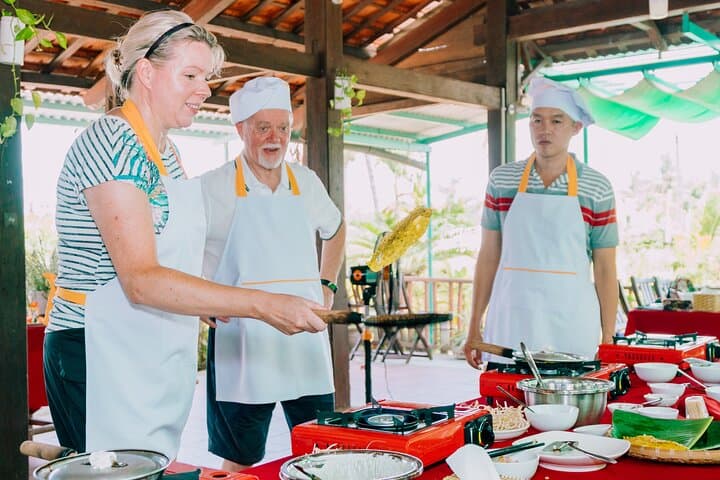
The practical half of the day is hands-on: you’ll weed, pound herbs, and take part in a guided cooking lesson led by a professional chef, then eat what you made. Expect six hours door-to-door with gentle cycling totaling roughly 8–12 km on mostly flat terrain and minimal elevation gain.
Bring sun protection, a refillable water bottle, and shoes you don’t mind getting dusty. If you have mobility or spinal issues this day can be bumpy during the farm work and basket boat; inform the operator at booking. The experience balances easy physical activity with cultural depth—good for anyone who wants to leave the old town for a clear taste of rural central Vietnam.
moderate.
6 hours.
Moderate fitness: able to cycle 8–12 km on flat rural paths and participate in light farm tasks.
Yes—vegetarian and vegan dishes can be prepared; please notify the operator when booking so substitutions can be arranged.
Cycling is on mostly flat village roads for about 8–12 km at an easy pace; basic cycling ability is sufficient.
Pick up and return to hotels within the Hoi An area by bicycle are included; confirm pickup point when you book.
Infants are allowed but must sit on an adult’s lap; the activity is not recommended for travelers with spinal injuries.
Hoi An was a major Southeast Asian trading port from the 15th to 19th centuries; Tra Que village preserves traditional herb and vegetable cultivation methods used for generations.
Tra Que farms practice organic methods and local guides encourage low-impact behavior—avoid single-use plastics and stay on paths to protect paddies and waterways.
Cooking Class in Tra Que Organic Vegetable Village operates guided outdoor trips and adventures with an emphasis on safety, stewardship, and memorable experiences.
You start on a narrow lane where rice paddies stretch like a green promise and the air smells faintly of river mud and cilantro.
You start on a narrow lane where rice paddies stretch like a green promise and the air smells faintly of river mud and cilantro.
A local guide fits you to a bicycle and the group moves at the steady pace of the countryside—flat lanes, patched cement, and the occasional water buffalo crossing. The ride takes you to Cam Thanh coconut village for a basket-boat glide through braided channels, then to Tra Que organic gardens where farmers show seed, soil, and seasonal care.
Hoi An’s trading history as a 15th–19th-century port still shapes the food: spices and techniques arrived by sea and mixed with local herbs to form dishes you’ll learn to prepare—green papaya salad, bánh xèo, spring rolls, and clay-pot fish.
Geologically, the low coastal plain here is alluvial—slow rivers and tidal flats that keep soils fertile and support the wet-rice system visible from the road.
The practical half of the day is hands-on: you’ll weed, pound herbs, and take part in a guided cooking lesson led by a professional chef, then eat what you made. Expect six hours door-to-door with gentle cycling totaling roughly 8–12 km on mostly flat terrain and minimal elevation gain.
Bring sun protection, a refillable water bottle, and shoes you don’t mind getting dusty. If you have mobility or spinal issues this day can be bumpy during the farm work and basket boat; inform the operator at booking. The experience balances easy physical activity with cultural depth—good for anyone who wants to leave the old town for a clear taste of rural central Vietnam.