THE ADVENTURE COLLECTIVE® · Independent discovery and booking for outdoor travel

Begin at Hoi An’s bustling market, sail a 25-minute river cruise, then learn to cook signature Vietnamese dishes with local chefs. This half-day experience blends hands-on technique with cultural insight and fresh ingredients.
Begin at Hoi An’s bustling market, sail a 25-minute river cruise, then learn to cook signature Vietnamese dishes with local chefs. This half-day experience blends hands-on technique with cultural insight and fresh ingredients.
The market wakes before the town does—stall lights flicker, vendors call out over baskets of herbs and fresh river prawns. You step into that pulse, a short walk between produce tables and trolleys, then slip onto a low boat for a 25-minute glide where sampans and riverside houses drift past like pages of local life.
Verified experiences and guided adventures in the surrounding area.
Operated by Hoi An Express Travel · Hoi An, Quang Nam
The market wakes before the town does—stall lights flicker, vendors call out over baskets of herbs and fresh river prawns. You step into that pulse, a short walk between produce tables and trolleys, then slip onto a low boat for a 25-minute glide where sampans and riverside houses drift past like pages of local life.
Hoi An’s food is the product of trade and tide: Cham rice fields, Chinese and Japanese merchant influences, and French-era ingredients converged to make dishes like Cao Lau and Quang noodle. The town’s geology—rice plains fed by the Thu Bon River—creates the vegetables and freshwater fish central to its cuisine.
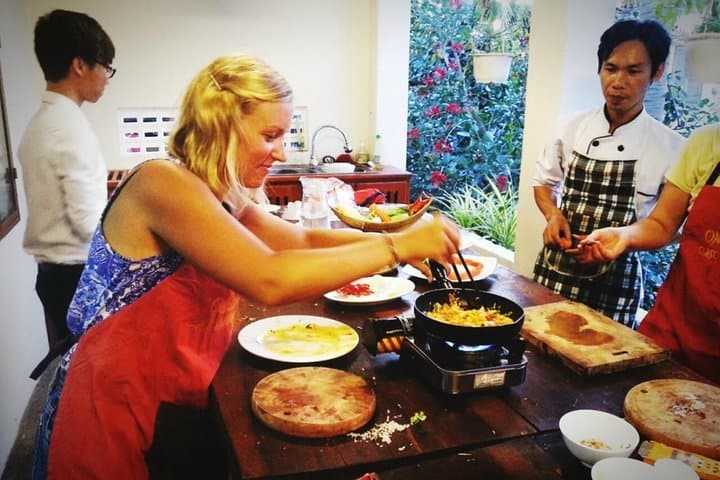
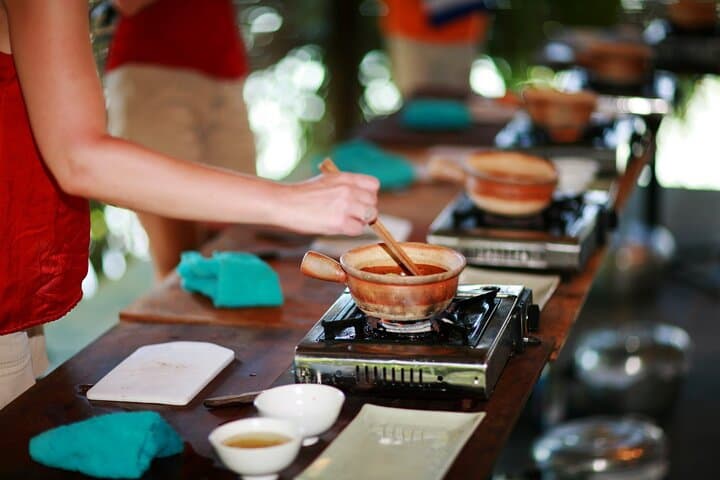
At the cooking school, chefs demonstrate and then coach you through hand-cut noodles, fragrant herbs, and precise seasoning. The class balances technique and taste: learn knife skills, starch handling for Cao Lau noodles, and how to balance fish sauce, lime, and sugar.
Practical edge: market shopping means cash, small bills, and a willingness to ask questions—vendor interaction is part of the lesson. The boat ride prefers calm conditions; bring a light rain layer in monsoon months. The class involves standing and repetitive motions for a few hours, but no prior cooking experience is required.
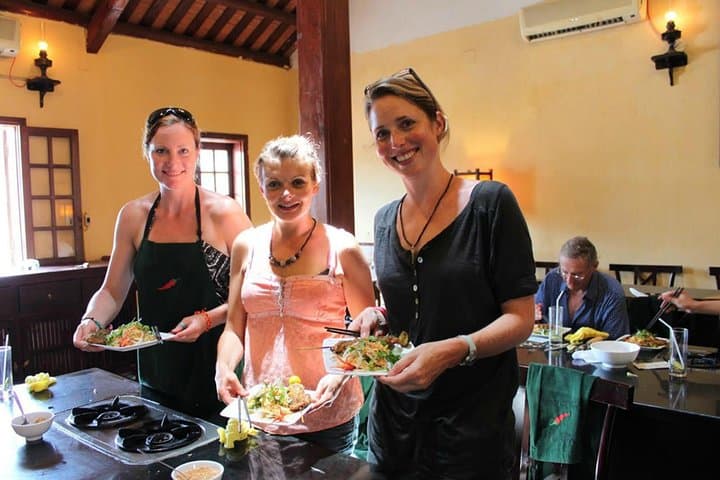
Timing tip: morning markets are liveliest and ingredients are freshest. If you care about sustainability, ask about seafood sourcing and opt for vegetable-focused options when available. Leave with recipes, a full plate, and a better sense of how Hoi An’s river and fields push its food forward.
easy.
4–5 hours.
Light activity: standing, short walks through market stalls, and basic food prep—suitable for most fitness levels.
Yes—hotel pickup and drop-off in Hoi An City Center are included in the booking.
Yes—vegetarian options are available; notify special dietary requirements at booking or on arrival.
The standard tour runs in English; other languages may be available on request—check when booking.
Children ages 6 and younger are free; adult pricing applies from age 7—consider attention span for the full class length.
Hoi An was a major Southeast Asian trading port from the 15th to 19th centuries, and its cuisine reflects Cham, Chinese, Japanese, and European influences.
Tour operators increasingly focus on reducing plastic waste and sourcing seafood responsibly—ask your host about sustainable ingredient choices and local-supplier support.
Hoi An Express Travel operates guided outdoor trips and adventures with an emphasis on safety, stewardship, and memorable experiences.
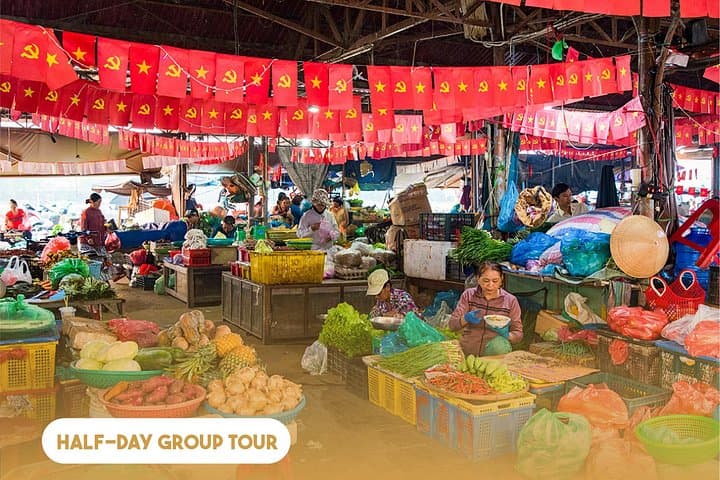
The market wakes before the town does—stall lights flicker, vendors call out over baskets of herbs and fresh river prawns. You step into that pulse, a short walk between produce tables and trolleys, then slip onto a low boat for a 25-minute glide where sampans and riverside houses drift past like pages of local life.
The market wakes before the town does—stall lights flicker, vendors call out over baskets of herbs and fresh river prawns. You step into that pulse, a short walk between produce tables and trolleys, then slip onto a low boat for a 25-minute glide where sampans and riverside houses drift past like pages of local life.
Hoi An’s food is the product of trade and tide: Cham rice fields, Chinese and Japanese merchant influences, and French-era ingredients converged to make dishes like Cao Lau and Quang noodle. The town’s geology—rice plains fed by the Thu Bon River—creates the vegetables and freshwater fish central to its cuisine.
At the cooking school, chefs demonstrate and then coach you through hand-cut noodles, fragrant herbs, and precise seasoning. The class balances technique and taste: learn knife skills, starch handling for Cao Lau noodles, and how to balance fish sauce, lime, and sugar.
Practical edge: market shopping means cash, small bills, and a willingness to ask questions—vendor interaction is part of the lesson. The boat ride prefers calm conditions; bring a light rain layer in monsoon months. The class involves standing and repetitive motions for a few hours, but no prior cooking experience is required.
Timing tip: morning markets are liveliest and ingredients are freshest. If you care about sustainability, ask about seafood sourcing and opt for vegetable-focused options when available. Leave with recipes, a full plate, and a better sense of how Hoi An’s river and fields push its food forward.