THE ADVENTURE COLLECTIVE® · Independent discovery and booking for outdoor travel

Cycle through rice fields to Tra Que Village, where hands-on farming and a lantern workshop reveal Hoi An’s living traditions. This half-day tour blends gentle exercise, local food, and craft for an intimate rural experience.
Cycle through rice fields to Tra Que Village, where hands-on farming and a lantern workshop reveal Hoi An’s living traditions. This half-day tour blends gentle exercise, local food, and craft for an intimate rural experience.
A cycletire hums over compacted earth as early light slants across rice paddies — that’s where the Tra Que day begins. Participants pedal narrow lanes past shrimp farms and emerald fields, the river’s breath cooling the air, before arriving at a low-slung vegetable village that still works by hand.
Verified experiences and guided adventures in the surrounding area.
Operated by Local Tours ASIA · Hoi An, Quang Nam
A cycletire hums over compacted earth as early light slants across rice paddies — that’s where the Tra Que day begins. Participants pedal narrow lanes past shrimp farms and emerald fields, the river’s breath cooling the air, before arriving at a low-slung vegetable village that still works by hand.
Tra Que’s soil is shaped by alluvial deposits from the Thu Bon River; generations of farmers refined a local organic method using sea-based minerals and simple tools. The village’s herb gardens supplied the Cham and later Vietnamese households; today, small family plots and communal beds keep those techniques alive. Lantern-making that follows traces back to Hoi An’s centuries as a trading port — Japanese and Chinese influences merged into the paper-and-bamboo craft that lights the old town.
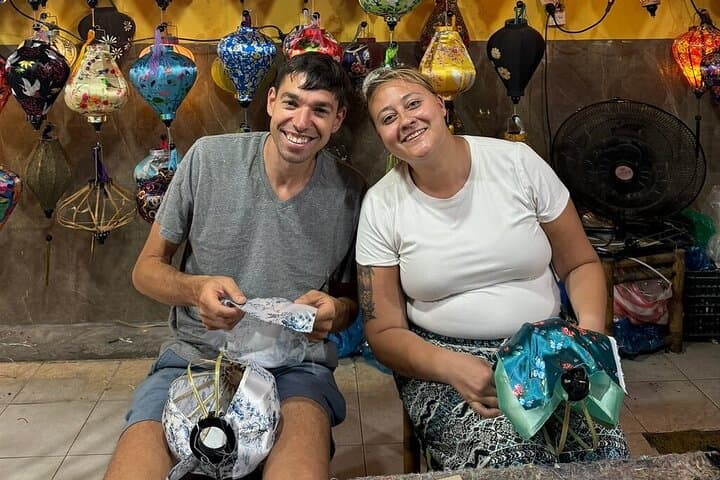
On the ground, expect flat terrain and soft-packed village lanes — total cycling distance is modest (roughly 6–10 km round trip) with negligible elevation gain. Farming is hands-on but low-impact: planting, weeding, and a chance to try the local “E Water” herbal drink. Lantern workshops are seated and guided; you leave with a finished lantern and a clearer sense of local rhythms.
Practical tips: bring a helmet or use the provided bicycle, wear sturdy closed-toe shoes for garden work, and carry 500–750 ml water. The experience runs about five hours, includes lunch and entrance fees, and suits most fitness levels. Morning departures are best to avoid midday rain and heat. This tour mixes gentle exercise, cultural craft, and a window into Hoi An’s agricultural heritage.
easy.
5 hours.
Suitable for casual cyclists and anyone comfortable with light manual tasks; basic mobility required for short rides and garden work.
Expect about 6–10 km total on flat, village lanes; the pace is relaxed with frequent stops for activities and photos.
Yes — the tour provides standard city bicycles suited for casual riders with minimal cycling experience.
Yes — farming tasks are low-impact and the ride is gentle, though participants with mobility or spine issues should avoid heavy digging and notify the operator in advance.
Yes — the workshop includes materials and instruction to make a lantern you can keep as a souvenir.
Tra Que’s farming methods evolved from tidal soils fed by the Thu Bon River; the village has long supplied Hoi An with aromatic herbs and vegetables, sustaining local cuisine for centuries.
Small-scale organic practices in Tra Que reduce chemical runoff, but increased tourism requires careful waste management and respect for planting schedules to avoid disrupting local agriculture.
Local Tours ASIA operates guided outdoor trips and adventures with an emphasis on safety, stewardship, and memorable experiences.


A cycletire hums over compacted earth as early light slants across rice paddies — that’s where the Tra Que day begins. Participants pedal narrow lanes past shrimp farms and emerald fields, the river’s breath cooling the air, before arriving at a low-slung vegetable village that still works by hand.
A cycletire hums over compacted earth as early light slants across rice paddies — that’s where the Tra Que day begins. Participants pedal narrow lanes past shrimp farms and emerald fields, the river’s breath cooling the air, before arriving at a low-slung vegetable village that still works by hand.
Tra Que’s soil is shaped by alluvial deposits from the Thu Bon River; generations of farmers refined a local organic method using sea-based minerals and simple tools. The village’s herb gardens supplied the Cham and later Vietnamese households; today, small family plots and communal beds keep those techniques alive. Lantern-making that follows traces back to Hoi An’s centuries as a trading port — Japanese and Chinese influences merged into the paper-and-bamboo craft that lights the old town.
On the ground, expect flat terrain and soft-packed village lanes — total cycling distance is modest (roughly 6–10 km round trip) with negligible elevation gain. Farming is hands-on but low-impact: planting, weeding, and a chance to try the local “E Water” herbal drink. Lantern workshops are seated and guided; you leave with a finished lantern and a clearer sense of local rhythms.
Practical tips: bring a helmet or use the provided bicycle, wear sturdy closed-toe shoes for garden work, and carry 500–750 ml water. The experience runs about five hours, includes lunch and entrance fees, and suits most fitness levels. Morning departures are best to avoid midday rain and heat. This tour mixes gentle exercise, cultural craft, and a window into Hoi An’s agricultural heritage.