THE ADVENTURE COLLECTIVE® · Independent discovery and booking for outdoor travel

Explore Hoi An’s quieter side on a customizable half-day tour by jeep, Vespa or scooter. Visit rice-paper makers, a whale temple, herb gardens and glide through the Cam Thanh coconut forest in a basket boat.
Explore Hoi An’s quieter side on a customizable half-day tour by jeep, Vespa or scooter. Visit rice-paper makers, a whale temple, herb gardens and glide through the Cam Thanh coconut forest in a basket boat.
A low-slung army jeep rattles along a narrow dyke, dust lifting off cracked red earth as fishermen on the Thu Bon River pause to watch. The guide steers the rhythm of the day—across bridges, through cornfields, and into the slow heart of Hoi An’s agricultural fringe—where coconut palms lean like watchful hosts and basket boats bob under the mangrove canopy.
Verified experiences and guided adventures in the surrounding area.
Operated by Local Tours HALONG · Hoi An, Quang Nam
A low-slung army jeep rattles along a narrow dyke, dust lifting off cracked red earth as fishermen on the Thu Bon River pause to watch. The guide steers the rhythm of the day—across bridges, through cornfields, and into the slow heart of Hoi An’s agricultural fringe—where coconut palms lean like watchful hosts and basket boats bob under the mangrove canopy.
This half-day excursion threads local craft and river culture into a concise route: Cam Kim’s rice-paper workshops, Tra Nhieu’s whale temple, Tra Que’s aromatic herb beds, and a serene paddle through Cam Thanh’s water coconut forest. Hoi An’s port history (15th–19th centuries) set the region’s pattern of trade and fishing; silt from the Thu Bon created the fertile floodplain that feeds the villages today. Geologically, the flat alluvial plain gives way to tidal channels and aquaculture ponds—an environment shaped by seasonal monsoons and tidal exchange.
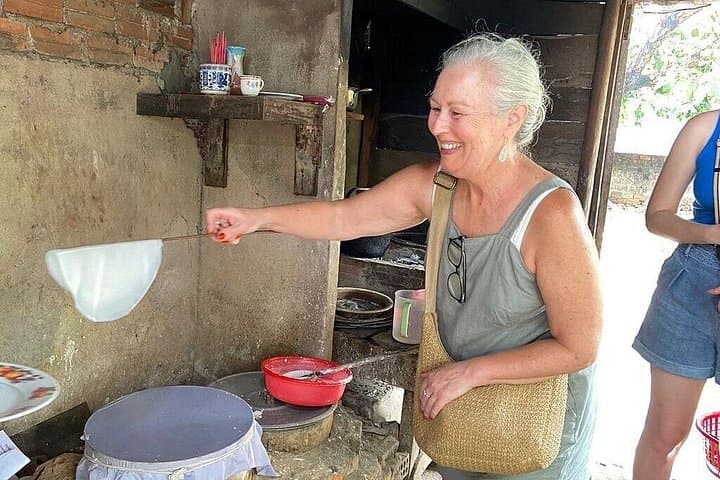
Expect tactile encounters: hand-rolling rice paper, watching mat-weavers ply bamboo, and the gentle splash of a coracle against mangrove roots. The tour is customizable—choose an army jeep, classic Vespa with driver, or a modern scooter—and includes a coffee stop and optional riverside lunch.
Practical notes: morning departures avoid heat and traffic; bring sun protection, comfortable closed-toe shoes for short village walks, and modest clothing for temple visits. Mobility is generally easy but the basket-boat ride requires basic balance. Respect private homes, ask before photographing people, and consider small donations for demonstrations. This half-day offers concentrated cultural immersion—an accessible way to experience rural life beyond Hoi An’s lantern-lit streets.
easy.
4–5 hours.
Suitable for most fitness levels; requires short periods of standing and basic balance for basket-boat rides.
Yes—most operators let you select between an army jeep, classic Vespa (with driver), or modern scooter when you book; confirm availability in advance.
Lunch is optional; the tour offers a riverside meal for an additional fee—verify when booking to choose the lunch option.
The tour is generally suitable for families and older travelers but includes brief, bumpy stretches and a basket-boat ride that requires basic balance; not recommended for those with spinal issues.
Carry small denominations of Vietnamese dong for modest tips to guides, boat drivers, and local demonstrators; larger purchases may accept cards but cash is preferred in villages.
Hoi An was a major Southeast Asian trading port from the 15th to 19th centuries; the Thu Bon River shaped settlement patterns and agricultural fertility in the surrounding plain.
Riverine and mangrove habitats are sensitive to development and aquaculture—support small-scale operators and avoid single-use plastics to minimize impact.
Local Tours HALONG operates guided outdoor trips and adventures with an emphasis on safety, stewardship, and memorable experiences.
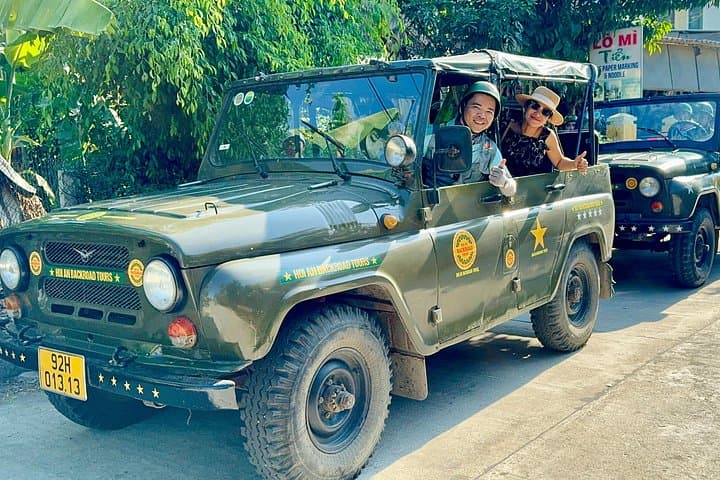

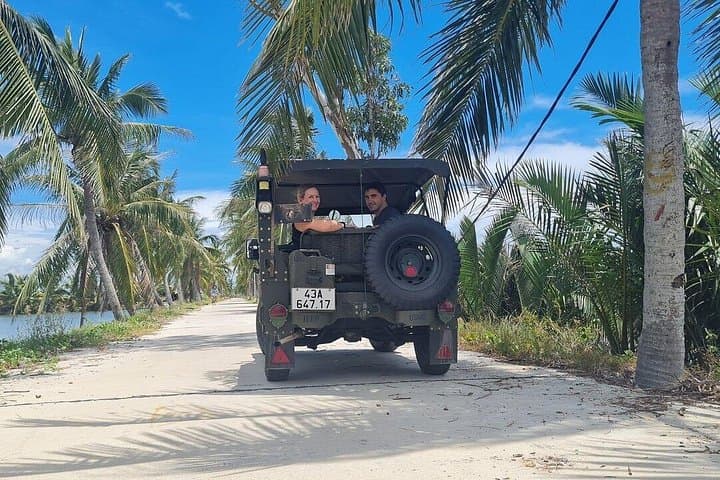
A low-slung army jeep rattles along a narrow dyke, dust lifting off cracked red earth as fishermen on the Thu Bon River pause to watch. The guide steers the rhythm of the day—across bridges, through cornfields, and into the slow heart of Hoi An’s agricultural fringe—where coconut palms lean like watchful hosts and basket boats bob under the mangrove canopy.
A low-slung army jeep rattles along a narrow dyke, dust lifting off cracked red earth as fishermen on the Thu Bon River pause to watch. The guide steers the rhythm of the day—across bridges, through cornfields, and into the slow heart of Hoi An’s agricultural fringe—where coconut palms lean like watchful hosts and basket boats bob under the mangrove canopy.
This half-day excursion threads local craft and river culture into a concise route: Cam Kim’s rice-paper workshops, Tra Nhieu’s whale temple, Tra Que’s aromatic herb beds, and a serene paddle through Cam Thanh’s water coconut forest. Hoi An’s port history (15th–19th centuries) set the region’s pattern of trade and fishing; silt from the Thu Bon created the fertile floodplain that feeds the villages today. Geologically, the flat alluvial plain gives way to tidal channels and aquaculture ponds—an environment shaped by seasonal monsoons and tidal exchange.
Expect tactile encounters: hand-rolling rice paper, watching mat-weavers ply bamboo, and the gentle splash of a coracle against mangrove roots. The tour is customizable—choose an army jeep, classic Vespa with driver, or a modern scooter—and includes a coffee stop and optional riverside lunch.
Practical notes: morning departures avoid heat and traffic; bring sun protection, comfortable closed-toe shoes for short village walks, and modest clothing for temple visits. Mobility is generally easy but the basket-boat ride requires basic balance. Respect private homes, ask before photographing people, and consider small donations for demonstrations. This half-day offers concentrated cultural immersion—an accessible way to experience rural life beyond Hoi An’s lantern-lit streets.