THE ADVENTURE COLLECTIVE® · Independent discovery and booking for outdoor travel

Cycle rural lanes from Thanh Ha pottery to Kim Bong carpentry and Tra Que’s herb beds on this easy half‑day cultural tour. Hands‑on pottery and farm activities, a local set‑menu lunch, and riverside scenery make for an active, low‑impact cultural immersion.
Cycle rural lanes from Thanh Ha pottery to Kim Bong carpentry and Tra Que’s herb beds on this easy half‑day cultural tour. Hands‑on pottery and farm activities, a local set‑menu lunch, and riverside scenery make for an active, low‑impact cultural immersion.
A low-slung boat slips across the Thu Bon River and bicycles click into motion as the morning light spreads over rice paddies and narrow lanes. Riders follow quiet village roads to Thanh Ha’s pottery yards where clay still remembers the river’s path; later the air fills with the rasp of chisels in Kim Bong, and by midday the herb-scented beds of Tra Que dare you to try a farmer’s rhythm.
Verified experiences and guided adventures in the surrounding area.
Operated by Authentic NINH BINH · Hoi An, Quang Nam
A low-slung boat slips across the Thu Bon River and bicycles click into motion as the morning light spreads over rice paddies and narrow lanes. Riders follow quiet village roads to Thanh Ha’s pottery yards where clay still remembers the river’s path; later the air fills with the rasp of chisels in Kim Bong, and by midday the herb-scented beds of Tra Que dare you to try a farmer’s rhythm.
These craft villages grew alongside Hoi An’s role as a regional trading port from the 15th century onward; skills passed down through generations adapted to changing markets but retained clear local signatures. Geologically the area is flat alluvium fed by the Thu Bon River, which makes the soil at Tra Que unusually fertile for vegetables and herbs. Culturally, carpenters, potters and farmers in these villages operate in close loops—workshops open to the lane, family kilns, and communal irrigation channels that still govern the day.
Practical guidance: expect about four hours of easy cycling on flat rural roads and short walks through workshops and gardens. The tour typically includes a guide, entrance fees, bicycle, a set‑menu Tra Que meal, mineral water and basic farm clothing for hands‑on activities. Wear closed-toe shoes for pottery and carpentry areas, bring sun protection and insect repellent, and carry small cash for souvenirs. The pace is relaxed but active—great for travelers who want cultural immersion without strenuous hiking. Respect working spaces, remove muddy shoes where requested, and leave kilns and tools to the artisans—the best souvenirs are what you learn watching and doing.
easy.
4 hours.
Suitable for most fitness levels—short, flat cycling segments and light farm work; basic mobility required.
Yes—bicycles are provided and used for transfers between villages; guides will confirm fit and safety before departure.
Yes—the tour includes a set-menu lunch at a Tra Que restaurant, with options to accommodate common dietary preferences if requested in advance.
Generally yes—activities are low-impact, but children should be supervised in workshops and while cycling; inform the operator about ages when booking.
No—entrance fees are included in the tour price, so you won’t need to pay for site access during the itinerary.
Hoi An’s craft villages developed alongside its role as a major Southeast Asian trading port from the 15th to 19th centuries; many techniques remain locally specific and family-held.
Choose locally operated experiences, buy directly from artisans when possible, avoid single-use plastics, and follow guide instructions to limit trampling in cultivated plots.
Authentic NINH BINH operates guided outdoor trips and adventures with an emphasis on safety, stewardship, and memorable experiences.
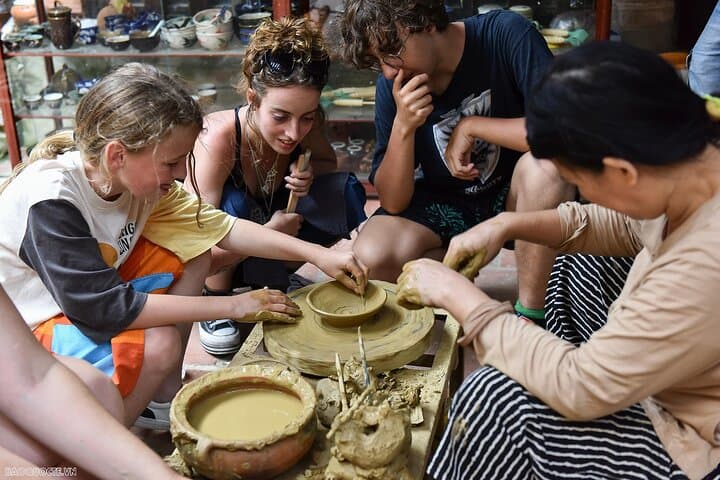
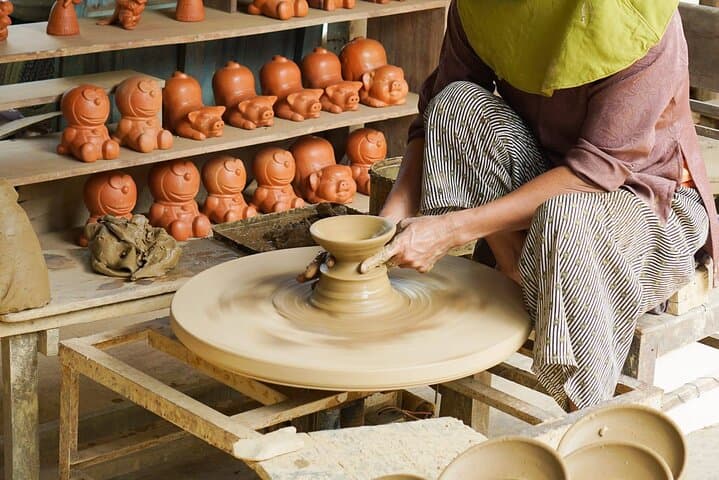
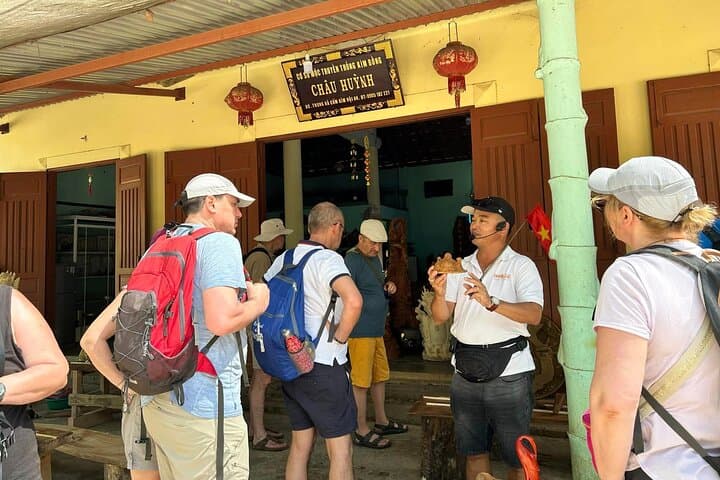
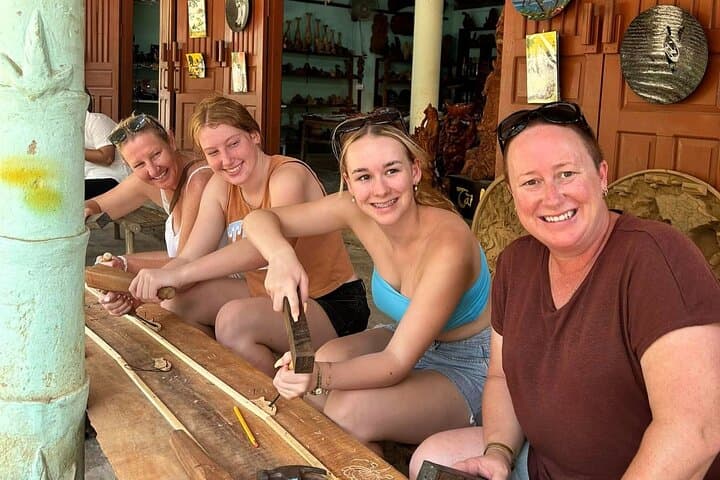
A low-slung boat slips across the Thu Bon River and bicycles click into motion as the morning light spreads over rice paddies and narrow lanes. Riders follow quiet village roads to Thanh Ha’s pottery yards where clay still remembers the river’s path; later the air fills with the rasp of chisels in Kim Bong, and by midday the herb-scented beds of Tra Que dare you to try a farmer’s rhythm.
A low-slung boat slips across the Thu Bon River and bicycles click into motion as the morning light spreads over rice paddies and narrow lanes. Riders follow quiet village roads to Thanh Ha’s pottery yards where clay still remembers the river’s path; later the air fills with the rasp of chisels in Kim Bong, and by midday the herb-scented beds of Tra Que dare you to try a farmer’s rhythm.
These craft villages grew alongside Hoi An’s role as a regional trading port from the 15th century onward; skills passed down through generations adapted to changing markets but retained clear local signatures. Geologically the area is flat alluvium fed by the Thu Bon River, which makes the soil at Tra Que unusually fertile for vegetables and herbs. Culturally, carpenters, potters and farmers in these villages operate in close loops—workshops open to the lane, family kilns, and communal irrigation channels that still govern the day.
Practical guidance: expect about four hours of easy cycling on flat rural roads and short walks through workshops and gardens. The tour typically includes a guide, entrance fees, bicycle, a set‑menu Tra Que meal, mineral water and basic farm clothing for hands‑on activities. Wear closed-toe shoes for pottery and carpentry areas, bring sun protection and insect repellent, and carry small cash for souvenirs. The pace is relaxed but active—great for travelers who want cultural immersion without strenuous hiking. Respect working spaces, remove muddy shoes where requested, and leave kilns and tools to the artisans—the best souvenirs are what you learn watching and doing.