THE ADVENTURE COLLECTIVE® · Independent discovery and booking for outdoor travel

Cycle out of Hoi An for a four‑hour loop through Thanh Ha pottery, Kim Bong carpentry and Tra Que vegetable farms. Hands-on activities, a village meal and easy terrain make this a compact cultural immersion.
Cycle out of Hoi An for a four‑hour loop through Thanh Ha pottery, Kim Bong carpentry and Tra Que vegetable farms. Hands-on activities, a village meal and easy terrain make this a compact cultural immersion.
Pedaling away from Hoi An’s lantern-lit lanes, the road opens onto low, irrigated fields where the Thu Bon River nudges the horizon. The air carries clay dust, fresh-cut wood, and the iron-bright scent of seaweed fertilizer — a compact sensory map of three craft villages packed into a four‑hour loop.
Verified experiences and guided adventures in the surrounding area.
Operated by Authentuc PU LUONG · Hoi An, Quang Nam
Pedaling away from Hoi An’s lantern-lit lanes, the road opens onto low, irrigated fields where the Thu Bon River nudges the horizon. The air carries clay dust, fresh-cut wood, and the iron-bright scent of seaweed fertilizer — a compact sensory map of three craft villages packed into a four‑hour loop.
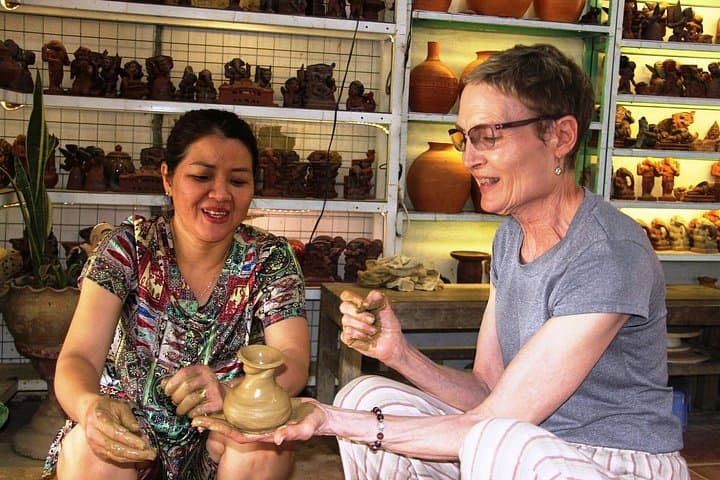
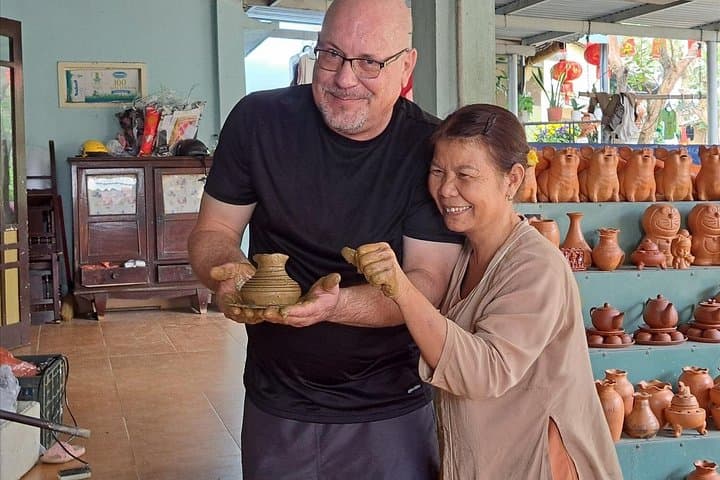
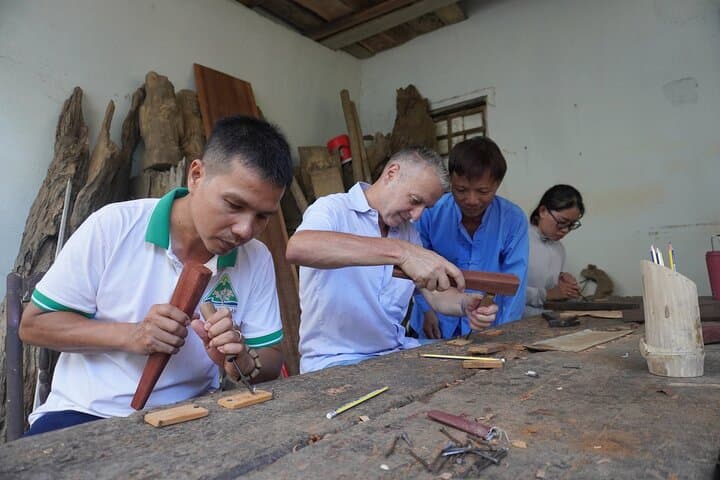
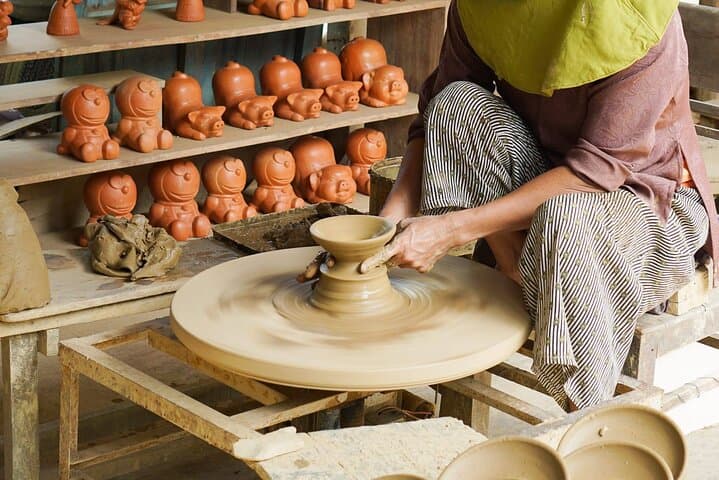
Thanh Ha pottery sits on an alluvial plain; its kilns and family workshops explain centuries of local ceramic craft and the functional design favored by river traders. Kim Bong, on the right bank of the lower Thu Bon, grew around boat-accessible sawmills and refined carpentry techniques—look for finely mortised joinery and lacquered furniture. Tra Que Vegetable Village, just 3 km northeast of Hoi An ancient town, is famed for its nutrient-rich soil and hands-on organic farming traditions that feed the town’s restaurants.
Geology here is simple: flat floodplain, fertile silts deposited by seasonal flows, and a lagoon system that moderates temperatures. Culturally, these villages are community-centered—apprenticeship runs in families and most workshops accept custom commissions.
Practical guidance: the tour is low-elevation and largely flat, with short bicycle transfers between spots (expect 5–10 km of easy cycling total). Activities include pottery shaping, carpentry demos, and farmwork at Tra Que, plus a set-menu village meal. Wear closed-toe shoes for workshops, sun protection for open fields, and bring small cash for bespoke purchases. The pace is gentle but hands-on; travelers with mobility or cardiovascular restrictions should consider alternatives. With straightforward logistics and direct cultural exchange, this half-day visit offers high-impact learning in a short window—ideal for travelers wanting craft, food, and rural rhythms without a full-day commitment.
easy.
4 hours.
Light activity—suitable for most fitness levels; you should be comfortable cycling short distances and standing for demonstrations.
Yes—bicycles are provided for the trip and are suitable for short, flat transfers between villages.
Yes—the tour includes a set-menu lunch or dinner at a Tra Que restaurant featuring local produce.
Access is limited—paths and workshops are uneven and not ideal for wheelchairs or limited mobility; contact the operator for alternatives.
Not recommended for pregnant travelers or those with spinal or serious cardiovascular issues; light physical activity is required.
These craft hamlets grew alongside Hoi An’s trading networks; pottery and carpentry supported river commerce for centuries.
Tra Que practices small-scale organic farming and many workshops reuse materials—support local artisans and avoid buying untreated tropical hardwoods to reduce environmental impact.
Authentuc PU LUONG operates guided outdoor trips and adventures with an emphasis on safety, stewardship, and memorable experiences.
Pedaling away from Hoi An’s lantern-lit lanes, the road opens onto low, irrigated fields where the Thu Bon River nudges the horizon. The air carries clay dust, fresh-cut wood, and the iron-bright scent of seaweed fertilizer — a compact sensory map of three craft villages packed into a four‑hour loop.
Pedaling away from Hoi An’s lantern-lit lanes, the road opens onto low, irrigated fields where the Thu Bon River nudges the horizon. The air carries clay dust, fresh-cut wood, and the iron-bright scent of seaweed fertilizer — a compact sensory map of three craft villages packed into a four‑hour loop.
Thanh Ha pottery sits on an alluvial plain; its kilns and family workshops explain centuries of local ceramic craft and the functional design favored by river traders. Kim Bong, on the right bank of the lower Thu Bon, grew around boat-accessible sawmills and refined carpentry techniques—look for finely mortised joinery and lacquered furniture. Tra Que Vegetable Village, just 3 km northeast of Hoi An ancient town, is famed for its nutrient-rich soil and hands-on organic farming traditions that feed the town’s restaurants.
Geology here is simple: flat floodplain, fertile silts deposited by seasonal flows, and a lagoon system that moderates temperatures. Culturally, these villages are community-centered—apprenticeship runs in families and most workshops accept custom commissions.
Practical guidance: the tour is low-elevation and largely flat, with short bicycle transfers between spots (expect 5–10 km of easy cycling total). Activities include pottery shaping, carpentry demos, and farmwork at Tra Que, plus a set-menu village meal. Wear closed-toe shoes for workshops, sun protection for open fields, and bring small cash for bespoke purchases. The pace is gentle but hands-on; travelers with mobility or cardiovascular restrictions should consider alternatives. With straightforward logistics and direct cultural exchange, this half-day visit offers high-impact learning in a short window—ideal for travelers wanting craft, food, and rural rhythms without a full-day commitment.