THE ADVENTURE COLLECTIVE® · Independent discovery and booking for outdoor travel

Ride out of Hoi An for a four-hour circuit through Thanh Ha pottery, Kim Bong carpentry, and Tra Que’s vegetable beds. Expect hands-on craft sessions, riverside workshops, and an organic farm experience that reveals how local traditions shape daily life.
Ride out of Hoi An for a four-hour circuit through Thanh Ha pottery, Kim Bong carpentry, and Tra Que’s vegetable beds. Expect hands-on craft sessions, riverside workshops, and an organic farm experience that reveals how local traditions shape daily life.
You start on a warm Hoi An morning, pedals clicking as the town recedes and a river-tinted light opens over low, thatched roofs. The guide leads you first to Thanh Ha Pottery Village, where kiln smoke still scents the air and clay spins under practiced hands. Clay and river meet here—the Red River delta’s soils and local sand give the pottery its weight and tone.
Verified experiences and guided adventures in the surrounding area.
Operated by Authentic Travel HOI AN · Hoi An, Quang Nam
You start on a warm Hoi An morning, pedals clicking as the town recedes and a river-tinted light opens over low, thatched roofs. The guide leads you first to Thanh Ha Pottery Village, where kiln smoke still scents the air and clay spins under practiced hands. Clay and river meet here—the Red River delta’s soils and local sand give the pottery its weight and tone.
From there the route slips along the Thu Bon’s edges into Kim Bong Carpentry Village. The air hums with chisels; planks and joinery line the yards. Kim Bong’s craft evolved around water transport—timber floated downriver, artisans carving functional art that furnished Hoi An’s merchant houses.
The final act is Tra Que Vegetable Village, three kilometers northeast of town, ringed by lagoon channels and fertile alluvial flats. Vegetable beds ripple like green fins; herbs and greens smell bright and immediate. You’ll hoe, water, and learn organic techniques that have kept the fields productive for centuries.
Practical guide: it’s a four-hour loop best done in the morning to avoid midday heat. You’ll use a bicycle between stops and spend most time on flat, paved or packed-earth lanes—bring a light jacket for early fog and sun protection for open fields. Hydrate before and after the farm session; wear closed-toe shoes for pottery and carpentry areas. Budget time for souvenir shopping at small workshops; prices are negotiable but artisans appreciate fair offers.
This tour blends hands-on craft, riverside history, and agriculture—an approachable day outdoors that connects you directly to Hoi An’s living traditions.
easy.
4 hours.
Light activity; suitable for most fitness levels comfortable with short bike rides and standing during demonstrations
The tour lasts about four hours with short, easy bike rides between villages on mostly flat, paved or compacted lanes.
Yes—pottery shaping and simple farm tasks are family-friendly, though young children should be supervised around tools and kilns.
Lunch is a set menu at a local Tra Que restaurant; the operator can usually accommodate vegetarian or vegan requests if notified in advance.
Yes, pickup from centrally located Hoi An hotels is included; confirm your pickup point when booking.
Hoi An’s craft villages developed alongside the Thu Bon River trade network; pottery and carpentry supplied both local use and export to regional markets for centuries.
Tra Que practices organic farming to protect soil and waterways; visitors should avoid trampling beds and use marked paths to minimize impact.
Authentic Travel HOI AN operates guided outdoor trips and adventures with an emphasis on safety, stewardship, and memorable experiences.
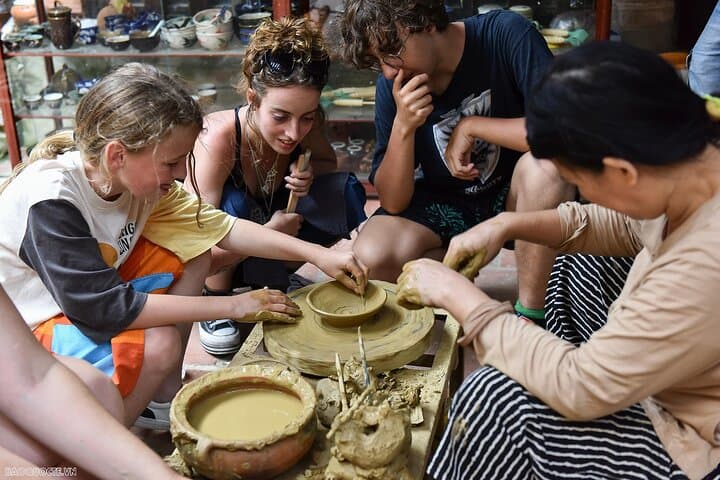
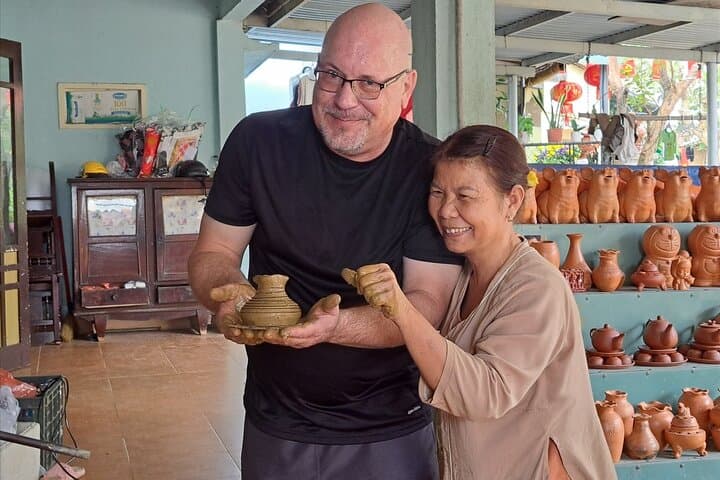
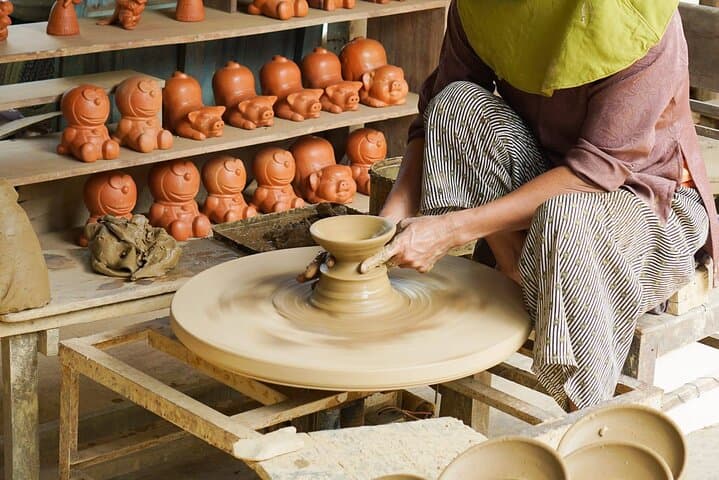
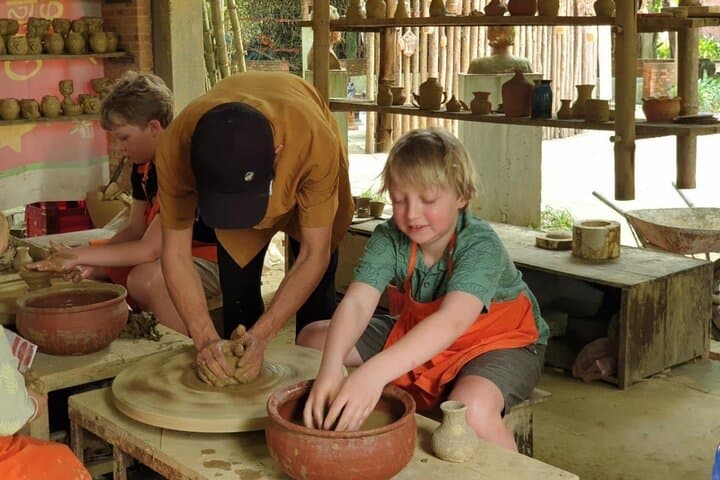
You start on a warm Hoi An morning, pedals clicking as the town recedes and a river-tinted light opens over low, thatched roofs. The guide leads you first to Thanh Ha Pottery Village, where kiln smoke still scents the air and clay spins under practiced hands. Clay and river meet here—the Red River delta’s soils and local sand give the pottery its weight and tone.
You start on a warm Hoi An morning, pedals clicking as the town recedes and a river-tinted light opens over low, thatched roofs. The guide leads you first to Thanh Ha Pottery Village, where kiln smoke still scents the air and clay spins under practiced hands. Clay and river meet here—the Red River delta’s soils and local sand give the pottery its weight and tone.
From there the route slips along the Thu Bon’s edges into Kim Bong Carpentry Village. The air hums with chisels; planks and joinery line the yards. Kim Bong’s craft evolved around water transport—timber floated downriver, artisans carving functional art that furnished Hoi An’s merchant houses.
The final act is Tra Que Vegetable Village, three kilometers northeast of town, ringed by lagoon channels and fertile alluvial flats. Vegetable beds ripple like green fins; herbs and greens smell bright and immediate. You’ll hoe, water, and learn organic techniques that have kept the fields productive for centuries.
Practical guide: it’s a four-hour loop best done in the morning to avoid midday heat. You’ll use a bicycle between stops and spend most time on flat, paved or packed-earth lanes—bring a light jacket for early fog and sun protection for open fields. Hydrate before and after the farm session; wear closed-toe shoes for pottery and carpentry areas. Budget time for souvenir shopping at small workshops; prices are negotiable but artisans appreciate fair offers.
This tour blends hands-on craft, riverside history, and agriculture—an approachable day outdoors that connects you directly to Hoi An’s living traditions.