THE ADVENTURE COLLECTIVE® · Independent discovery and booking for outdoor travel

Cycle from Hoi An into emerald rice paddies, glide through Cam Thanh’s basket-boat canals, and learn organic farming and cooking at Tra Que Village. This half-day tour blends hands-on culture with practical outdoor movement.
Cycle from Hoi An into emerald rice paddies, glide through Cam Thanh’s basket-boat canals, and learn organic farming and cooking at Tra Que Village. This half-day tour blends hands-on culture with practical outdoor movement.
The morning air outside Hoi An is green and humid; bicycles click into motion and a local guide steers you away from the lantern-lit streets toward a grid of rice paddies and narrow irrigation canals.
Verified experiences and guided adventures in the surrounding area.
Operated by Be Your Feet Travel · Hoi An, Quang Nam
The morning air outside Hoi An is green and humid; bicycles click into motion and a local guide steers you away from the lantern-lit streets toward a grid of rice paddies and narrow irrigation canals.
You pedal past raised dikes and shallow ponds where the Thu Bon River once spread rich alluvial soils, and the coconut palms of Cam Thanh lean over channels that dare you to slow down. At the water coconut forest, you’ll transfer to a round basket boat and feel the current nudging the hull as fishermen demonstrate net-casting — an intimate performance of rhythm and place.
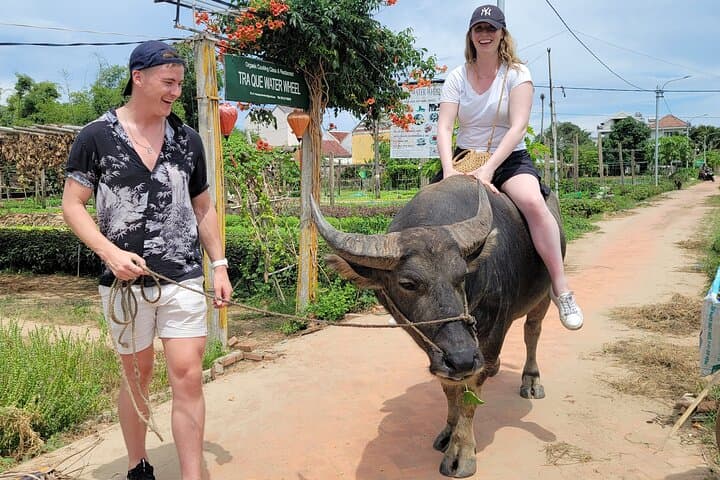
Tra Que Vegetable Village is small but exacting: beds of aromatic herbs, manual irrigation channels, and farmers who still follow organic cycles that predate modern tourism. The area’s history connects to Hoi An’s centuries as a trading port; its soil and techniques evolved from exchanges with Cham and later Chinese and Japanese merchants.
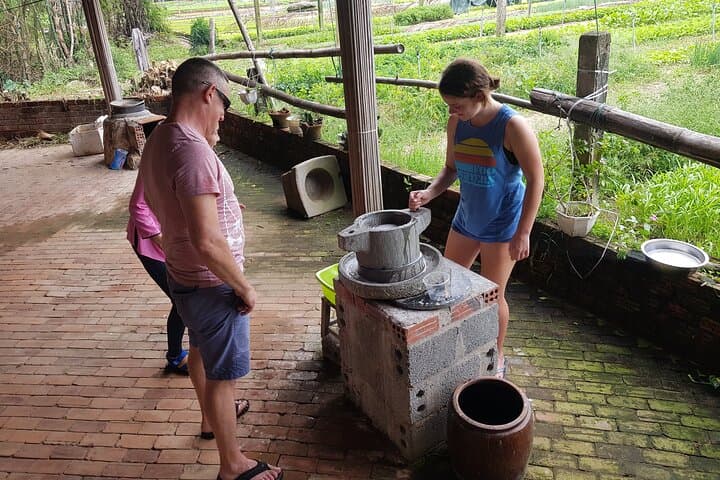
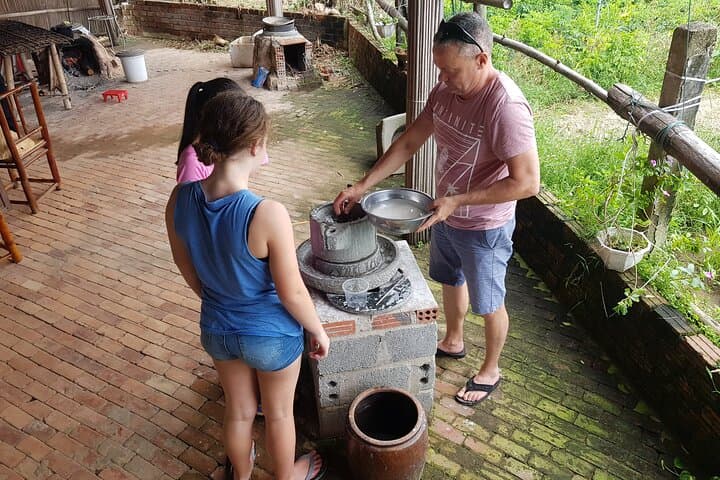
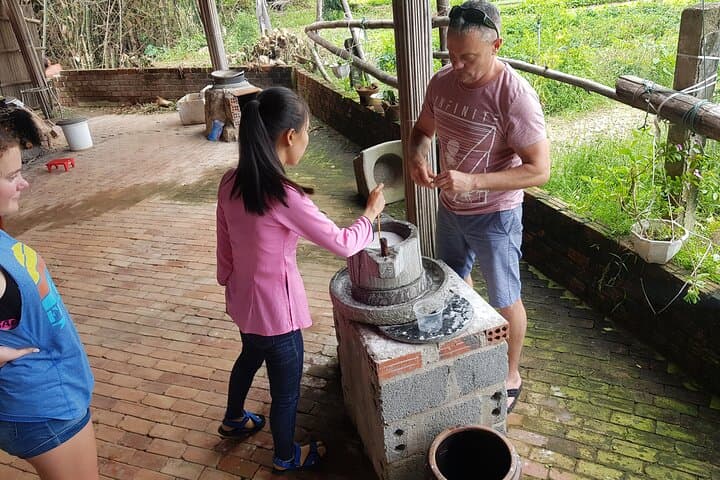
Then the practical part—farming, harvesting, and a hands-on cooking class. Under a chef’s eye you turn fresh herbs and greens into central Vietnamese staples, and lunch becomes the most direct way to taste the countryside.
Expect four to five hours of moderate activity: light cycling on flat village paths, short boat transfers, and standing work in the garden. Bring sunscreen, a reusable water bottle, closed-toe shoes, and a willingness to get your hands dirty. Time your ride for early morning or late afternoon to avoid peak heat; insects are present near water, but mosquito repellent and local knowledge keep them manageable.
This is a day designed for steady curiosity — a practical, sensory route into the rhythms of rural Vietnam.
moderate.
4–5 hours.
Moderately fit: comfortable cycling for short distances and able to stand and kneel during farm work.
No—basic cycling ability is sufficient; the route is mostly flat village paths with occasional uneven surfaces.
Yes—lunch prepared during the cooking class is included, often featuring dishes made from Tra Que produce.
Yes—infants must sit on laps and child seats may be available; check with the operator for age recommendations.
The tour generally runs rain or shine; check cancellation policy and bring a rain jacket if heavy showers are forecast.
Tra Que has long been recognized for its herb gardens supplying Hoi An; the village’s techniques reflect centuries of coastal trade and Cham influence in central Vietnam.
Locals practice small-scale organic techniques and rely on sustainable water use; visitors should avoid single-use plastics and follow guidance to minimize soil disturbance.
Be Your Feet Travel operates guided outdoor trips and adventures with an emphasis on safety, stewardship, and memorable experiences.
The morning air outside Hoi An is green and humid; bicycles click into motion and a local guide steers you away from the lantern-lit streets toward a grid of rice paddies and narrow irrigation canals.
The morning air outside Hoi An is green and humid; bicycles click into motion and a local guide steers you away from the lantern-lit streets toward a grid of rice paddies and narrow irrigation canals.
You pedal past raised dikes and shallow ponds where the Thu Bon River once spread rich alluvial soils, and the coconut palms of Cam Thanh lean over channels that dare you to slow down. At the water coconut forest, you’ll transfer to a round basket boat and feel the current nudging the hull as fishermen demonstrate net-casting — an intimate performance of rhythm and place.
Tra Que Vegetable Village is small but exacting: beds of aromatic herbs, manual irrigation channels, and farmers who still follow organic cycles that predate modern tourism. The area’s history connects to Hoi An’s centuries as a trading port; its soil and techniques evolved from exchanges with Cham and later Chinese and Japanese merchants.
Then the practical part—farming, harvesting, and a hands-on cooking class. Under a chef’s eye you turn fresh herbs and greens into central Vietnamese staples, and lunch becomes the most direct way to taste the countryside.
Expect four to five hours of moderate activity: light cycling on flat village paths, short boat transfers, and standing work in the garden. Bring sunscreen, a reusable water bottle, closed-toe shoes, and a willingness to get your hands dirty. Time your ride for early morning or late afternoon to avoid peak heat; insects are present near water, but mosquito repellent and local knowledge keep them manageable.
This is a day designed for steady curiosity — a practical, sensory route into the rhythms of rural Vietnam.