THE ADVENTURE COLLECTIVE® · Independent discovery and booking for outdoor travel

Cycle out of Hoi An to Tra Que Village for a hands-on farming lesson and a Vietnamese cooking class. This 4–5 hour experience blends flat countryside rides with tactile garden work and a communal meal.
Cycle out of Hoi An to Tra Que Village for a hands-on farming lesson and a Vietnamese cooking class. This 4–5 hour experience blends flat countryside rides with tactile garden work and a communal meal.
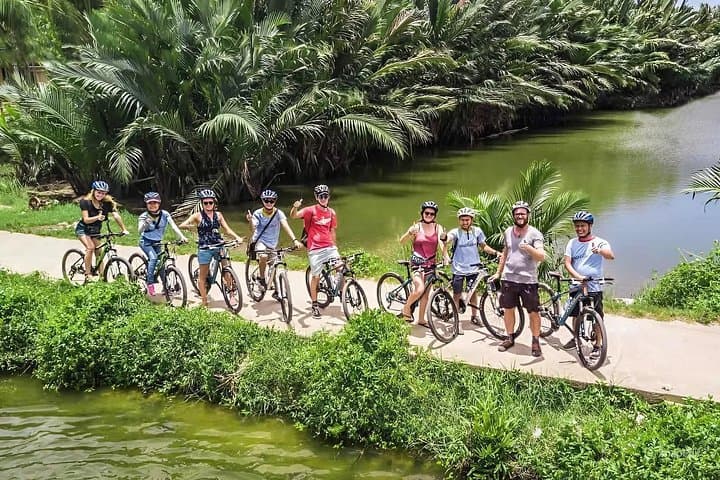
The morning air in the fields outside Hoi An tastes faintly of river mud and green herb—cyclists push off along flat lanes as the rice paddies open wide, water glinting and frogs calling from ditches. Pedaling through Tra Que Village feels like moving into a working painting: low stone houses, beds of mint and coriander, and farmers guiding simple tools with practiced rhythm.
Verified experiences and guided adventures in the surrounding area.
Operated by VN Bike Tour · Hoi An, Quang Nam
The morning air in the fields outside Hoi An tastes faintly of river mud and green herb—cyclists push off along flat lanes as the rice paddies open wide, water glinting and frogs calling from ditches. Pedaling through Tra Que Village feels like moving into a working painting: low stone houses, beds of mint and coriander, and farmers guiding simple tools with practiced rhythm.
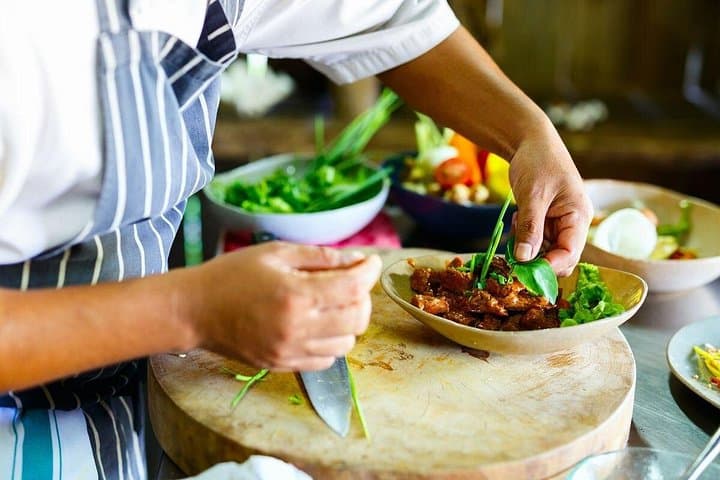
Tra Que has been a community garden for generations; its soil is loam and silt deposited by the Thu Bon River, and villagers long used natural fertilizers and traditional crop rotation rather than mechanized farming. The cooking portion connects that agricultural history to the kitchen—recipes that emphasize fresh herbs, fish sauce, and charcoal-stirring techniques reflect central Vietnamese coastal culture shaped by tides, trade, and rice cultivation.
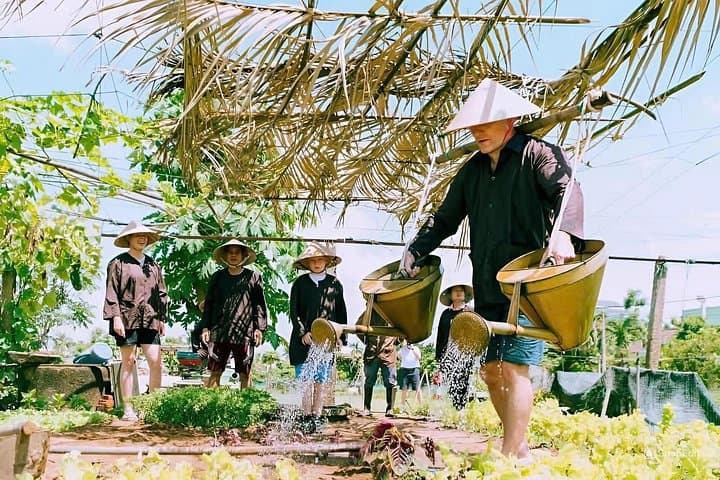
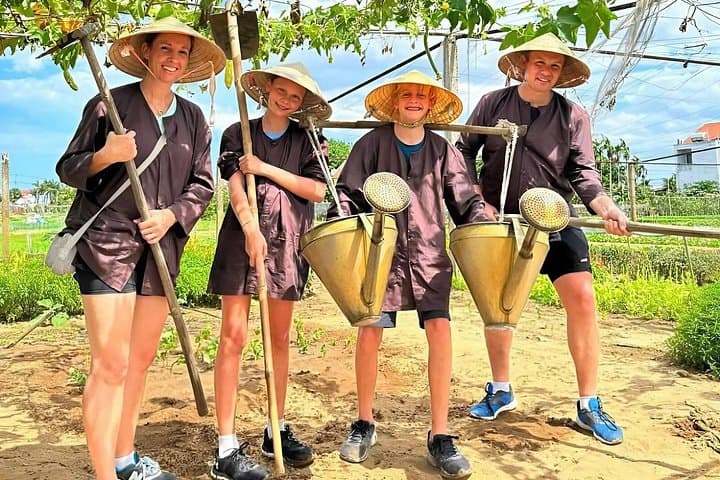
Expect 4–5 hours total: a relaxed 30–60 minute cycle each way on flat, often-paved rural lanes, hands-on time in the gardens learning seeding and herbal care, then a tactile cooking class where you chop, flame-cook, and plate local dishes to eat together.
Practical notes: wear breathable, quick-dry clothing and closed-toe shoes for garden work; bring sun protection and a small towel for perspiration. Guides typically provide bikes, helmets, and A/C transport back to town. The pace suits most fitness levels but involves short periods standing, bending, and light scooping in the soil.
Timing your visit for early morning keeps heat and crowds down; bring cash for market snacks and be ready to taste the immediate reward of food you helped grow.
easy.
4–5 hours.
Suitable for most fitness levels; requires basic cycling ability and light bending/standing during garden work
No—routes are flat rural lanes suited to casual cyclists; guides provide bikes and adjust pace for group ability.
Yes—most operators can adapt recipes for common dietary needs if notified at booking; bring allergy details in writing.
Transfers and some surfaces are marked as accessible, but active gardening and cooking stations require standing and mobility; contact the operator with specifics.
Full refunds are typically available if you cancel at least 24 hours before departure; check your booking confirmation for details.
Tra Que’s farming methods reflect centuries of Thu Bon River floodplain agriculture and local communal land stewardship.
The village emphasizes organic practices and low-chemical cultivation; visitors should avoid trampling beds and take all litter back to town.
VN Bike Tour operates guided outdoor trips and adventures with an emphasis on safety, stewardship, and memorable experiences.
The morning air in the fields outside Hoi An tastes faintly of river mud and green herb—cyclists push off along flat lanes as the rice paddies open wide, water glinting and frogs calling from ditches. Pedaling through Tra Que Village feels like moving into a working painting: low stone houses, beds of mint and coriander, and farmers guiding simple tools with practiced rhythm.
The morning air in the fields outside Hoi An tastes faintly of river mud and green herb—cyclists push off along flat lanes as the rice paddies open wide, water glinting and frogs calling from ditches. Pedaling through Tra Que Village feels like moving into a working painting: low stone houses, beds of mint and coriander, and farmers guiding simple tools with practiced rhythm.
Tra Que has been a community garden for generations; its soil is loam and silt deposited by the Thu Bon River, and villagers long used natural fertilizers and traditional crop rotation rather than mechanized farming. The cooking portion connects that agricultural history to the kitchen—recipes that emphasize fresh herbs, fish sauce, and charcoal-stirring techniques reflect central Vietnamese coastal culture shaped by tides, trade, and rice cultivation.
Expect 4–5 hours total: a relaxed 30–60 minute cycle each way on flat, often-paved rural lanes, hands-on time in the gardens learning seeding and herbal care, then a tactile cooking class where you chop, flame-cook, and plate local dishes to eat together.
Practical notes: wear breathable, quick-dry clothing and closed-toe shoes for garden work; bring sun protection and a small towel for perspiration. Guides typically provide bikes, helmets, and A/C transport back to town. The pace suits most fitness levels but involves short periods standing, bending, and light scooping in the soil.
Timing your visit for early morning keeps heat and crowds down; bring cash for market snacks and be ready to taste the immediate reward of food you helped grow.