THE ADVENTURE COLLECTIVE® · Independent discovery and booking for outdoor travel

Cycle out of Hoi An and into Tra Que Village for hands-on herb farming and a market-to-table Vietnamese cooking class. Expect easy cycling, tactile farming tasks, and a shared meal made from ingredients you helped harvest.
Cycle out of Hoi An and into Tra Que Village for hands-on herb farming and a market-to-table Vietnamese cooking class. Expect easy cycling, tactile farming tasks, and a shared meal made from ingredients you helped harvest.
Pedal away from the lantern-lit lanes of Hoi An and into a patchwork of narrow fields where the air tastes faintly of seaweed and cilantro. The ride to Tra Que Village is gentle—flat lanes lined with coconut palms and low stone walls—each turn revealing farmers bent over raised beds and small canals that push cool air across the paddies.
Verified experiences and guided adventures in the surrounding area.
Operated by My Son Tours · Hoi An, Quang Nam
Pedal away from the lantern-lit lanes of Hoi An and into a patchwork of narrow fields where the air tastes faintly of seaweed and cilantro. The ride to Tra Que Village is gentle—flat lanes lined with coconut palms and low stone walls—each turn revealing farmers bent over raised beds and small canals that push cool air across the paddies.
Tra Que’s farming techniques are local history: families have tended these herb gardens for generations, using seaweed fertiliser and hand tools rather than machines. The village’s soils are alluvial, deposited by nearby rivers, which keeps the beds fertile and the produce vibrant. Culture here is hands-on; you’ll meet a host family, try traditional planting, and learn recipes that link market produce directly to the table.
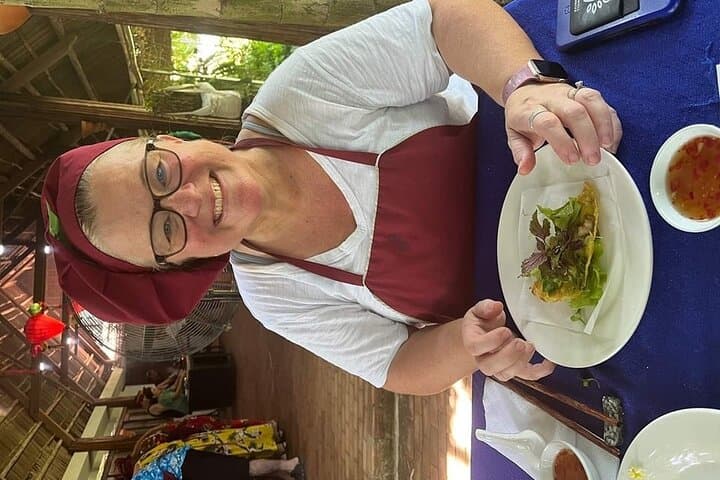
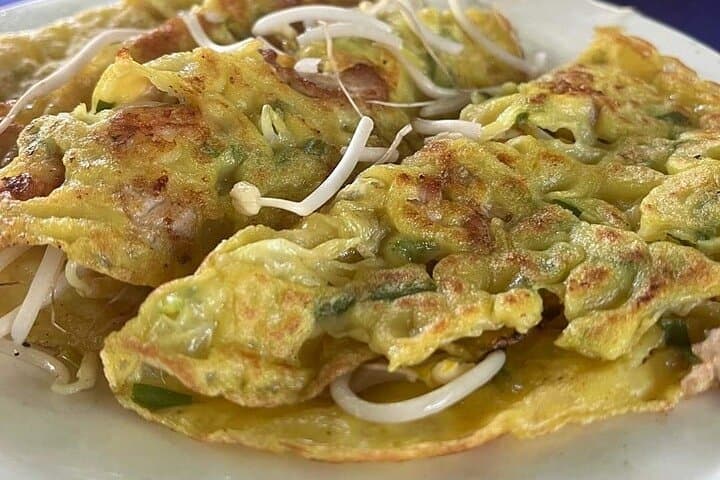
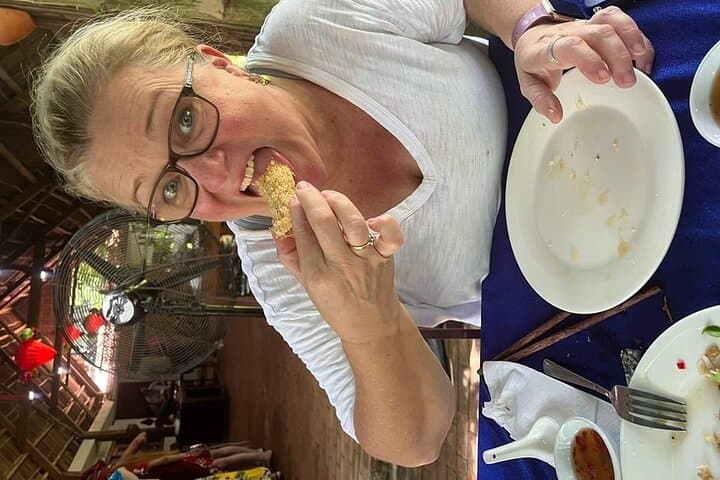
The cooking segment focuses on simple, regional classics—rice pancakes, spring rolls, herb salads—preparing dishes with what you’ve just foraged or chosen at the market. Expect approachable instruction, communal chopping and an immediate payoff: the meal you helped make.
Practical guidance: wear closed-toe shoes and a sun hat for the farm work, bring a small daypack for water and camera, and choose a morning or late-afternoon departure to avoid midday heat. The cycling distances are short and flat; guides provide helmets and basic bike support. Respect crop beds—step only where shown—and bring cash for local purchases and optional tips. This is a low-impact cultural ride that rewards curiosity and a willingness to get your hands in the soil.
easy.
4 hours.
Light activity; suitable for people who can cycle short distances and do low-impact farm tasks
Cycling segments are short and mostly flat—total tour time is about four hours, with on-bike time typically under an hour interspersed with stops.
Yes—routes are easy and guides can accommodate families; children must be supervised and may use a child seat or slower pace if needed.
Vegetarian and pescatarian options are commonly available—notify the operator when booking to ensure substitutions for meat dishes.
Bring a hat, sun protection, closed-toe shoes, and a small bag for valuables; the operator supplies aprons, gloves, and farm clothes if required.
Tra Que has been an herb and vegetable producing community for generations, known locally for using seaweed-based fertiliser and communal farming techniques.
Tours support local livelihoods; avoid stepping on beds, limit single-use plastics, and follow guide instructions to minimize impact on fragile plots.
My Son Tours operates guided outdoor trips and adventures with an emphasis on safety, stewardship, and memorable experiences.
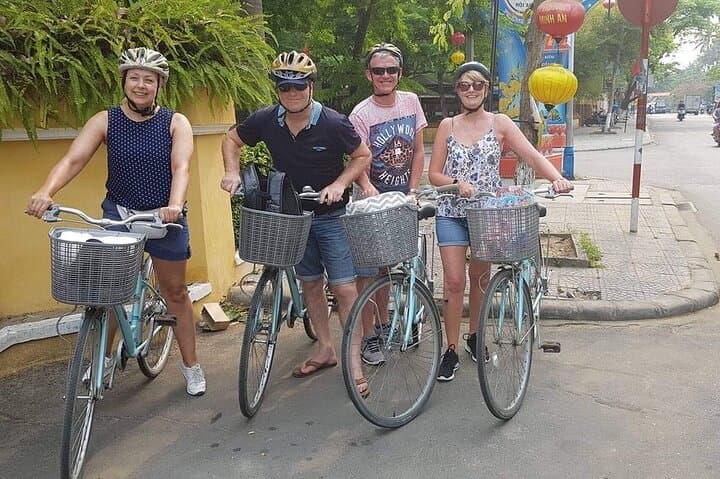
Pedal away from the lantern-lit lanes of Hoi An and into a patchwork of narrow fields where the air tastes faintly of seaweed and cilantro. The ride to Tra Que Village is gentle—flat lanes lined with coconut palms and low stone walls—each turn revealing farmers bent over raised beds and small canals that push cool air across the paddies.
Pedal away from the lantern-lit lanes of Hoi An and into a patchwork of narrow fields where the air tastes faintly of seaweed and cilantro. The ride to Tra Que Village is gentle—flat lanes lined with coconut palms and low stone walls—each turn revealing farmers bent over raised beds and small canals that push cool air across the paddies.
Tra Que’s farming techniques are local history: families have tended these herb gardens for generations, using seaweed fertiliser and hand tools rather than machines. The village’s soils are alluvial, deposited by nearby rivers, which keeps the beds fertile and the produce vibrant. Culture here is hands-on; you’ll meet a host family, try traditional planting, and learn recipes that link market produce directly to the table.
The cooking segment focuses on simple, regional classics—rice pancakes, spring rolls, herb salads—preparing dishes with what you’ve just foraged or chosen at the market. Expect approachable instruction, communal chopping and an immediate payoff: the meal you helped make.
Practical guidance: wear closed-toe shoes and a sun hat for the farm work, bring a small daypack for water and camera, and choose a morning or late-afternoon departure to avoid midday heat. The cycling distances are short and flat; guides provide helmets and basic bike support. Respect crop beds—step only where shown—and bring cash for local purchases and optional tips. This is a low-impact cultural ride that rewards curiosity and a willingness to get your hands in the soil.