THE ADVENTURE COLLECTIVE® · Independent discovery and booking for outdoor travel

A full-day escape from Sapporo to Hoheikyo Dam and Hoheikyo Onsen that pairs dramatic autumn foliage with a restorative outdoor hot spring. Expect easy walks, photo viewpoints, and a 9–10 hour itinerary perfect for koyo season.
A full-day escape from Sapporo to Hoheikyo Dam and Hoheikyo Onsen that pairs dramatic autumn foliage with a restorative outdoor hot spring. Expect easy walks, photo viewpoints, and a 9–10 hour itinerary perfect for koyo season.
You step out of Sapporo’s urban hush into a ribbon of highway and thickening spruce; by the time the bus rounds the last bend the dam looms, a pale arc holding back a turquoise stillness that throws back the fall colors like a mirror. The air bites clean, and the leaves—maple and birch—seem to push toward the water, daring the surface to keep their fire.
Verified experiences and guided adventures in the surrounding area.
You step out of Sapporo’s urban hush into a ribbon of highway and thickening spruce; by the time the bus rounds the last bend the dam looms, a pale arc holding back a turquoise stillness that throws back the fall colors like a mirror. The air bites clean, and the leaves—maple and birch—seem to push toward the water, daring the surface to keep their fire.
Hoheikyo Dam sits on the Toyohira watershed that supplies Sapporo, constructed in the postwar decades to regulate floods and secure water for the growing city; the reservoir and surrounding hills are carved from volcanic soils and glacially-influenced terrain, giving steep forested slopes and crisp, stony overlooks. Hoheikyo Onsen carries a quieter history: a woodland soak culture where hot spring water has been used to warm bodies and conversations for generations.
Expect easy paved viewpoints and short dirt trails rather than long backcountry routes—this is a scenic day trip with photo stops, a gentle walk along reservoir edges, and a restorative open-air onsen soak. Practicalities matter: the full excursion runs about 9–10 hours from Sapporo, including roughly an hour’s drive each way; bring layered clothing for temperature swings, a small daypack, and cash for lockers and local snacks. Onsen etiquette is straightforward—clean thoroughly before entering, and keep tattoos and phone use in mind.
Plan your visit for morning light on the water and late afternoon warmth in the onsen; autumn (koyo) is peak for color, but spring buds and snowy winters each have their own clarity. With clear planning, this is an accessible, sensory day that pairs sightseeing and a traditional Japanese hot-spring finish.
easy.
9–10 hours.
Light fitness; able to walk short paved and dirt trails and stand for viewing periods
The drive typically takes about 45–70 minutes each way depending on traffic and season; the tour includes round-trip transport within the day.
Public onsen are traditionally used without swimwear; many require full-body showering beforehand and have rules about tattoos—check the operator for specific facility policies.
No—most viewpoints are accessible via paved or gently sloped dirt paths; the tour focuses on short walks and sightseeing rather than long hikes.
Late October to early November is usually peak for koyo in the Hoheikyo area, but timing shifts with elevation and annual weather patterns.
Hoheikyo Dam was developed during the mid-20th century to stabilize river flow and secure water for Sapporo; the surrounding onsen are part of a long-standing regional bathing culture.
Stick to marked paths and carry out all trash; high visitor seasons can strain onsen facilities and local trails, so minimize footprint and follow local signage.
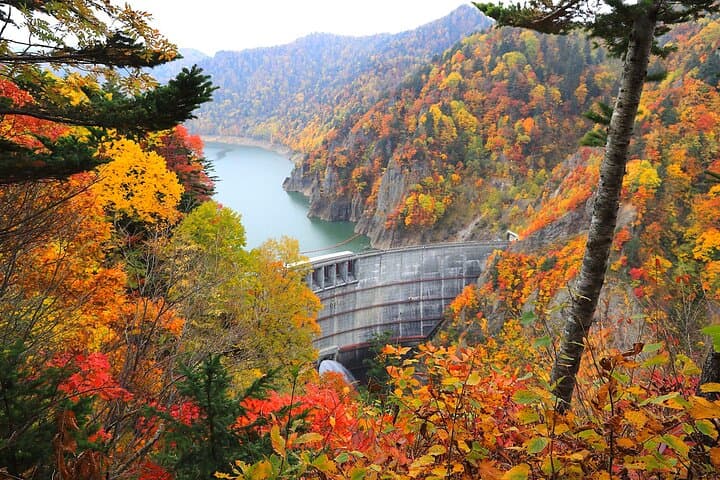
You step out of Sapporo’s urban hush into a ribbon of highway and thickening spruce; by the time the bus rounds the last bend the dam looms, a pale arc holding back a turquoise stillness that throws back the fall colors like a mirror. The air bites clean, and the leaves—maple and birch—seem to push toward the water, daring the surface to keep their fire.
You step out of Sapporo’s urban hush into a ribbon of highway and thickening spruce; by the time the bus rounds the last bend the dam looms, a pale arc holding back a turquoise stillness that throws back the fall colors like a mirror. The air bites clean, and the leaves—maple and birch—seem to push toward the water, daring the surface to keep their fire.
Hoheikyo Dam sits on the Toyohira watershed that supplies Sapporo, constructed in the postwar decades to regulate floods and secure water for the growing city; the reservoir and surrounding hills are carved from volcanic soils and glacially-influenced terrain, giving steep forested slopes and crisp, stony overlooks. Hoheikyo Onsen carries a quieter history: a woodland soak culture where hot spring water has been used to warm bodies and conversations for generations.
Expect easy paved viewpoints and short dirt trails rather than long backcountry routes—this is a scenic day trip with photo stops, a gentle walk along reservoir edges, and a restorative open-air onsen soak. Practicalities matter: the full excursion runs about 9–10 hours from Sapporo, including roughly an hour’s drive each way; bring layered clothing for temperature swings, a small daypack, and cash for lockers and local snacks. Onsen etiquette is straightforward—clean thoroughly before entering, and keep tattoos and phone use in mind.
Plan your visit for morning light on the water and late afternoon warmth in the onsen; autumn (koyo) is peak for color, but spring buds and snowy winters each have their own clarity. With clear planning, this is an accessible, sensory day that pairs sightseeing and a traditional Japanese hot-spring finish.