THE ADVENTURE COLLECTIVE® · Independent discovery and booking for outdoor travel

A full-day active tour from Hobart to Launceston that delivers Wineglass Bay’s world-class lookout, optional beach descent, oyster stops, and coastal highlights—ideal for travelers who want a compact, outdoors-forward taste of Freycinet.
A full-day active tour from Hobart to Launceston that delivers Wineglass Bay’s world-class lookout, optional beach descent, oyster stops, and coastal highlights—ideal for travelers who want a compact, outdoors-forward taste of Freycinet.
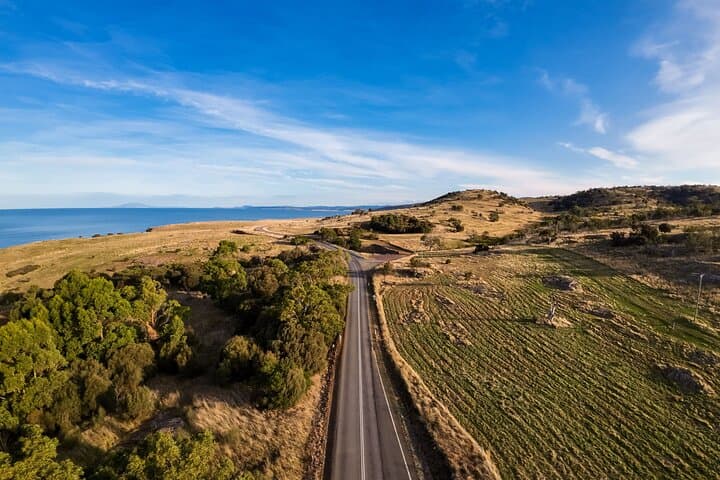
You step off the coach into a wind that seems to be cleaning the world — salt on your lips, granite warm under a low sun. The bus has threaded the east coast towns of Orford and Swansea and pulled into the parking area where trailheads fan out toward the pink granite of Freycinet National Park. Guides gather the group with practiced calm: maps, water reminders, and the choice most visitors wrestle with — the shorter return from the Wineglass Bay Lookout, or the extra hour and a half down to the beach.
Verified experiences and guided adventures in the surrounding area.
Operated by Tours Tasmania · Coles Bay, Tasmania
You step off the coach into a wind that seems to be cleaning the world — salt on your lips, granite warm under a low sun. The bus has threaded the east coast towns of Orford and Swansea and pulled into the parking area where trailheads fan out toward the pink granite of Freycinet National Park. Guides gather the group with practiced calm: maps, water reminders, and the choice most visitors wrestle with — the shorter return from the Wineglass Bay Lookout, or the extra hour and a half down to the beach.
Freycinet is among Tasmania’s earliest protected places, its granite ribs laid down 400 million years ago and smoothed by ice and sea. The bowl of Wineglass Bay, a crescent of white sand and aquamarine water, reads like a geological diagram — pale quartz sand, sculpted granite, and a lee where sea birds wheel. The region also carries cultural layers: the traditional owners, the Oyster Bay Nation, lived seasonally along these coasts and left middens and place names that still mark the landscape.
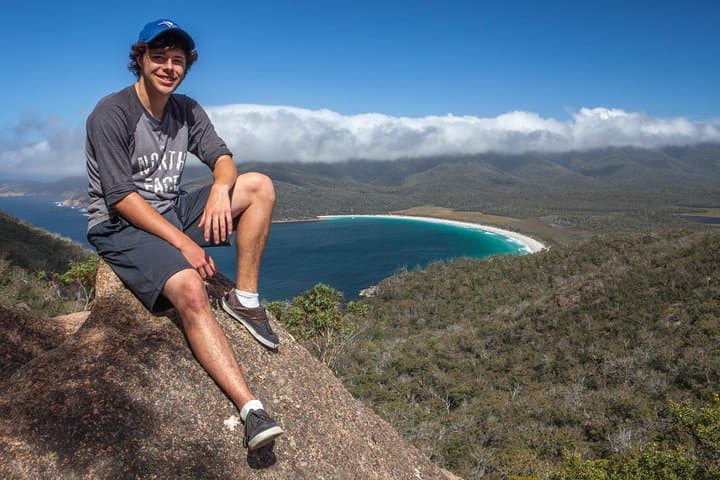
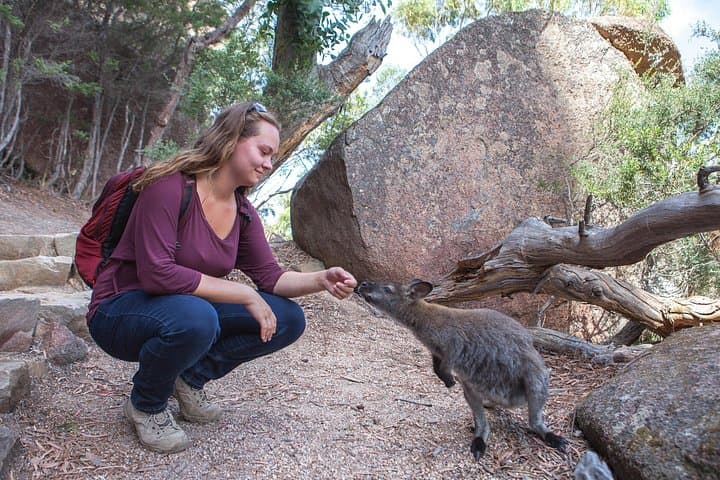
The walk to the Lookout is brisk — 1.3 km uphill over compacted track and timber steps, taking most groups 45–60 minutes depending on pace. The trail climbs through coastal scrub and low eucalypt, where the wind moves like a visible hand, smoothing the world ahead. At the top, the bay opens: a perfect arc of sand hugged by clear water and flanked by jagged headlands. Guides use the moment not just for photos but to explain local ecology — how the pink granite derives its hue, where wallabies shelter, and why the bays are ideal for oysters.
For those who push on, the descent to Wineglass Bay beach is a moderate, rewarding hike (roughly 2.5 hours return from the Lookout). On arrival the beach invites cooling swims and picnic lunches; swimmers should respect swell and currents. The tour also includes shorter stops — Honeymoon Bay, Cape Tourville Lighthouse, and the Devil’s Corner winery for a late-afternoon view toward the stately Hazards range — which stitch the day together before the return run to Launceston.
Practically: arrive hydrated, wear closed sturdy shoes, and layer for wind and sudden showers. The day is long — expect a 11–12 hour itinerary with one small suitcase allowed per person for transport. Guides keep groups moving at an even pace and manage wildlife viewing to minimize disturbance. If you want the beach, plan to descend early and bring a compact lunch or buy provisions en route. For photographers, morning and late afternoon light sculpt the granite; for hikers, moderate fitness and steady knees make the day far more enjoyable.
This is a tour designed for people who want the most iconic slice of Tasmania in a single, active day: a mix of walking, coastal geology, and local flavors that makes the east coast feel immediate and earned.
moderate.
11–12 hours.
Moderate fitness required—comfortable with uphill walks of up to 60 minutes and stair-like sections; good balance and knee strength help.
The Lookout is about 1.3 km uphill from the carpark and typically takes 45–60 minutes one-way at a moderate pace.
Yes — you can descend to Wineglass Bay beach and swim if conditions are calm, but watch for currents and check with guides before entering the water.
Lunch is not included; there’s an opportunity to buy bakery-style food en route or bring a packed picnic to eat in the National Park.
Pickup is available from select central Hobart hotels if arranged at least 48 hours prior; otherwise meet at the Tasmanian Travel & Information Centre, 20 Davey Street.
Each traveller may bring one small suitcase (carry-on size ~22 inch) plus a daypack; larger luggage requires prior arrangement.
Minimum age is 8; children should be comfortable with moderate uphill walks and supervised on beach sections.
Freycinet National Park was established in the early 20th century; its name honors French explorer Louis de Freycinet, and the area bears evidence of centuries of Aboriginal seasonal use.
Visitors are asked to stay on tracks, carry out rubbish, and follow guide instructions to minimize erosion and wildlife disturbance; park fees support maintenance and conservation.
Tours Tasmania operates guided outdoor trips and adventures with an emphasis on safety, stewardship, and memorable experiences.

You step off the coach into a wind that seems to be cleaning the world — salt on your lips, granite warm under a low sun. The bus has threaded the east coast towns of Orford and Swansea and pulled into the parking area where trailheads fan out toward the pink granite of Freycinet National Park. Guides gather the group with practiced calm: maps, water reminders, and the choice most visitors wrestle with — the shorter return from the Wineglass Bay Lookout, or the extra hour and a half down to the beach.
You step off the coach into a wind that seems to be cleaning the world — salt on your lips, granite warm under a low sun. The bus has threaded the east coast towns of Orford and Swansea and pulled into the parking area where trailheads fan out toward the pink granite of Freycinet National Park. Guides gather the group with practiced calm: maps, water reminders, and the choice most visitors wrestle with — the shorter return from the Wineglass Bay Lookout, or the extra hour and a half down to the beach.
Freycinet is among Tasmania’s earliest protected places, its granite ribs laid down 400 million years ago and smoothed by ice and sea. The bowl of Wineglass Bay, a crescent of white sand and aquamarine water, reads like a geological diagram — pale quartz sand, sculpted granite, and a lee where sea birds wheel. The region also carries cultural layers: the traditional owners, the Oyster Bay Nation, lived seasonally along these coasts and left middens and place names that still mark the landscape.
The walk to the Lookout is brisk — 1.3 km uphill over compacted track and timber steps, taking most groups 45–60 minutes depending on pace. The trail climbs through coastal scrub and low eucalypt, where the wind moves like a visible hand, smoothing the world ahead. At the top, the bay opens: a perfect arc of sand hugged by clear water and flanked by jagged headlands. Guides use the moment not just for photos but to explain local ecology — how the pink granite derives its hue, where wallabies shelter, and why the bays are ideal for oysters.
For those who push on, the descent to Wineglass Bay beach is a moderate, rewarding hike (roughly 2.5 hours return from the Lookout). On arrival the beach invites cooling swims and picnic lunches; swimmers should respect swell and currents. The tour also includes shorter stops — Honeymoon Bay, Cape Tourville Lighthouse, and the Devil’s Corner winery for a late-afternoon view toward the stately Hazards range — which stitch the day together before the return run to Launceston.
Practically: arrive hydrated, wear closed sturdy shoes, and layer for wind and sudden showers. The day is long — expect a 11–12 hour itinerary with one small suitcase allowed per person for transport. Guides keep groups moving at an even pace and manage wildlife viewing to minimize disturbance. If you want the beach, plan to descend early and bring a compact lunch or buy provisions en route. For photographers, morning and late afternoon light sculpt the granite; for hikers, moderate fitness and steady knees make the day far more enjoyable.
This is a tour designed for people who want the most iconic slice of Tasmania in a single, active day: a mix of walking, coastal geology, and local flavors that makes the east coast feel immediate and earned.