THE ADVENTURE COLLECTIVE® · Independent discovery and booking for outdoor travel

A full-day escape from Hanoi that combines the 10th-century temples of Hoa Lu with a tranquil sampan ride and a flat bicycle loop through Tam Coc’s rice fields. Expect karst cliffs, cave passages by boat, and close-up views of rural Vietnamese life.
A full-day escape from Hanoi that combines the 10th-century temples of Hoa Lu with a tranquil sampan ride and a flat bicycle loop through Tam Coc’s rice fields. Expect karst cliffs, cave passages by boat, and close-up views of rural Vietnamese life.
Morning light on the Ngo Dong river flattens the limestone karsts into sharp silhouettes as a small wooden sampan slips forward, pushed by the rhythmic thigh of a local rower. That quiet glide—past tunnels of reed and open rice paddies—is the heart of a day that pairs Vietnam’s early capital with its living countryside.
Verified experiences and guided adventures in the surrounding area.
Operated by Wati Travel · Tam Coc, Ninh Binh Province
Morning light on the Ngo Dong river flattens the limestone karsts into sharp silhouettes as a small wooden sampan slips forward, pushed by the rhythmic thigh of a local rower. That quiet glide—past tunnels of reed and open rice paddies—is the heart of a day that pairs Vietnam’s early capital with its living countryside.
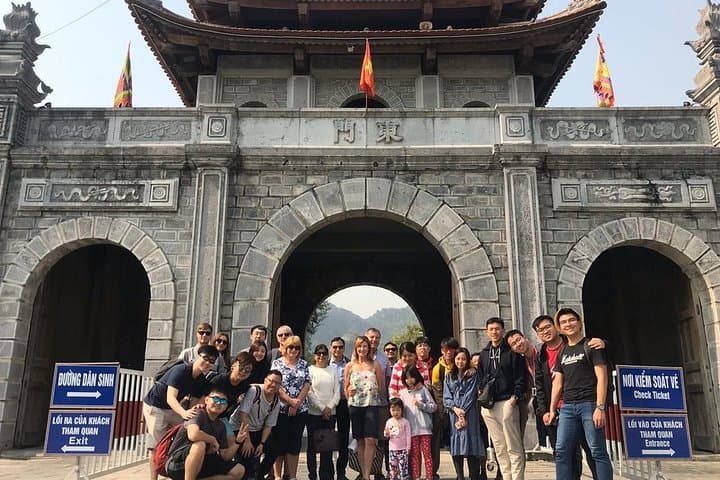
Start at Hoa Lu, the 10th–11th century seat of the Dinh and Le dynasties: compact temples of dark wood and stone set against low karst ridges that once guarded the Red River plain. The region’s geology is unmistakable—towering limestone pillars weathered into caves and narrow passes, the product of millions of years of marine sediment and tectonic lift.
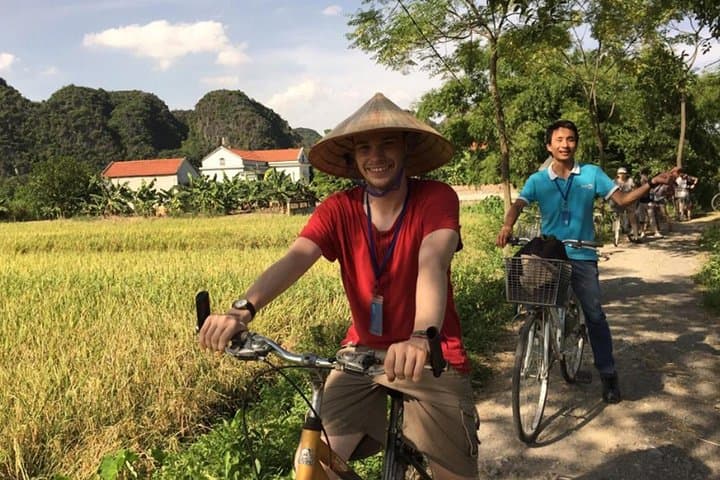
After a buffet lunch with local goat specialties, the experience shifts to water and wheel. A 1–2 hour sampan ride on the Ngo Dong threads through rice fields and caves within the Trang An landscape (a UNESCO-listed karst complex). Later, a gentle bicycle loop on flat, unpaved farm lanes brings you close to working paddies and local life: water buffalo, hand-tended crops and roadside stalls.
Practical edge: expect a full day (approximately 10–11 hours from central Hanoi with round-trip transfer), easy walking, and mostly flat cycling on compacted dirt. Bring sun protection, insect repellent and a small dry bag for cameras. Peak light for photos is morning on the river and late afternoon on the fields—plan seating on the sampan accordingly.
This is a low-impact, high-reward day for travelers who want history, karst scenery and quiet rural rhythms without strenuous hiking.
easy.
10–11 hours.
Suitable for most fitness levels; you should be able to sit in a small boat and pedal a basic bicycle for short, flat stretches.
Yes—the guided sampan trip on the Ngo Dong is included and typically lasts 1–2 hours as part of the full-day itinerary.
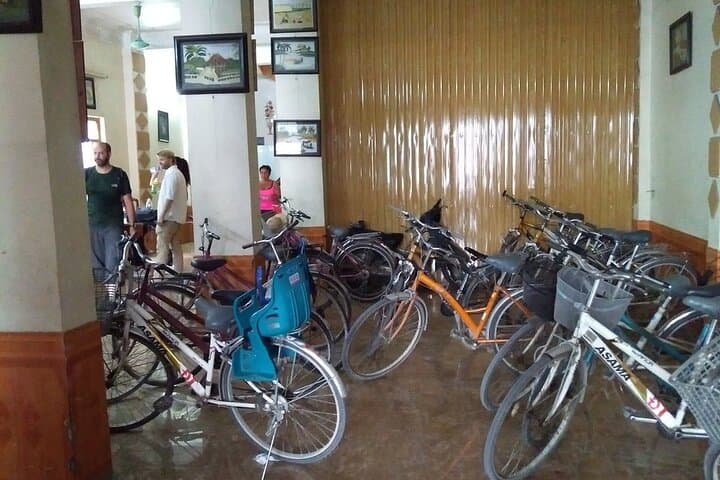
No—bicycle sections are flat short loops across packed farm lanes and suitable for riders with basic cycling ability; bikes are provided.
Entrance to Hoa Lu and Tam Coc and the buffet lunch are included; drinks at lunch are usually paid separately.
Yes—pickup is normally provided from the Old Quarter and select central hotels; confirm your pickup point when booking.
Hoa Lu was Vietnam’s capital in the 10th–11th centuries under the Dinh and Early Le dynasties, with temples honoring past rulers on a compact archaeological site.
Tam Coc and Trang An sit within a protected karst landscape; visitors should stay in boats and on paths, avoid trampling young rice shoots and carry out any trash.
Wati Travel operates guided outdoor trips and adventures with an emphasis on safety, stewardship, and memorable experiences.
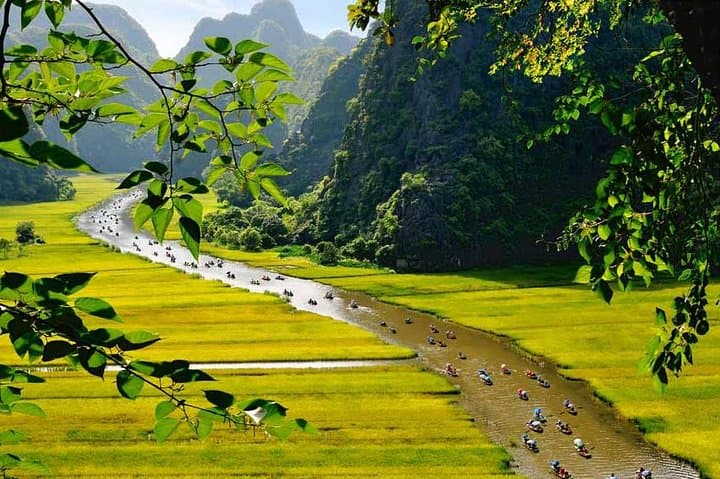
Morning light on the Ngo Dong river flattens the limestone karsts into sharp silhouettes as a small wooden sampan slips forward, pushed by the rhythmic thigh of a local rower. That quiet glide—past tunnels of reed and open rice paddies—is the heart of a day that pairs Vietnam’s early capital with its living countryside.
Morning light on the Ngo Dong river flattens the limestone karsts into sharp silhouettes as a small wooden sampan slips forward, pushed by the rhythmic thigh of a local rower. That quiet glide—past tunnels of reed and open rice paddies—is the heart of a day that pairs Vietnam’s early capital with its living countryside.
Start at Hoa Lu, the 10th–11th century seat of the Dinh and Le dynasties: compact temples of dark wood and stone set against low karst ridges that once guarded the Red River plain. The region’s geology is unmistakable—towering limestone pillars weathered into caves and narrow passes, the product of millions of years of marine sediment and tectonic lift.
After a buffet lunch with local goat specialties, the experience shifts to water and wheel. A 1–2 hour sampan ride on the Ngo Dong threads through rice fields and caves within the Trang An landscape (a UNESCO-listed karst complex). Later, a gentle bicycle loop on flat, unpaved farm lanes brings you close to working paddies and local life: water buffalo, hand-tended crops and roadside stalls.
Practical edge: expect a full day (approximately 10–11 hours from central Hanoi with round-trip transfer), easy walking, and mostly flat cycling on compacted dirt. Bring sun protection, insect repellent and a small dry bag for cameras. Peak light for photos is morning on the river and late afternoon on the fields—plan seating on the sampan accordingly.
This is a low-impact, high-reward day for travelers who want history, karst scenery and quiet rural rhythms without strenuous hiking.