THE ADVENTURE COLLECTIVE® · Independent discovery and booking for outdoor travel

Spend a four-hour morning in Hluhluwe-iMfolozi, Africa's oldest game reserve, searching for white rhino, elephant and other Big Five members. This half-day drive pairs patient viewing with local conservation history and accessible logistics.
Spend a four-hour morning in Hluhluwe-iMfolozi, Africa's oldest game reserve, searching for white rhino, elephant and other Big Five members. This half-day drive pairs patient viewing with local conservation history and accessible logistics.
Morning light slices across rolling savanna as the safari vehicle eases through the gate at Hluhluwe-iMfolozi — Africa's oldest proclaimed game reserve. The low, grassy hills reveal giraffe necks and the slow, deliberate grazing of buffalo; in the distance, elephant dust plumes rise like small weather systems. Guides scan with practiced patience, and the land answers in twitching ears and distant roars.
Verified experiences and guided adventures in the surrounding area.
Operated by Ghost Mountain Safaris · Hluhluwe, KwaZulu-Natal
Morning light slices across rolling savanna as the safari vehicle eases through the gate at Hluhluwe-iMfolozi — Africa's oldest proclaimed game reserve. The low, grassy hills reveal giraffe necks and the slow, deliberate grazing of buffalo; in the distance, elephant dust plumes rise like small weather systems. Guides scan with practiced patience, and the land answers in twitching ears and distant roars.
Established in the late 19th century to halt the extinction of the white rhino, Hluhluwe's landscape is an interplay of ancient geology and managed wilderness: gentle hills formed from Natal Group sandstones, broad river valleys, and thickets of thorny bush that shelter antelope and bird flocks. Zulu culture threads through the park's edges — villages nearby, oral histories of the land and conservation efforts that have shaped modern management.
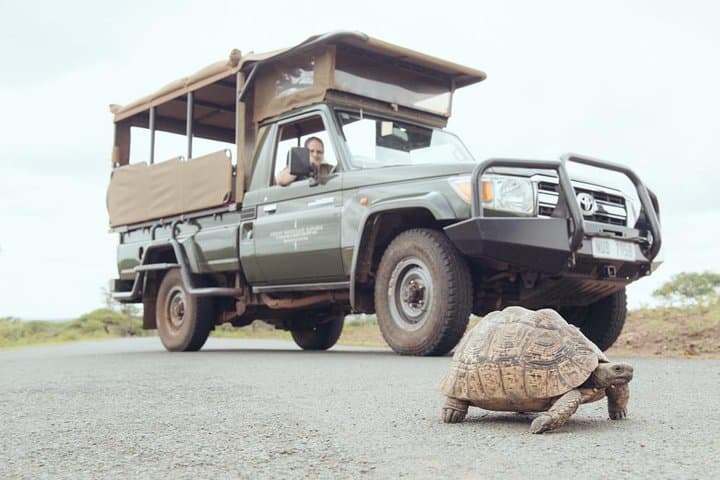
A half-day game drive (about four hours) focuses on wildlife encounters, interpreting tracks, and short stops at vantage points. Expect open-sided vehicles, dusty tracks, and long sightlines that favor rhino and elephant spotting. Photography is straightforward but bring a long lens and steady hands; wildlife can be surprisingly close or hold at a respectful distance.
Practical notes: arrive at Memorial Gate on time, bring layered sun protection and plenty of water, and listen to guides about safe behavior around animals. Early morning drives offer cooler temperatures and more activity; mid-morning light is good for photography but animals may bed down. Hluhluwe rewards patience — the drive is about watching the landscape reveal its stories as much as ticking species off a list.
easy.
4 hours.
Suitable for most fitness levels — minimal walking, mostly seated in a vehicle
Sightings cannot be guaranteed, but Hluhluwe is one of the best reserves for white rhino and offers strong chances for elephants, buffalo and other large mammals; guides increase your likelihood with local knowledge.
Most visitors drive from Hluhluwe town or arrange pickup; the Memorial Gate is a common meeting point with signage on regional roads—confirm directions with the operator before departure.
Yes — children are allowed but must be accompanied by an adult and follow safety guidance; check vehicle seating and age policies with the operator when booking.
Standard policy allows full refund if canceled at least 24 hours before departure; last-minute cancellations typically aren't refundable—review the booking terms on your confirmation.
Hluhluwe-iMfolozi was set aside in the 1890s primarily to protect the white rhino and later became central to broader conservation and anti-poaching strategies in KwaZulu-Natal.
Ongoing rhino protection programs and community-based initiatives are active here; visitors can reduce impact by staying on roads and following guide instructions.
Ghost Mountain Safaris operates guided outdoor trips and adventures with an emphasis on safety, stewardship, and memorable experiences.
Morning light slices across rolling savanna as the safari vehicle eases through the gate at Hluhluwe-iMfolozi — Africa's oldest proclaimed game reserve. The low, grassy hills reveal giraffe necks and the slow, deliberate grazing of buffalo; in the distance, elephant dust plumes rise like small weather systems. Guides scan with practiced patience, and the land answers in twitching ears and distant roars.
Morning light slices across rolling savanna as the safari vehicle eases through the gate at Hluhluwe-iMfolozi — Africa's oldest proclaimed game reserve. The low, grassy hills reveal giraffe necks and the slow, deliberate grazing of buffalo; in the distance, elephant dust plumes rise like small weather systems. Guides scan with practiced patience, and the land answers in twitching ears and distant roars.
Established in the late 19th century to halt the extinction of the white rhino, Hluhluwe's landscape is an interplay of ancient geology and managed wilderness: gentle hills formed from Natal Group sandstones, broad river valleys, and thickets of thorny bush that shelter antelope and bird flocks. Zulu culture threads through the park's edges — villages nearby, oral histories of the land and conservation efforts that have shaped modern management.
A half-day game drive (about four hours) focuses on wildlife encounters, interpreting tracks, and short stops at vantage points. Expect open-sided vehicles, dusty tracks, and long sightlines that favor rhino and elephant spotting. Photography is straightforward but bring a long lens and steady hands; wildlife can be surprisingly close or hold at a respectful distance.
Practical notes: arrive at Memorial Gate on time, bring layered sun protection and plenty of water, and listen to guides about safe behavior around animals. Early morning drives offer cooler temperatures and more activity; mid-morning light is good for photography but animals may bed down. Hluhluwe rewards patience — the drive is about watching the landscape reveal its stories as much as ticking species off a list.