THE ADVENTURE COLLECTIVE® · Independent discovery and booking for outdoor travel

Spend a day tracing the scars and stories of the Eastern Cape’s Albany district from Port Elizabeth. Visit fortified farmhouses, the Clay Fort, Fraser’s Signal Tower and stone churches while a local guide connects geology and colonial history.
Spend a day tracing the scars and stories of the Eastern Cape’s Albany district from Port Elizabeth. Visit fortified farmhouses, the Clay Fort, Fraser’s Signal Tower and stone churches while a local guide connects geology and colonial history.
Morning light freckles the low hills as an air-conditioned minibus slips out of Port Elizabeth and onto farm roads where stone churches and fortified homesteads punctuate the landscape. Fields of clay and winter-green scrub sweep past; gulls wheel over the estuaries and the air smells faintly of salt and dust. The tour threads Bathurst, Port Alfred and Grahamstown (now Makhanda), pausing at the Clay Fort and Fraser’s Signal Tower, small sites that hold larger stories of frontier life.
Verified experiences and guided adventures in the surrounding area.
Operated by Alan Tours · Port Elizabeth, Eastern Cape
Morning light freckles the low hills as an air-conditioned minibus slips out of Port Elizabeth and onto farm roads where stone churches and fortified homesteads punctuate the landscape. Fields of clay and winter-green scrub sweep past; gulls wheel over the estuaries and the air smells faintly of salt and dust. The tour threads Bathurst, Port Alfred and Grahamstown (now Makhanda), pausing at the Clay Fort and Fraser’s Signal Tower, small sites that hold larger stories of frontier life.
This is Albany country: 19th-century colonial settlements, Xhosa cultural ties and the scars of frontier conflicts that shaped modern Eastern Cape boundaries. Geologically the district rides gentle Karoo-era slopes—clay soils, sandstone outcrops and coastal sediments that guided early roadways and farm placements. Local culture is visible in stone churches, monuments and working farms; guides translate the layered history from mission stations to tiny field hospitals left behind by past conflicts.
Practical guidance: the full-day excursion runs about 10 hours with light walking at stops; most time is spent in the vehicle. Entrance fees, bottled water, coffee and a light lunch are included. The operator requires a minimum of two people and can provide infant seats; mobility is easy but expect short unpaved stretches. Bring sun protection and a camera with extra battery — light can be sharp and change quickly. Respect private farmland, keep to paths, and be prepared for variable coastal wind and dust. This trip suits anyone wanting a ground-level, history-first view of Albany’s landscapes and stories.
easy.
10 hours.
Suitable for all fitness levels; mostly travel by vehicle with short, easy walks at sites
The tour runs about 10 hours and includes entrance fees, bottled water, coffee/tea and a light lunch; transportation is in an air-conditioned vehicle.
Yes—operator notes a minimum of two people; single travelers may incur a single-person supplement.
Infant seats are available and the tour is described as suitable for all physical fitness levels, making it family-friendly for young children.
Most of the day is spent in the vehicle with short, easy walks at each stop on unpaved or uneven ground—moderate mobility is recommended.
Albany played a central role in 19th-century frontier and colonial conflicts; Grahamstown (now Makhanda) and surrounding monuments record those turbulent encounters.
Much of the route passes working farmland—respect private property, avoid littering and support local guides and businesses to help sustain community tourism.
Alan Tours operates guided outdoor trips and adventures with an emphasis on safety, stewardship, and memorable experiences.

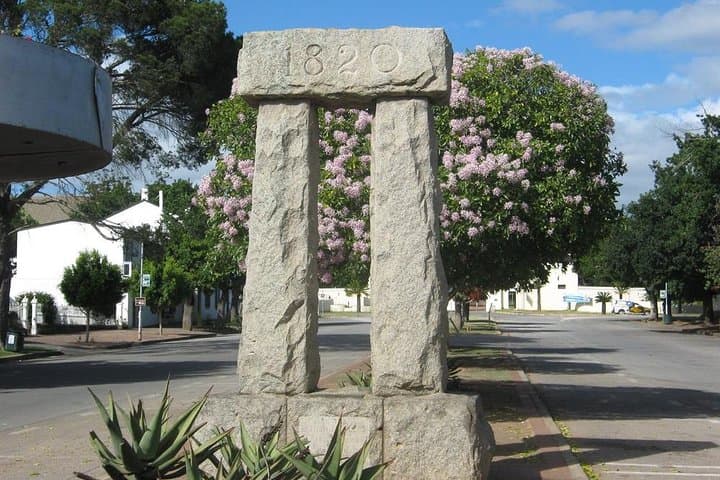


Morning light freckles the low hills as an air-conditioned minibus slips out of Port Elizabeth and onto farm roads where stone churches and fortified homesteads punctuate the landscape. Fields of clay and winter-green scrub sweep past; gulls wheel over the estuaries and the air smells faintly of salt and dust. The tour threads Bathurst, Port Alfred and Grahamstown (now Makhanda), pausing at the Clay Fort and Fraser’s Signal Tower, small sites that hold larger stories of frontier life.
Morning light freckles the low hills as an air-conditioned minibus slips out of Port Elizabeth and onto farm roads where stone churches and fortified homesteads punctuate the landscape. Fields of clay and winter-green scrub sweep past; gulls wheel over the estuaries and the air smells faintly of salt and dust. The tour threads Bathurst, Port Alfred and Grahamstown (now Makhanda), pausing at the Clay Fort and Fraser’s Signal Tower, small sites that hold larger stories of frontier life.
This is Albany country: 19th-century colonial settlements, Xhosa cultural ties and the scars of frontier conflicts that shaped modern Eastern Cape boundaries. Geologically the district rides gentle Karoo-era slopes—clay soils, sandstone outcrops and coastal sediments that guided early roadways and farm placements. Local culture is visible in stone churches, monuments and working farms; guides translate the layered history from mission stations to tiny field hospitals left behind by past conflicts.
Practical guidance: the full-day excursion runs about 10 hours with light walking at stops; most time is spent in the vehicle. Entrance fees, bottled water, coffee and a light lunch are included. The operator requires a minimum of two people and can provide infant seats; mobility is easy but expect short unpaved stretches. Bring sun protection and a camera with extra battery — light can be sharp and change quickly. Respect private farmland, keep to paths, and be prepared for variable coastal wind and dust. This trip suits anyone wanting a ground-level, history-first view of Albany’s landscapes and stories.