THE ADVENTURE COLLECTIVE® · Independent discovery and booking for outdoor travel

Explore Salvador’s original capital on a three-hour walk from Farol da Barra to Pelourinho. Discover colonial churches, baroque interiors and lively street culture while navigating cobbled lanes and coastal views.
Explore Salvador’s original capital on a three-hour walk from Farol da Barra to Pelourinho. Discover colonial churches, baroque interiors and lively street culture while navigating cobbled lanes and coastal views.
The Atlantic breeze hits first at Farol da Barra, salt spray and gulls challenging you to look further down Salvador’s fractured coastline. A three-hour walking tour moves from the lighthouse’s low cliffs into the steep, cobbled lanes of Pelourinho, where color-washed buildings lean in close and the city’s layered past speaks in stone and timber.
Verified experiences and guided adventures in the surrounding area.
Operated by ALLTOUR · Salvador, Bahia
The Atlantic breeze hits first at Farol da Barra, salt spray and gulls challenging you to look further down Salvador’s fractured coastline. A three-hour walking tour moves from the lighthouse’s low cliffs into the steep, cobbled lanes of Pelourinho, where color-washed buildings lean in close and the city’s layered past speaks in stone and timber.
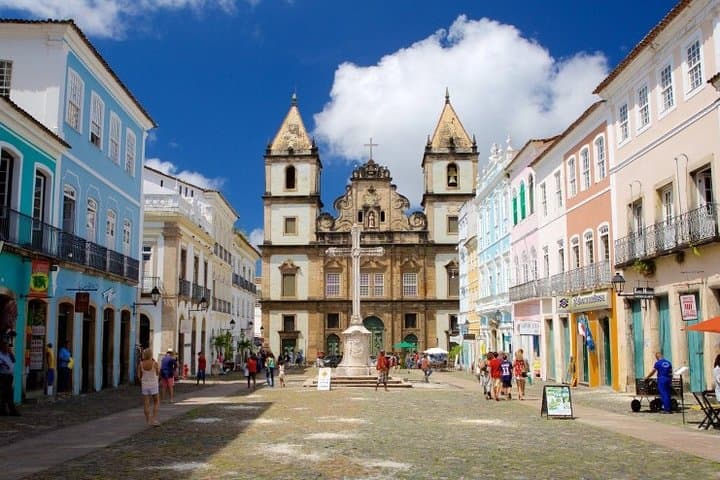
Salvador was Brazil’s first capital, founded in 1549; the tour threads through sites tied to Portuguese settlement, Afro-Brazilian culture and baroque church wealth. Geology is plain in the city’s relief—limestone and laterite cliffs created the upper town where colonial administrators built high above the bay—and you’ll feel the elevation change on steps and narrow alleys. Pelourinho’s plazas and the Church of São Francisco offer hands-on history: gilded interiors, carved angels and the town square where civic life has long played out.
Locals move the rhythm here—street musicians, vendors selling acarajé, and everyday life rubbing against preserved façades. Expect informed guide commentary (Portuguese or Spanish) and short stops for photos; church interiors usually prohibit flash photography. The walk is easy-paced but includes uneven cobbles and steep steps.
Practical notes: wear breathable shoes with good grip and sun protection; carry water and a lightweight rain layer during the wet season. Plan for about three hours including transit between stops; churches may charge small admission fees. If you want stronger photography angles, aim for early morning light at Farol da Barra or late afternoon in Pelourinho when shadows sculpt the facades. This tour offers a compact, walkable introduction to Salvador’s most historic streets.
easy.
3 hours.
Suitable for most fitness levels; comfortable walking ability and balance on uneven surfaces recommended
The experience runs approximately three hours, covering Farol da Barra, Pelourinho and key churches with short guided stops.
No—small admission fees to some churches are typically not included and are paid on site.
Guided commentary is available in Portuguese or Spanish according to the listing.
Yes—it's physically easy, but infants must sit on an adult’s lap during any vehicle segments and uneven streets may be challenging with strollers.
Salvador was established as Brazil’s first colonial capital in 1549 and developed as a hub of the transatlantic trade, shaping its architecture, religion and Afro-Brazilian culture.
Historic preservation in Pelourinho balances tourism with community life; support local vendors and follow signage to minimize wear on fragile colonial buildings.
ALLTOUR operates guided outdoor trips and adventures with an emphasis on safety, stewardship, and memorable experiences.
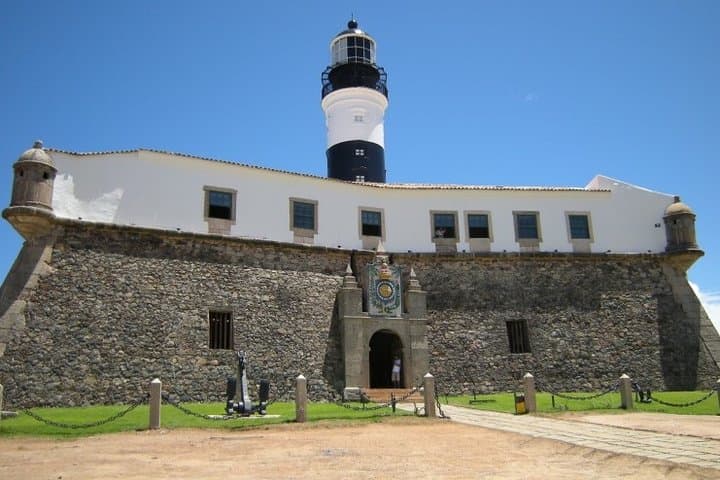
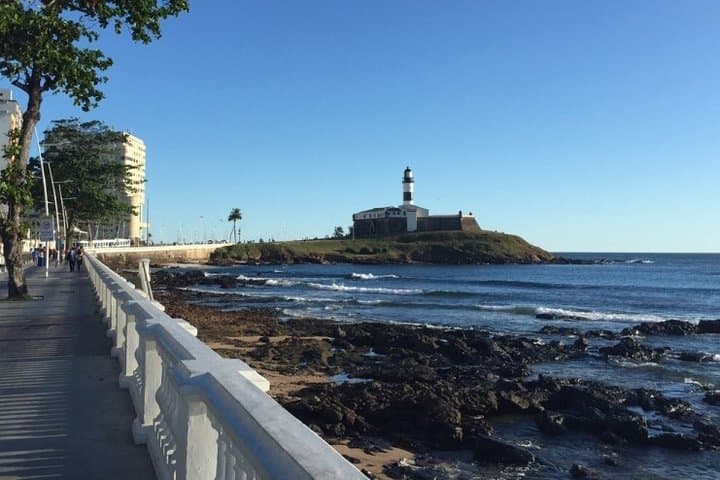
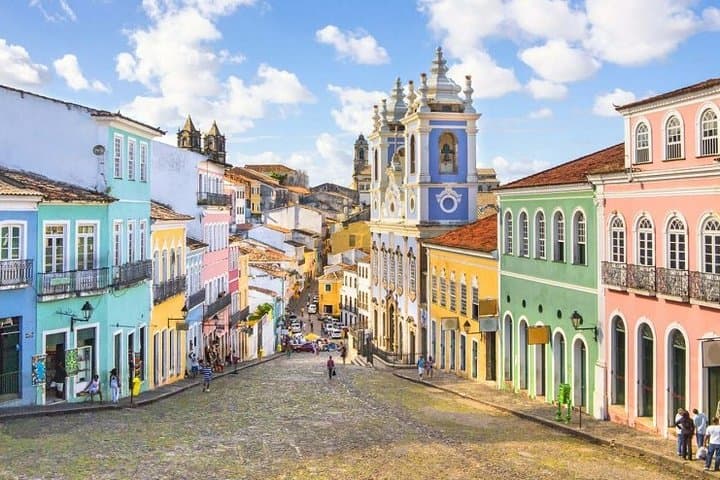
The Atlantic breeze hits first at Farol da Barra, salt spray and gulls challenging you to look further down Salvador’s fractured coastline. A three-hour walking tour moves from the lighthouse’s low cliffs into the steep, cobbled lanes of Pelourinho, where color-washed buildings lean in close and the city’s layered past speaks in stone and timber.
The Atlantic breeze hits first at Farol da Barra, salt spray and gulls challenging you to look further down Salvador’s fractured coastline. A three-hour walking tour moves from the lighthouse’s low cliffs into the steep, cobbled lanes of Pelourinho, where color-washed buildings lean in close and the city’s layered past speaks in stone and timber.
Salvador was Brazil’s first capital, founded in 1549; the tour threads through sites tied to Portuguese settlement, Afro-Brazilian culture and baroque church wealth. Geology is plain in the city’s relief—limestone and laterite cliffs created the upper town where colonial administrators built high above the bay—and you’ll feel the elevation change on steps and narrow alleys. Pelourinho’s plazas and the Church of São Francisco offer hands-on history: gilded interiors, carved angels and the town square where civic life has long played out.
Locals move the rhythm here—street musicians, vendors selling acarajé, and everyday life rubbing against preserved façades. Expect informed guide commentary (Portuguese or Spanish) and short stops for photos; church interiors usually prohibit flash photography. The walk is easy-paced but includes uneven cobbles and steep steps.
Practical notes: wear breathable shoes with good grip and sun protection; carry water and a lightweight rain layer during the wet season. Plan for about three hours including transit between stops; churches may charge small admission fees. If you want stronger photography angles, aim for early morning light at Farol da Barra or late afternoon in Pelourinho when shadows sculpt the facades. This tour offers a compact, walkable introduction to Salvador’s most historic streets.