THE ADVENTURE COLLECTIVE® · Independent discovery and booking for outdoor travel

Trace Georgia’s layered past on a single, scenic day trip from Tbilisi. Visit Jvari and Svetitskhoveli in Mtskheta, explore Stalin’s museum in Gori, and walk the rock-cut streets of Uplistsikhe.
Trace Georgia’s layered past on a single, scenic day trip from Tbilisi. Visit Jvari and Svetitskhoveli in Mtskheta, explore Stalin’s museum in Gori, and walk the rock-cut streets of Uplistsikhe.
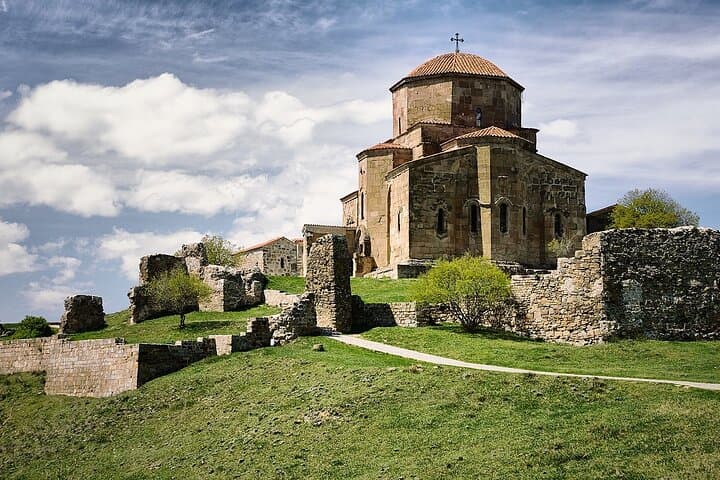
You step off the coach onto wind-swept basalt terraces where the Kura River tugs at the valley below, and the skyline is punctuated by the silhouette of Jvari Monastery. The air carries hints of baked clay from Uplistsikhe’s rock-hewn streets and the faint smoke of wood-fired bread in Mtskheta’s narrow lanes.
Verified experiences and guided adventures in the surrounding area.
Operated by Amiran Gigauri · Tbilisi, Tbilisi
You step off the coach onto wind-swept basalt terraces where the Kura River tugs at the valley below, and the skyline is punctuated by the silhouette of Jvari Monastery. The air carries hints of baked clay from Uplistsikhe’s rock-hewn streets and the faint smoke of wood-fired bread in Mtskheta’s narrow lanes.
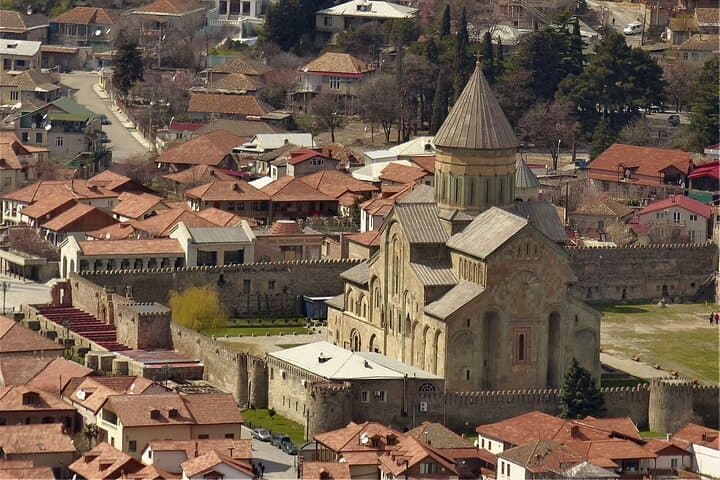
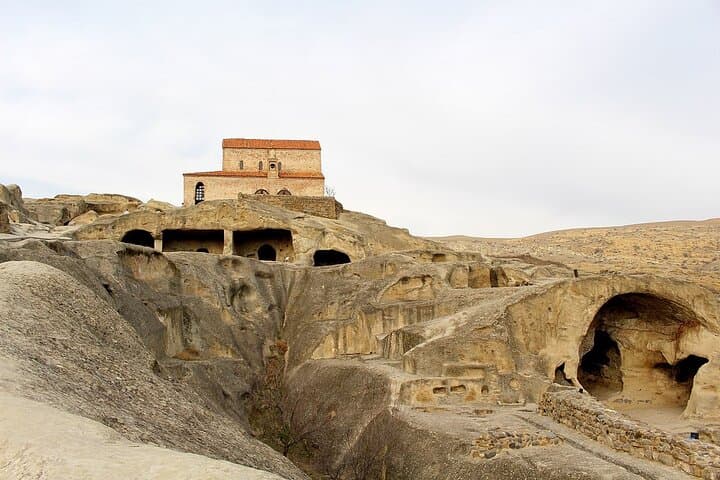
This full-day route threads three layers of Georgian history. Mtskheta, an early medieval capital, houses the 11th-century Svetitskhoveli Cathedral with its layered frescoes and stonework; Jvari, a 6th-century hilltop church, frames the confluence of rivers. Gori offers a different chapter: a Soviet-era museum in the town where Joseph Stalin was born. Uplistsikhe, carved from volcanic tufa, dates back to the late Bronze Age and shows how geology shaped settlement—soft rock that monks and merchants hollowed into homes, tunnels and public halls.
Culture here is tactile: church stone worn by centuries of pilgrims, bread baked in clay ovens, and roadside stands selling honey and churchkhela. Expect uneven rock and stepped pathways at ancient sites; the wind and sun will be your constant companions.
Practical guidance: wear grippy shoes for climbing carved stairs, bring water and sun protection, and budget time for short walks at each stop—most visits last 40–60 minutes. Photography is allowed at most sites, but some interiors restrict flash. The day is long but manageable: the driving between sites gives time to reset and take in the changing landscape.
easy.
8–9 hours.
Suitable for most fitness levels; participants should be comfortable with short hikes, stairs and standing for up to an hour at a time.
Many sites require a separate admission fee; this tour description notes that some admissions are not included—bring cash or card to pay on-site.
Most operators depart from central Tbilisi; confirm your pickup point when booking and allow time for morning collection.
Yes—walking is generally light, but visitors should be able to manage stairs and uneven surfaces; pushchairs may be impractical at rocky sites.
The itinerary includes a lunch stop but not necessarily a supplied meal—confirm whether lunch is included or if you should budget for a meal at a local restaurant.
Mtskheta served as Georgia’s religious and political center in the early medieval period; Svetitskhoveli is a UNESCO site and Uplistsikhe preserves urban life carved into volcanic tufa centuries earlier.
The region balances tourism with preservation—stay on marked paths, avoid touching frescoes, and use local guides to support conservation-aware access.
Amiran Gigauri operates guided outdoor trips and adventures with an emphasis on safety, stewardship, and memorable experiences.
You step off the coach onto wind-swept basalt terraces where the Kura River tugs at the valley below, and the skyline is punctuated by the silhouette of Jvari Monastery. The air carries hints of baked clay from Uplistsikhe’s rock-hewn streets and the faint smoke of wood-fired bread in Mtskheta’s narrow lanes.
You step off the coach onto wind-swept basalt terraces where the Kura River tugs at the valley below, and the skyline is punctuated by the silhouette of Jvari Monastery. The air carries hints of baked clay from Uplistsikhe’s rock-hewn streets and the faint smoke of wood-fired bread in Mtskheta’s narrow lanes.
This full-day route threads three layers of Georgian history. Mtskheta, an early medieval capital, houses the 11th-century Svetitskhoveli Cathedral with its layered frescoes and stonework; Jvari, a 6th-century hilltop church, frames the confluence of rivers. Gori offers a different chapter: a Soviet-era museum in the town where Joseph Stalin was born. Uplistsikhe, carved from volcanic tufa, dates back to the late Bronze Age and shows how geology shaped settlement—soft rock that monks and merchants hollowed into homes, tunnels and public halls.
Culture here is tactile: church stone worn by centuries of pilgrims, bread baked in clay ovens, and roadside stands selling honey and churchkhela. Expect uneven rock and stepped pathways at ancient sites; the wind and sun will be your constant companions.
Practical guidance: wear grippy shoes for climbing carved stairs, bring water and sun protection, and budget time for short walks at each stop—most visits last 40–60 minutes. Photography is allowed at most sites, but some interiors restrict flash. The day is long but manageable: the driving between sites gives time to reset and take in the changing landscape.