THE ADVENTURE COLLECTIVE® · Independent discovery and booking for outdoor travel

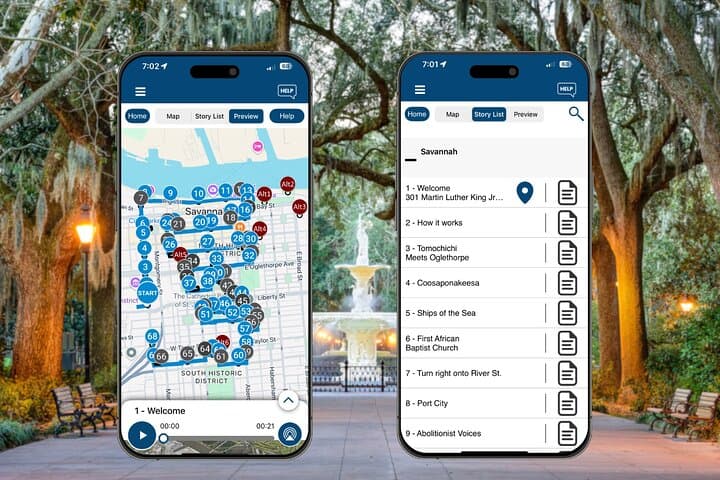
Walk Savannah on your own timetable with a narrated, GPS-driven audio tour that maps the riverfront, iconic squares, and hidden corners. Download the app, follow the voice-guided route from the Visitors Center, and explore 50+ stories across roughly five miles.
Walk Savannah on your own timetable with a narrated, GPS-driven audio tour that maps the riverfront, iconic squares, and hidden corners. Download the app, follow the voice-guided route from the Visitors Center, and explore 50+ stories across roughly five miles.
You step off the curb at 301 Martin Luther King Jr. Blvd with the river’s edge humming to your right and the squares opening like chapters ahead. The audio guide starts in your ear and the city takes shape—cobblestones click beneath your shoes, Spanish moss brushes the sky, and the Savannah River dares you to follow its long current along the waterfront.
Verified experiences and guided adventures in the surrounding area.
Operated by Action Day Trips · Savannah, GA
You step off the curb at 301 Martin Luther King Jr. Blvd with the river’s edge humming to your right and the squares opening like chapters ahead. The audio guide starts in your ear and the city takes shape—cobblestones click beneath your shoes, Spanish moss brushes the sky, and the Savannah River dares you to follow its long current along the waterfront.
Savannah was founded in 1733 by James Oglethorpe on land once occupied by Indigenous peoples; its grid of public squares was a practical urban plan that also became the stage for antebellum wealth, Civil War history, and civil-rights activism. The tour threads through 50+ audio stories and passes landmarks from Forsyth Park’s fountain to the Olde Pink House and the Owens-Thomas House, tracing architectural styles from Georgian to Greek Revival and the social history behind them.
Geology here is low and marshy—flat, with oaks thriving in clay-loam soils—and the river shaped the city’s shipping economy. Culture is immediate: gospel spills from church doors while riverside warehouses recall cotton and rail. Local insights highlight quieter turns—Jones Street’s brick sidewalks, a tucked-away courtyard garden, and where to hear live brass bands nearby.
Practically: the route is just over five miles and designed for self-paced exploration. Download the Action Tour Guide app and the tour while on Wi‑Fi, bring comfortable shoes, and carry water; audio works offline after setup. Start anytime, pause for museums or lunch, and allow 1–2 hours if you move steadily or longer if you stop to read plaques and linger in squares.
moderate.
1–2 hours.
Moderate—appropriate for most people who can walk 5+ miles at an easy pace; expect some standing and short stair sections in historic buildings if you enter them.
The core route covers just over five miles and typically takes 1–2 hours when walked steadily; plan for longer if you visit museums or stop for meals.
You must download the Action Tour Guide app and the specific tour while you have Wi‑Fi or cellular service; once downloaded, the tour functions offline.
No—museum and house admissions are not included. The audio guide points them out but you must purchase separate tickets if you plan to enter.
The password is valid for the number of travelers booked; each device must use the same password, and sharing headphones is an option for couples to save devices.
Savannah’s plan was laid out in 1733 by James Oglethorpe and used a grid of public squares; the city later became an important port for rice and cotton and a focal point in Civil War and civil-rights history.
The Historic District is protected by preservation ordinances—stay on sidewalks, avoid trampling lawns, and support local museums and preservation groups to keep buildings maintained.
Action Day Trips operates guided outdoor trips and adventures with an emphasis on safety, stewardship, and memorable experiences.


You step off the curb at 301 Martin Luther King Jr. Blvd with the river’s edge humming to your right and the squares opening like chapters ahead. The audio guide starts in your ear and the city takes shape—cobblestones click beneath your shoes, Spanish moss brushes the sky, and the Savannah River dares you to follow its long current along the waterfront.
You step off the curb at 301 Martin Luther King Jr. Blvd with the river’s edge humming to your right and the squares opening like chapters ahead. The audio guide starts in your ear and the city takes shape—cobblestones click beneath your shoes, Spanish moss brushes the sky, and the Savannah River dares you to follow its long current along the waterfront.
Savannah was founded in 1733 by James Oglethorpe on land once occupied by Indigenous peoples; its grid of public squares was a practical urban plan that also became the stage for antebellum wealth, Civil War history, and civil-rights activism. The tour threads through 50+ audio stories and passes landmarks from Forsyth Park’s fountain to the Olde Pink House and the Owens-Thomas House, tracing architectural styles from Georgian to Greek Revival and the social history behind them.
Geology here is low and marshy—flat, with oaks thriving in clay-loam soils—and the river shaped the city’s shipping economy. Culture is immediate: gospel spills from church doors while riverside warehouses recall cotton and rail. Local insights highlight quieter turns—Jones Street’s brick sidewalks, a tucked-away courtyard garden, and where to hear live brass bands nearby.
Practically: the route is just over five miles and designed for self-paced exploration. Download the Action Tour Guide app and the tour while on Wi‑Fi, bring comfortable shoes, and carry water; audio works offline after setup. Start anytime, pause for museums or lunch, and allow 1–2 hours if you move steadily or longer if you stop to read plaques and linger in squares.