THE ADVENTURE COLLECTIVE® · Independent discovery and booking for outdoor travel

Walk San Marino’s fortified ridge from Piazza della Libertà to Guaita Tower, ride the Monte Titano cable car, and finish at the Museo di Stato. This two‑hour guided tour pairs compact urban history with sweeping Adriatic views.
Walk San Marino’s fortified ridge from Piazza della Libertà to Guaita Tower, ride the Monte Titano cable car, and finish at the Museo di Stato. This two‑hour guided tour pairs compact urban history with sweeping Adriatic views.
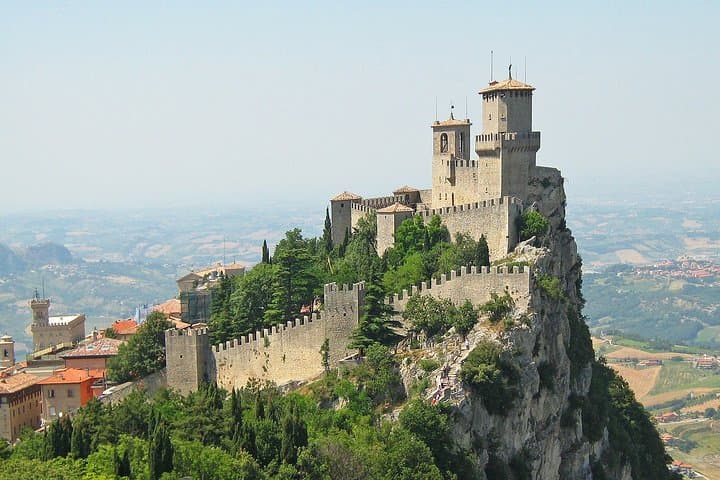
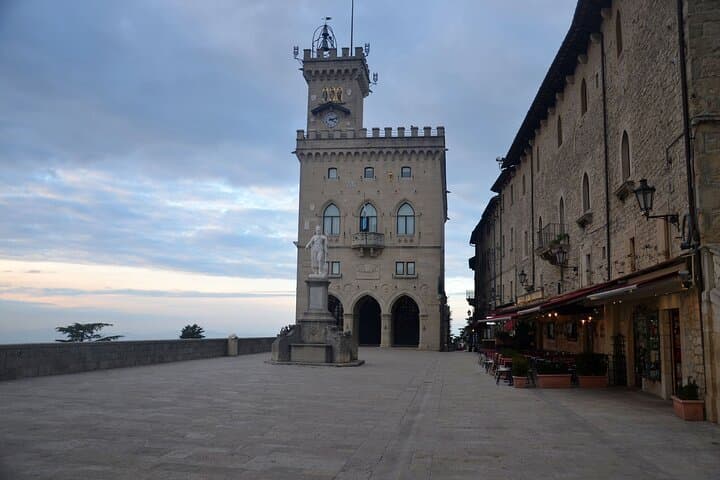
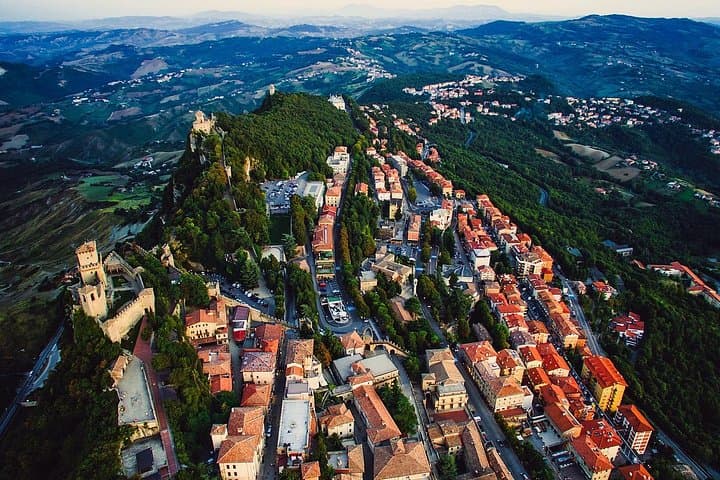
A cool breeze arrives from the Adriatic as the group gathers in Piazza della Libertà, the city’s practicable heart. The Statua della Libertà watches over pale stone streets while the guide moves people toward the Palazzo Pubblico, its neo‑Gothic façade marking the Republic’s civic life. From there the route threads upward: cobbled alleys, a cable car platform that lifts passengers above terracotta roofs, and the compact military silhouette of the Guaita Tower crowning Monte Titano.
Verified experiences and guided adventures in the surrounding area.
Operated by BlackBuck Travels · San Marino, N/A
A cool breeze arrives from the Adriatic as the group gathers in Piazza della Libertà, the city’s practicable heart. The Statua della Libertà watches over pale stone streets while the guide moves people toward the Palazzo Pubblico, its neo‑Gothic façade marking the Republic’s civic life. From there the route threads upward: cobbled alleys, a cable car platform that lifts passengers above terracotta roofs, and the compact military silhouette of the Guaita Tower crowning Monte Titano.
San Marino’s story is literal ground-under-foot. The ridge of Monte Titano is a limestone spur on the northeastern edge of the Apennines, a natural lookout that shaped settlement since late antiquity; tradition records Saint Marinus founding the republic in the early 4th century. The Guaita (11th century) and neighboring towers—Cesta and Montale—speak to medieval defensive strategies, while the Basilica’s early‑19th‑century neoclassical lines replace an earlier Romanesque sanctuary. Local culture blends Italianate cuisine with civic pride: museum collections in the Museo di Stato hold artifacts and art that trace trade and governance across centuries.
Practical guidance: expect two hours of mostly easy walking over uneven stone and short stair sections; the cable car reduces steep approach. Comfortable shoes and a light layer are wise—wind on the summit can be sharper than in the valleys. Allow time for photo stops at Belvedere terraces, and plan your visit outside peak midday crowds to enjoy clearer views of the Adriatic and surrounding farmland.
easy.
2 hours.
Suitable for most fitness levels; requires short climbs and standing for viewpoints
The guided experience lasts about two hours and covers Piazza della Libertà, Palazzo Pubblico, Guaita Tower, the Basilica, a cable car ascent, and the Museo di Stato.
Yes—it's classified as easy and suitable for most ages, but participants should be able to manage short stair sections and uneven paving.
This tour description lists a private guide and access to viewpoints; separate museum entrance fees may apply depending on the itinerary—confirm with the operator.
Yes—the cable car runs between the lower Piazzale Campo della Fiera and the historic center; schedules vary seasonally, so check times before your visit.
San Marino claims origins in 301 AD when stonecutter Saint Marinus founded a Christian community; its independence evolved through medieval alliances and maritime-era diplomacy.
Historic preservation governs alterations in the old city; visitors are asked to stay on paths, avoid touching fragile masonry, and support local businesses to sustain conservation efforts.
BlackBuck Travels operates guided outdoor trips and adventures with an emphasis on safety, stewardship, and memorable experiences.
A cool breeze arrives from the Adriatic as the group gathers in Piazza della Libertà, the city’s practicable heart. The Statua della Libertà watches over pale stone streets while the guide moves people toward the Palazzo Pubblico, its neo‑Gothic façade marking the Republic’s civic life. From there the route threads upward: cobbled alleys, a cable car platform that lifts passengers above terracotta roofs, and the compact military silhouette of the Guaita Tower crowning Monte Titano.
A cool breeze arrives from the Adriatic as the group gathers in Piazza della Libertà, the city’s practicable heart. The Statua della Libertà watches over pale stone streets while the guide moves people toward the Palazzo Pubblico, its neo‑Gothic façade marking the Republic’s civic life. From there the route threads upward: cobbled alleys, a cable car platform that lifts passengers above terracotta roofs, and the compact military silhouette of the Guaita Tower crowning Monte Titano.
San Marino’s story is literal ground-under-foot. The ridge of Monte Titano is a limestone spur on the northeastern edge of the Apennines, a natural lookout that shaped settlement since late antiquity; tradition records Saint Marinus founding the republic in the early 4th century. The Guaita (11th century) and neighboring towers—Cesta and Montale—speak to medieval defensive strategies, while the Basilica’s early‑19th‑century neoclassical lines replace an earlier Romanesque sanctuary. Local culture blends Italianate cuisine with civic pride: museum collections in the Museo di Stato hold artifacts and art that trace trade and governance across centuries.
Practical guidance: expect two hours of mostly easy walking over uneven stone and short stair sections; the cable car reduces steep approach. Comfortable shoes and a light layer are wise—wind on the summit can be sharper than in the valleys. Allow time for photo stops at Belvedere terraces, and plan your visit outside peak midday crowds to enjoy clearer views of the Adriatic and surrounding farmland.