THE ADVENTURE COLLECTIVE® · Independent discovery and booking for outdoor travel

Walk Marseille from its grand cathedral to the working harbor on a 2–3 hour self‑guided route that blends ancient history, coastal geology and local food lore. Download the mobile tour, follow cobbled lanes and pause at Le Panier, La Major and Vallon des Auffes.
Walk Marseille from its grand cathedral to the working harbor on a 2–3 hour self‑guided route that blends ancient history, coastal geology and local food lore. Download the mobile tour, follow cobbled lanes and pause at Le Panier, La Major and Vallon des Auffes.
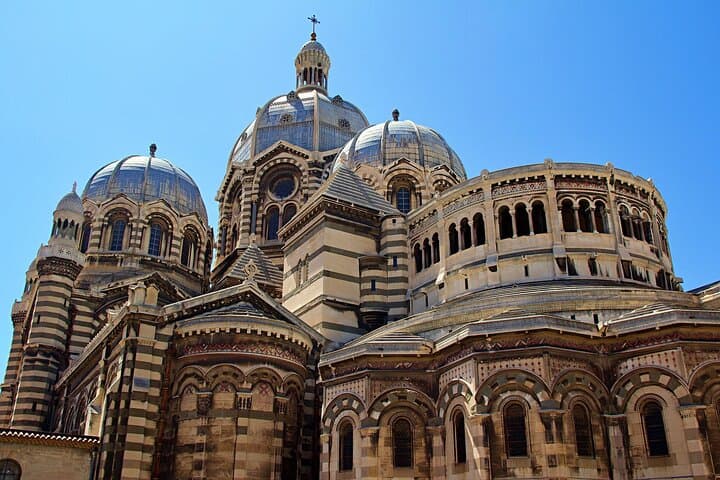
The city opens with a stripe‑banded cathedral at your back and the harbor’s breathing in front of you — salt air pushing on your face like an invitation. Follow narrow lanes where shutters click and gulls wheel above the Old Port; the route moves from monumental stone to intimate fishing coves over roughly 6 km, an hour‑by‑hour portrait of Marseille’s edge.
Verified experiences and guided adventures in the surrounding area.
Operated by Tourific · Marseille, Provence-Alpes-Côte d'Azur
The city opens with a stripe‑banded cathedral at your back and the harbor’s breathing in front of you — salt air pushing on your face like an invitation. Follow narrow lanes where shutters click and gulls wheel above the Old Port; the route moves from monumental stone to intimate fishing coves over roughly 6 km, an hour‑by‑hour portrait of Marseille’s edge.
Founded as Greek Massalia, the city’s identity is written in its piers and piazzas: Roman trade, medieval abbeys and 19th‑century harbor engineering all shaped this working Mediterranean port. Geology here is coastal limestone and sand, cliffs cut by waves that taught locals to build low harbors like Vallon des Auffes. Culture is equally tangible — bouillabaisse coming from the net, the annual blessing of the navettes biscuit at Saint‑Victor, and Le Panier’s paint‑splashed alleys where artisans still work.
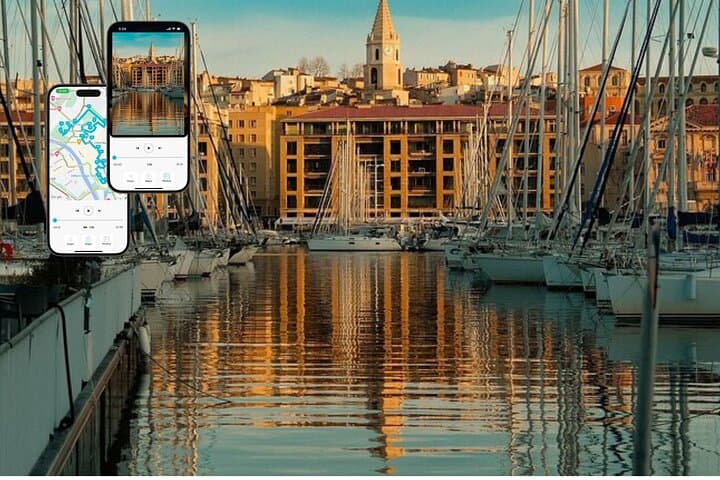
The tour combines audio narration, images and offline maps so you move at your own pace, pausing at La Major, La Vieille Charité and Fort Saint‑Jean. Expect cobbles, short staircases and busy streets; early morning or late afternoon offers cooler temperatures and better light for photos.
Practical guidance: download the app and the route for offline use, wear supportive shoes, bring water and a charged phone or power bank, and budget 2–3 hours to enjoy detours. Use public transit to start at the cathedral or end at the Vieux‑Port to save energy for a seaside drink after the walk.
moderate.
2–3 hours.
Moderate — able to walk 6 km on mixed cobbles and stairs without assistance
The tour covers about 6 km and takes roughly 2–3 hours at a leisurely pace, allowing time for stops and photos.
No — the app offers offline access once you download the tour, so you can run it without a mobile connection.
Parts of the route include cobblestones and stair sections; accessibility is limited in some historic areas.
No — the tour provides audio and images only; admissions and meals are extra and self‑arranged.
Marseille was founded as Greek Massalia around 600 BCE and has been a major Mediterranean trading port ever since, reflected in its layered architecture from Roman to 19th‑century harbor works.
Coastal habitats and historic fabric are sensitive to foot traffic and litter; stick to marked paths, dispose of waste responsibly and respect local fishing practices to reduce impact.
Tourific operates guided outdoor trips and adventures with an emphasis on safety, stewardship, and memorable experiences.
The city opens with a stripe‑banded cathedral at your back and the harbor’s breathing in front of you — salt air pushing on your face like an invitation. Follow narrow lanes where shutters click and gulls wheel above the Old Port; the route moves from monumental stone to intimate fishing coves over roughly 6 km, an hour‑by‑hour portrait of Marseille’s edge.
The city opens with a stripe‑banded cathedral at your back and the harbor’s breathing in front of you — salt air pushing on your face like an invitation. Follow narrow lanes where shutters click and gulls wheel above the Old Port; the route moves from monumental stone to intimate fishing coves over roughly 6 km, an hour‑by‑hour portrait of Marseille’s edge.
Founded as Greek Massalia, the city’s identity is written in its piers and piazzas: Roman trade, medieval abbeys and 19th‑century harbor engineering all shaped this working Mediterranean port. Geology here is coastal limestone and sand, cliffs cut by waves that taught locals to build low harbors like Vallon des Auffes. Culture is equally tangible — bouillabaisse coming from the net, the annual blessing of the navettes biscuit at Saint‑Victor, and Le Panier’s paint‑splashed alleys where artisans still work.
The tour combines audio narration, images and offline maps so you move at your own pace, pausing at La Major, La Vieille Charité and Fort Saint‑Jean. Expect cobbles, short staircases and busy streets; early morning or late afternoon offers cooler temperatures and better light for photos.
Practical guidance: download the app and the route for offline use, wear supportive shoes, bring water and a charged phone or power bank, and budget 2–3 hours to enjoy detours. Use public transit to start at the cathedral or end at the Vieux‑Port to save energy for a seaside drink after the walk.