THE ADVENTURE COLLECTIVE® · Independent discovery and booking for outdoor travel

Explore Prague’s Old Town on a 2–3 hour guided walk that covers the Astronomical Clock, Jewish Quarter, Rudolfinum and Jan Palach Square. Local guides deliver history, architecture, and practical tips while you navigate cobbled streets and iconic viewpoints.
Explore Prague’s Old Town on a 2–3 hour guided walk that covers the Astronomical Clock, Jewish Quarter, Rudolfinum and Jan Palach Square. Local guides deliver history, architecture, and practical tips while you navigate cobbled streets and iconic viewpoints.
Morning light catches the Gothic spires above Old Town Square as a small group gathers by the Cartier shop on the corner of Pařížská and Dlouhá. Guides unfurl maps and the city’s stones start talking: the Astronomical Clock’s hourly procession, the squat angles of a cubist facade, and the hush of a Jewish cemetery squeezed between narrow lanes. This is a walking tour that moves at the rhythm of the city—measured, story-driven, and deliberately close to the ground.
Verified experiences and guided adventures in the surrounding area.
Operated by SANDEMANs Tours - Prague · Prague, Prague
Morning light catches the Gothic spires above Old Town Square as a small group gathers by the Cartier shop on the corner of Pařížská and Dlouhá. Guides unfurl maps and the city’s stones start talking: the Astronomical Clock’s hourly procession, the squat angles of a cubist facade, and the hush of a Jewish cemetery squeezed between narrow lanes. This is a walking tour that moves at the rhythm of the city—measured, story-driven, and deliberately close to the ground.
Prague’s streets are living history. Medieval merchants built the lanes; Baroque patrons reshaped churches; 20th-century turmoil left visible scars from Nazi occupation through the Velvet Revolution. Geology shows itself in the Vltava’s steady pull and in the durable sandstone and basalt beneath your boots—materials that sustained towers and bridges for centuries.
Culturally, the route threads Bohemian legends with tangible sites: the Rudolfinum’s concert hall that once hosted parliament, the Astronomical Clock—one of the world’s oldest still operating—and Jan Palach Square, a sober reminder of civic protest. Local guides add context: which squares were markets, which buildings swapped functions, and where to step for the best, uncrowded view.
Practical: expect 2–3 hours on uneven cobblestones with minimal elevation change; carry water, wear grippy shoes, and plan for variable weather—rain won’t cancel the tour. Aim for early morning or late afternoon to avoid peak crowds and to keep photos free of tour buses. Accessible options are available, but ask ahead for assistance. For first-time visitors this walk is an efficient, sensory-first orientation to Prague’s core—equal parts architecture, politics, and the everyday pulse of the city.
easy.
2–3 hours.
Suitable for most fitness levels; participants should be able to stand and walk on uneven cobblestones for up to three hours.
The tour meets at Old Town Square in front of the Cartier shop and Czech tourism office at the corner of Pařížská and Dlouhá street.
Yes—this tour lists wheelchair accessibility, but notify the operator at booking to confirm accommodations and route adjustments.
Guides are available in English and Spanish; check the booking page for current language availability.
Full refunds are available if you cancel at least 24 hours before departure; tours run rain or shine and are not canceled for weather.
Prague’s Old Town grew from a medieval marketplace into a political and cultural center; landmarks like the Astronomical Clock date to the 15th century and the Rudolfinum served varied civic roles, including a parliamentary seat.
Prague’s historic center is a UNESCO World Heritage site—stay on marked paths, respect private property and signage, and support local guides to help fund preservation.
SANDEMANs Tours - Prague operates guided outdoor trips and adventures with an emphasis on safety, stewardship, and memorable experiences.

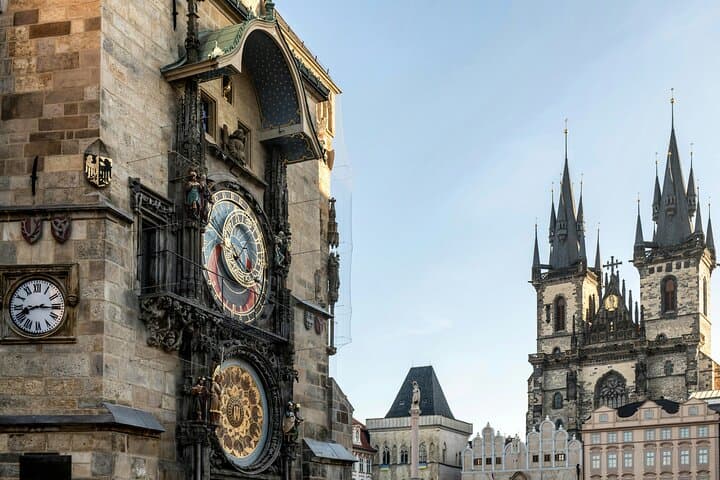

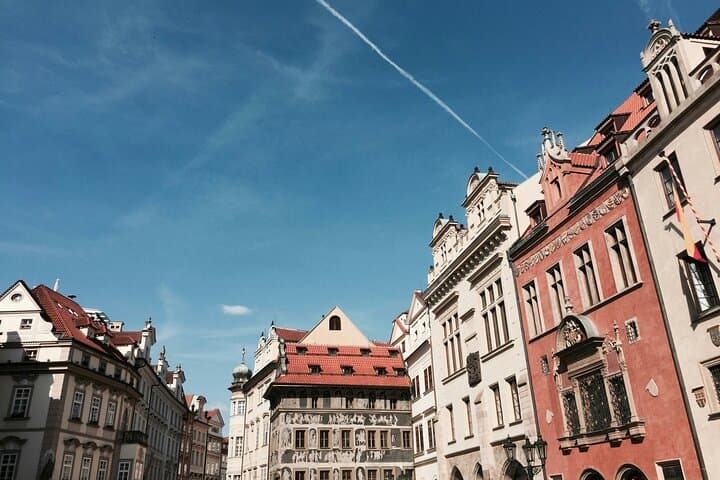
Morning light catches the Gothic spires above Old Town Square as a small group gathers by the Cartier shop on the corner of Pařížská and Dlouhá. Guides unfurl maps and the city’s stones start talking: the Astronomical Clock’s hourly procession, the squat angles of a cubist facade, and the hush of a Jewish cemetery squeezed between narrow lanes. This is a walking tour that moves at the rhythm of the city—measured, story-driven, and deliberately close to the ground.
Morning light catches the Gothic spires above Old Town Square as a small group gathers by the Cartier shop on the corner of Pařížská and Dlouhá. Guides unfurl maps and the city’s stones start talking: the Astronomical Clock’s hourly procession, the squat angles of a cubist facade, and the hush of a Jewish cemetery squeezed between narrow lanes. This is a walking tour that moves at the rhythm of the city—measured, story-driven, and deliberately close to the ground.
Prague’s streets are living history. Medieval merchants built the lanes; Baroque patrons reshaped churches; 20th-century turmoil left visible scars from Nazi occupation through the Velvet Revolution. Geology shows itself in the Vltava’s steady pull and in the durable sandstone and basalt beneath your boots—materials that sustained towers and bridges for centuries.
Culturally, the route threads Bohemian legends with tangible sites: the Rudolfinum’s concert hall that once hosted parliament, the Astronomical Clock—one of the world’s oldest still operating—and Jan Palach Square, a sober reminder of civic protest. Local guides add context: which squares were markets, which buildings swapped functions, and where to step for the best, uncrowded view.
Practical: expect 2–3 hours on uneven cobblestones with minimal elevation change; carry water, wear grippy shoes, and plan for variable weather—rain won’t cancel the tour. Aim for early morning or late afternoon to avoid peak crowds and to keep photos free of tour buses. Accessible options are available, but ask ahead for assistance. For first-time visitors this walk is an efficient, sensory-first orientation to Prague’s core—equal parts architecture, politics, and the everyday pulse of the city.