THE ADVENTURE COLLECTIVE® · Independent discovery and booking for outdoor travel

Explore Hanoi’s layers—from French neoclassical landmarks to hidden alleys—on a four-hour vintage Jeep tour. Expect short walks, local stops like Banana Island and Train Street, plus lunch and an English-speaking guide.
Explore Hanoi’s layers—from French neoclassical landmarks to hidden alleys—on a four-hour vintage Jeep tour. Expect short walks, local stops like Banana Island and Train Street, plus lunch and an English-speaking guide.
The Jeep eases through a tangle of lanes as morning light laces the windows of French façades and street-side cafés. Vendors set out baskets of herbs and sticky rice; a trampling of motorbikes parts as the open-top vehicle threads past the Opera House and toward narrow alleys where daily life unfolds close to the curb.
Verified experiences and guided adventures in the surrounding area.
Operated by Aclass Tours · Hanoi, Hanoi
The Jeep eases through a tangle of lanes as morning light laces the windows of French façades and street-side cafés. Vendors set out baskets of herbs and sticky rice; a trampling of motorbikes parts as the open-top vehicle threads past the Opera House and toward narrow alleys where daily life unfolds close to the curb.
This half-day route stitches together Hanoi’s layered past and everyday present. You’ll pass the 1901–1911 French Opera House and the austere Ho Chi Minh Mausoleum, then follow lakefront roads around West Lake and Truc Bach—sedimentary plains of the Red River delta underpin the city’s flat, water-rich geography, which shaped its market towns and canals. Banana Island’s farms and small village workshops reveal cottage industries and tea-growing traditions that predate modern high-rises.
Along the way, the city’s contrasts are vivid: wartime memorials sit near bonsai-lined streets, and Train Street’s narrow homes press close to the rails, forcing a choreography of residents and visitors when a train approaches. Guides explain the sculpted history—colonial architecture, revolutionary landmarks, and market culture—while flagging local etiquette and safety around busy crossings.
Practical guidance: the tour is four hours with short walks (typically 5–15 minutes) between stops; expect negligible elevation gain but irregular pavements and tight lanes. Lunch and bottled water are included; bring cash for small purchases, a sun hat, and a camera. Best booked for cool morning or late-afternoon light; follow your guide’s directions at Train Street and busy intersections to stay safe and respectful.
easy.
4 hours.
Light activity: mostly seated with short, easy walks at stops; suitable for travelers in average health
Pickup is from your hotel lobby in central Hanoi; provide your hotel name at booking so the guide can confirm the pick-up point.
Yes—lunch and bottled water are included as part of the tour.
This tour is not recommended for pregnant travelers or those with spinal or serious heart conditions due to vehicle movement and short walks on uneven ground.
An English-speaking guide is provided; check availability of other languages when booking.
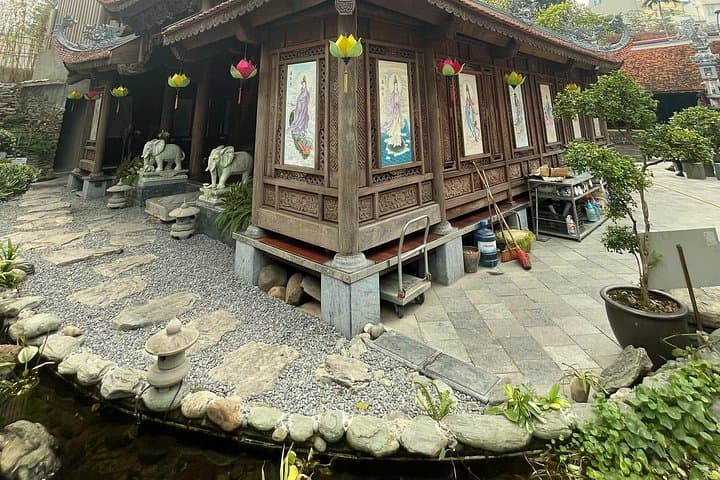
Hanoi’s core grew under French colonial planning in the early 20th century; many landmark buildings like the Opera House date to that era and reflect European architectural influence alongside older Vietnamese pagodas.
Traffic and urban development pressure Hanoi’s waterways and green spaces—avoid single-use plastics and follow guide instructions to minimize disturbance in residential alleys.
Aclass Tours operates guided outdoor trips and adventures with an emphasis on safety, stewardship, and memorable experiences.
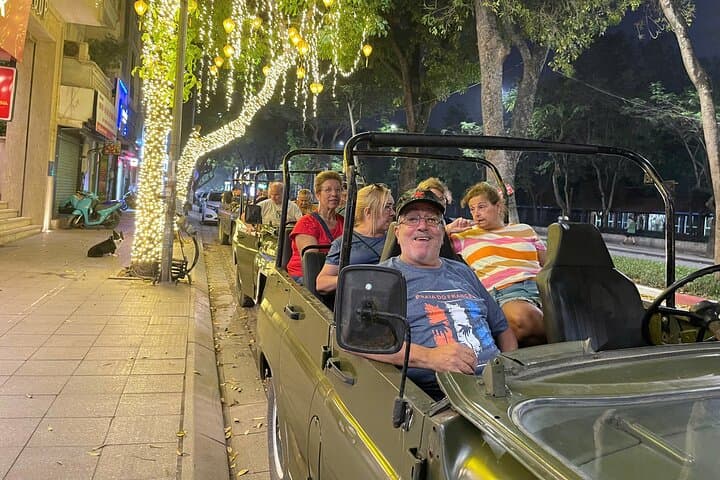


The Jeep eases through a tangle of lanes as morning light laces the windows of French façades and street-side cafés. Vendors set out baskets of herbs and sticky rice; a trampling of motorbikes parts as the open-top vehicle threads past the Opera House and toward narrow alleys where daily life unfolds close to the curb.
The Jeep eases through a tangle of lanes as morning light laces the windows of French façades and street-side cafés. Vendors set out baskets of herbs and sticky rice; a trampling of motorbikes parts as the open-top vehicle threads past the Opera House and toward narrow alleys where daily life unfolds close to the curb.
This half-day route stitches together Hanoi’s layered past and everyday present. You’ll pass the 1901–1911 French Opera House and the austere Ho Chi Minh Mausoleum, then follow lakefront roads around West Lake and Truc Bach—sedimentary plains of the Red River delta underpin the city’s flat, water-rich geography, which shaped its market towns and canals. Banana Island’s farms and small village workshops reveal cottage industries and tea-growing traditions that predate modern high-rises.
Along the way, the city’s contrasts are vivid: wartime memorials sit near bonsai-lined streets, and Train Street’s narrow homes press close to the rails, forcing a choreography of residents and visitors when a train approaches. Guides explain the sculpted history—colonial architecture, revolutionary landmarks, and market culture—while flagging local etiquette and safety around busy crossings.
Practical guidance: the tour is four hours with short walks (typically 5–15 minutes) between stops; expect negligible elevation gain but irregular pavements and tight lanes. Lunch and bottled water are included; bring cash for small purchases, a sun hat, and a camera. Best booked for cool morning or late-afternoon light; follow your guide’s directions at Train Street and busy intersections to stay safe and respectful.