THE ADVENTURE COLLECTIVE® · Independent discovery and booking for outdoor travel

Explore Sydney, Nova Scotia, at your own pace with a smartphone audio tour that leads you from harbour boardwalks to Gothic spires. Download offline, follow a live GPS map, and hear local stories about industry, wartime convoys, and resilient island culture.
Explore Sydney, Nova Scotia, at your own pace with a smartphone audio tour that leads you from harbour boardwalks to Gothic spires. Download offline, follow a live GPS map, and hear local stories about industry, wartime convoys, and resilient island culture.
The boardwalk air tastes of salt and coal dust as you step off a quiet street and onto Sydney’s harbour edge—waves push at pilings while a 60-foot steel fiddle watches over the inlet, its curves catching late light.
Verified experiences and guided adventures in the surrounding area.
Operated by Tripvia Tours · Sydney, Nova Scotia
The boardwalk air tastes of salt and coal dust as you step off a quiet street and onto Sydney’s harbour edge—waves push at pilings while a 60-foot steel fiddle watches over the inlet, its curves catching late light.
This self-guided smartphone audio walk threads Charlotte Street and the waterfront, tracing how a small harbour became “The Steel City.” You’ll pass Gothic Revival churches, Second Empire storefronts, and the repurposed HAT theatre — each building a chapter in Sydney’s industrial rise, the Great Fire of 1901, and the city’s reinvention after shipyards slowed. Granite quays and glacially carved inlets reveal the island’s Pleistocene past; bedrock and drumlins shape the shoreline you’ll walk along.
Local culture is blunt and musical: Cape Breton’s Scottish roots echo in street-level fiddles and murals, while cafés and artisan shops keep the community conversation alive. Characters in the tour bring wartime convoys and immigrant stories into earshot, grounding history in place.
Practical guidance: download the tour over Wi‑Fi and carry a fully charged phone and small power bank. The route is flat but paved and can take 90–120 minutes at a relaxed pace; allow extra time for museums or a harbour picnic. Wear grippy shoes for slick boardwalk sections, and time your walk for golden hour if you want the waterfront sculptures at their most photogenic.
This format suits independent travelers who prefer moving at their own pace — you stop, listen, and discover without a schedule, but bring rain protection and respect for fragile historic sites.
easy.
1.5–2 hours.
Suitable for most fitness levels; expect 2–3 km of mostly flat walking with occasional stops.
No—download the audio and the live map over Wi‑Fi before you start; the tour plays offline.
Yes—most of the route uses paved sidewalks and a boardwalk; some historic sidestreets may have uneven surfaces.
Yes—the audio is fully flexible—you can stop, skip, and restart anywhere along the route.
Yes—tour points include public amenities and nearby cafés; the itinerary notes spots for breaks.
Sydney grew during the 19th–20th centuries around shipbuilding and steel; its role in wartime convoys left lasting memorials along the waterfront.
Visitors are encouraged to stay on marked paths to protect fragile shoreline ecosystems and to support local heritage preservation efforts by following site guidelines.
Tripvia Tours operates guided outdoor trips and adventures with an emphasis on safety, stewardship, and memorable experiences.



The boardwalk air tastes of salt and coal dust as you step off a quiet street and onto Sydney’s harbour edge—waves push at pilings while a 60-foot steel fiddle watches over the inlet, its curves catching late light.
The boardwalk air tastes of salt and coal dust as you step off a quiet street and onto Sydney’s harbour edge—waves push at pilings while a 60-foot steel fiddle watches over the inlet, its curves catching late light.
This self-guided smartphone audio walk threads Charlotte Street and the waterfront, tracing how a small harbour became “The Steel City.” You’ll pass Gothic Revival churches, Second Empire storefronts, and the repurposed HAT theatre — each building a chapter in Sydney’s industrial rise, the Great Fire of 1901, and the city’s reinvention after shipyards slowed. Granite quays and glacially carved inlets reveal the island’s Pleistocene past; bedrock and drumlins shape the shoreline you’ll walk along.
Local culture is blunt and musical: Cape Breton’s Scottish roots echo in street-level fiddles and murals, while cafés and artisan shops keep the community conversation alive. Characters in the tour bring wartime convoys and immigrant stories into earshot, grounding history in place.
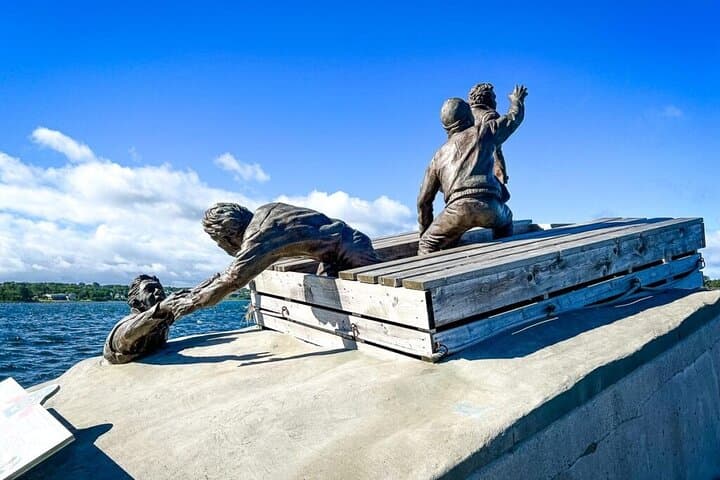
Practical guidance: download the tour over Wi‑Fi and carry a fully charged phone and small power bank. The route is flat but paved and can take 90–120 minutes at a relaxed pace; allow extra time for museums or a harbour picnic. Wear grippy shoes for slick boardwalk sections, and time your walk for golden hour if you want the waterfront sculptures at their most photogenic.
This format suits independent travelers who prefer moving at their own pace — you stop, listen, and discover without a schedule, but bring rain protection and respect for fragile historic sites.