THE ADVENTURE COLLECTIVE® · Independent discovery and booking for outdoor travel

Walk Charleston’s historic core on a focused two-hour tour that links Rainbow Row, The Battery and St. Michael’s Church. Expect cobbled streets, architectural details, and behind-the-scenes stories from local guides.
Walk Charleston’s historic core on a focused two-hour tour that links Rainbow Row, The Battery and St. Michael’s Church. Expect cobbled streets, architectural details, and behind-the-scenes stories from local guides.
The city smells of salt and old masonry as you step from sunlit King Street into the hush of cobbled alleys; palmettos lean over ironwork fences and the low roar of the Cooper River frames the walk.
Verified experiences and guided adventures in the surrounding area.
The city smells of salt and old masonry as you step from sunlit King Street into the hush of cobbled alleys; palmettos lean over ironwork fences and the low roar of the Cooper River frames the walk.
This two-hour guided walking tour threads through Charleston’s colonial grid — Rainbow Row’s pastel facades, the stately curve of The Battery, and the steeple of St. Michael’s Church puncturing a coastal sky. The guide points out masonry details, brick bonds and wrought-iron signatures that record trade, slavery, war and 19th-century wealth.
Geologically, the peninsula sits on Pleistocene deposits over coastal plain sediments; the low elevation explains why seawalls and historic fortifications like the Battery were built where they are. Culturally, the tour touches on colonial urban planning, antebellum architecture, the role of churches as community anchors, and ongoing preservation efforts in the Historic District.
Expect a mix of outdoor promenades and optional interior visits when congregations or institutions permit: churches and the Old Exchange are working buildings and access can vary. The pace is steady but unhurried, crossing brick streets and occasional stairs; bring footwear that handles cobbles and brief indoor climbs.
Practical notes: start earlier to avoid midday heat and crowds, budget two hours plus time for photos, and allow a few dollars for small admission fees or donations if interior visits are possible. Hydrate, wear sun protection, and listen for local anecdotes — the guide’s neighborhood knowledge brings this compact, layered history to life.
easy.
2–2 hours.
Light walking fitness; comfortable pace for most adults; some standing and brief stair climbs.
Interiors are visited when congregations and institutions permit; access varies and may depend on service schedules or special events.
Yes—it's a relaxed pace with short distances, though cobblestones and occasional steps mean mobility considerations apply.
Meeting details are provided at booking; tours typically start near a central Historic District landmark close to King Street or Waterfront Park.
Many local guides offer private or customizable tours—contact the operator for availability, pricing, and special requests.
Charleston’s Historic District grew from a colonial port; many surviving buildings reflect 18th- and 19th-century wealth tied to maritime trade and plantation agriculture.
Preservation groups actively manage restoration and guidelines to limit inappropriate alterations; visitors are asked to respect private property and minimize impact in historic areas.
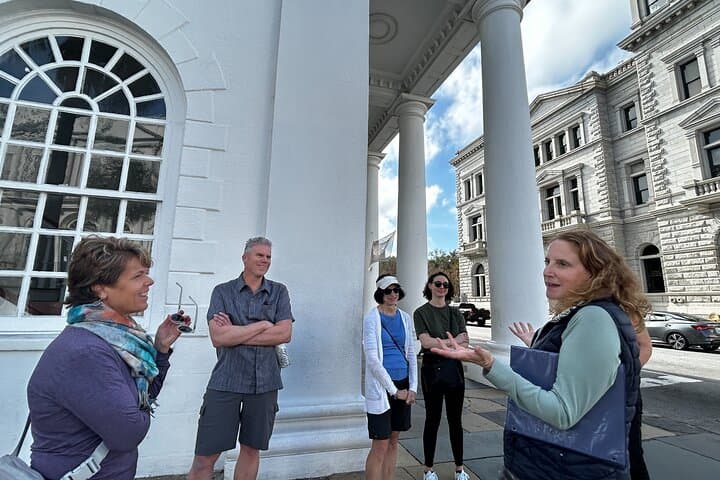
The city smells of salt and old masonry as you step from sunlit King Street into the hush of cobbled alleys; palmettos lean over ironwork fences and the low roar of the Cooper River frames the walk.
The city smells of salt and old masonry as you step from sunlit King Street into the hush of cobbled alleys; palmettos lean over ironwork fences and the low roar of the Cooper River frames the walk.
This two-hour guided walking tour threads through Charleston’s colonial grid — Rainbow Row’s pastel facades, the stately curve of The Battery, and the steeple of St. Michael’s Church puncturing a coastal sky. The guide points out masonry details, brick bonds and wrought-iron signatures that record trade, slavery, war and 19th-century wealth.
Geologically, the peninsula sits on Pleistocene deposits over coastal plain sediments; the low elevation explains why seawalls and historic fortifications like the Battery were built where they are. Culturally, the tour touches on colonial urban planning, antebellum architecture, the role of churches as community anchors, and ongoing preservation efforts in the Historic District.
Expect a mix of outdoor promenades and optional interior visits when congregations or institutions permit: churches and the Old Exchange are working buildings and access can vary. The pace is steady but unhurried, crossing brick streets and occasional stairs; bring footwear that handles cobbles and brief indoor climbs.
Practical notes: start earlier to avoid midday heat and crowds, budget two hours plus time for photos, and allow a few dollars for small admission fees or donations if interior visits are possible. Hydrate, wear sun protection, and listen for local anecdotes — the guide’s neighborhood knowledge brings this compact, layered history to life.