THE ADVENTURE COLLECTIVE® · Independent discovery and booking for outdoor travel

Walk two hours through Charleston’s historic district from Rainbow Row to the Waterfront Battery, with Powder Magazine admission included. This leisurely stroll layers colonial and Civil War history over cobblestones, iron gates, and harbor views.
Walk two hours through Charleston’s historic district from Rainbow Row to the Waterfront Battery, with Powder Magazine admission included. This leisurely stroll layers colonial and Civil War history over cobblestones, iron gates, and harbor views.
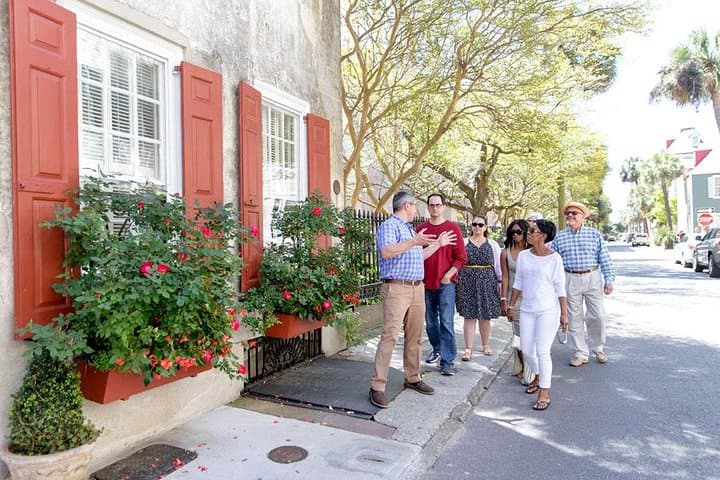
The tour begins on a warm brick sidewalk outside the Mills House Hotel, with Spanish moss drifting from live oaks and the harbor breeze nudging the curtains of painted 18th-century facades.
Verified experiences and guided adventures in the surrounding area.
Operated by Bulldog Tours · Charleston, SC
The tour begins on a warm brick sidewalk outside the Mills House Hotel, with Spanish moss drifting from live oaks and the harbor breeze nudging the curtains of painted 18th-century facades.
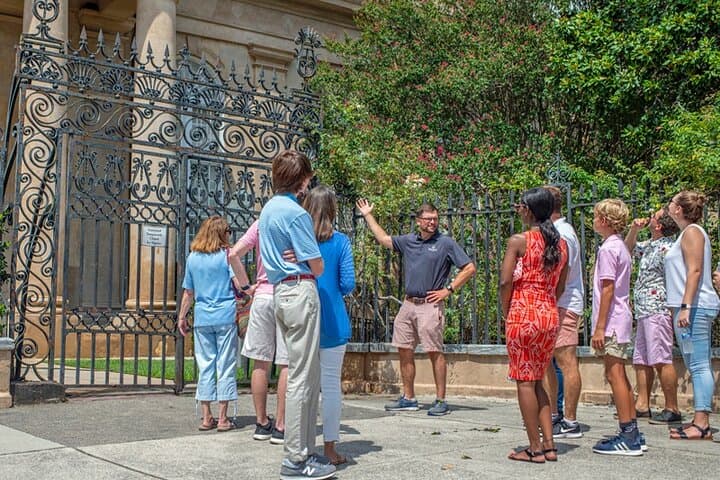
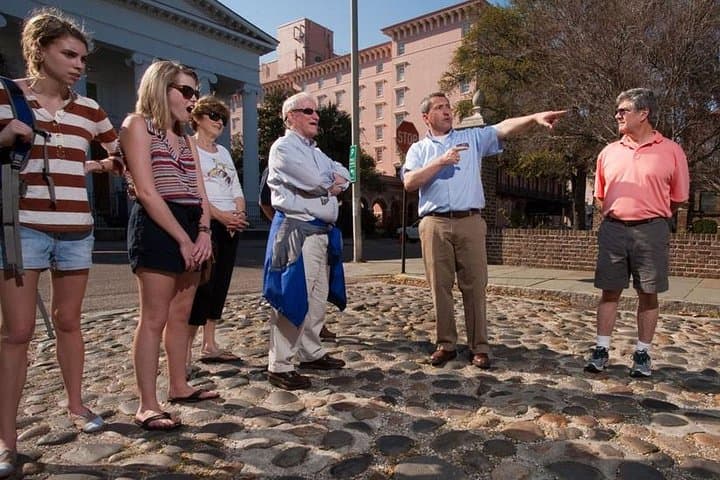
Over two hours a guide steers you through narrow alleys, past ironwork gates and cobblestones that remember carriages. You stop at Rainbow Row, a string of 18th-century Georgian houses whose colors still catch the morning light, then walk out to the Waterfront Battery where cannons and palmettos frame a view of Fort Sumter daring you to imagine tides of history.
Charleston’s story is layered — colonial trade, Revolutionary skirmishes, Civil War fortifications, and antebellum wealth built on complex cultural forces including Gullah traditions. Geologically, the low, marsh-fed peninsula sits on sedimentary soils that create the tidal creeks and oyster beds visible from the waterfront; the flat terrain makes the route accessible but preserves an unmistakable coastal character.
Practical guidance is straightforward: expect a leisurely 1–1.5 mile walk on varied surfaces — brick, cobble and paved sidewalks — with minimal elevation change. Powder Magazine admission is included and offers a compact museum stop about 15 minutes long. Tours operate in most weather; dress for humidity in summer and bring a light rain layer other seasons.
Plan to arrive 15 minutes early at 115 Meeting Street, wear supportive walking shoes, and carry water and sun protection. The route is wheelchair accessible in large stretches but uneven patches and curbs are present. For photographers, early morning light on Rainbow Row and late-afternoon glow on the Battery are prime moments.
easy.
2 hours.
Suitable for most fitness levels; involves 1–1.5 miles of walking with short standing stops.
Meet outside the Mills House Hotel courtyard at 115 Meeting Street; guides wear Bulldog Tours identification and ask guests to arrive 15 minutes early.
Much of the route is wheelchair accessible, but uneven cobbles and occasional curbs may require assistance; contact the operator in advance for specific accommodations.
Yes; admission to the Powder Magazine Museum is included in the tour price.
Cancel at least 24 hours before departure for a full refund; tours may be canceled due to low bookings or severe weather and you will be offered alternatives or a refund.
Charleston’s peninsula grew as a colonial port; its streets reflect 18th- and 19th-century wealth, trade networks, and the military history of Fort Sumter across the harbor.
The historic district relies on preservation zoning and saltmarsh conservation to protect architecture and shoreline habitats; stick to paths and avoid trampling fragile gardens.
Bulldog Tours operates guided outdoor trips and adventures with an emphasis on safety, stewardship, and memorable experiences.

The tour begins on a warm brick sidewalk outside the Mills House Hotel, with Spanish moss drifting from live oaks and the harbor breeze nudging the curtains of painted 18th-century facades.
The tour begins on a warm brick sidewalk outside the Mills House Hotel, with Spanish moss drifting from live oaks and the harbor breeze nudging the curtains of painted 18th-century facades.
Over two hours a guide steers you through narrow alleys, past ironwork gates and cobblestones that remember carriages. You stop at Rainbow Row, a string of 18th-century Georgian houses whose colors still catch the morning light, then walk out to the Waterfront Battery where cannons and palmettos frame a view of Fort Sumter daring you to imagine tides of history.
Charleston’s story is layered — colonial trade, Revolutionary skirmishes, Civil War fortifications, and antebellum wealth built on complex cultural forces including Gullah traditions. Geologically, the low, marsh-fed peninsula sits on sedimentary soils that create the tidal creeks and oyster beds visible from the waterfront; the flat terrain makes the route accessible but preserves an unmistakable coastal character.
Practical guidance is straightforward: expect a leisurely 1–1.5 mile walk on varied surfaces — brick, cobble and paved sidewalks — with minimal elevation change. Powder Magazine admission is included and offers a compact museum stop about 15 minutes long. Tours operate in most weather; dress for humidity in summer and bring a light rain layer other seasons.
Plan to arrive 15 minutes early at 115 Meeting Street, wear supportive walking shoes, and carry water and sun protection. The route is wheelchair accessible in large stretches but uneven patches and curbs are present. For photographers, early morning light on Rainbow Row and late-afternoon glow on the Battery are prime moments.