THE ADVENTURE COLLECTIVE® · Independent discovery and booking for outdoor travel

A 3-hour bilingual guided walk through Rio’s historic center that traces imperial boulevards, grand theatres and colonial churches. Ideal for history-minded travelers who want urban stories and architectural detail without a strenuous hike.
A 3-hour bilingual guided walk through Rio’s historic center that traces imperial boulevards, grand theatres and colonial churches. Ideal for history-minded travelers who want urban stories and architectural detail without a strenuous hike.
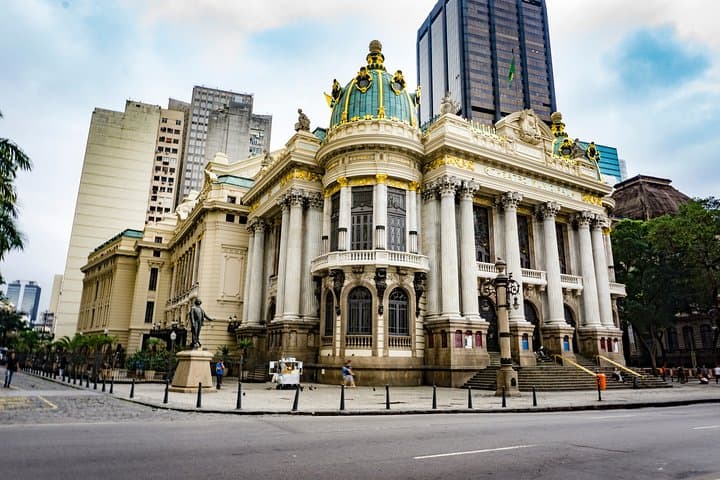
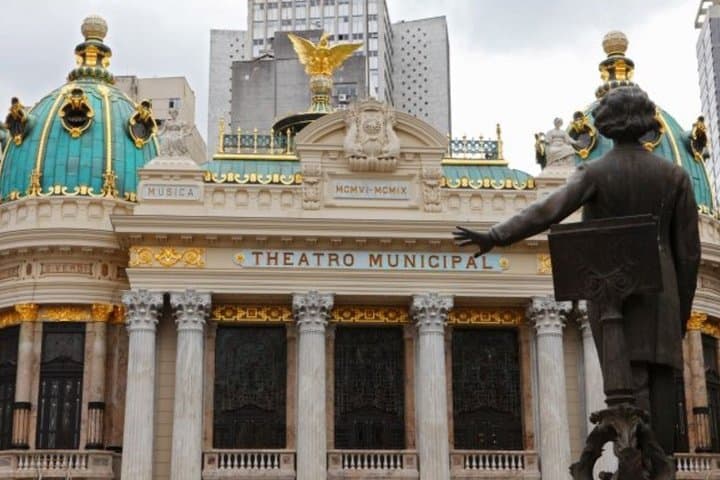
Morning light slices across Avenida Rio Branco and the city opens like a map underfoot — broad boulevards, gilt eagles on the Municipal Theatre, the carved wood and marble of the National Library. A three-hour guided walk through Rio's historic center moves at a steady, urban pace: plazas, former coffee houses, convents on low hills, and streets that once decided the nation's politics.
Verified experiences and guided adventures in the surrounding area.
Operated by RIO PASSEIOS EXPERIENCE · Rio de Janeiro, Rio de Janeiro
Morning light slices across Avenida Rio Branco and the city opens like a map underfoot — broad boulevards, gilt eagles on the Municipal Theatre, the carved wood and marble of the National Library. A three-hour guided walk through Rio's historic center moves at a steady, urban pace: plazas, former coffee houses, convents on low hills, and streets that once decided the nation's politics.
The route follows arteries laid down in the imperial period and reworked during the republic: Rua Primeiro de Março, Largo da Carioca and Cinelândia. The area sits on the margin of Guanabara Bay and the low morros that punctuate the center, where colonial stone, 19th-century Beaux-Arts façades and modernist interventions sit side by side. Cultural life here has long been civic and public — Machado de Assis and other writers met in these cafés; theaters and museums kept intellectual currents moving through the 20th century.
Expect a mix of architectural details (gilded eagles, restored murals), bustling public squares, and stops at institutions like Confeitaria Colombo, the National Library and the Municipal Theatre. The guide’s bilingual commentary connects dates, personalities and the visual clues in the façades to broader Brazilian history.
Practical notes: the walk covers roughly 3 hours on mostly paved surfaces with frequent stops; bring a refillable water bottle, sun protection and a lightweight rain layer (the operator runs rain or shine). Because meeting points can shift on busy days, confirm pickup details the day before and allow extra time for traffic if you’re coming from Copacabana or Lapa.
easy.
3 hours.
Suitable for all fitness levels; requires standing and walking on paved, sometimes uneven streets for three hours
The guide provides commentary in English, Spanish and Portuguese on shared tours.
Much of the route is on paved streets and plazas, but there are uneven surfaces and occasional steps; contact the operator in advance to discuss individual accessibility needs.
If you're late, notify the operator; they may instruct you to meet at a nearby landmark but cannot always wait for late arrivals.
Full refunds are available if you cancel at least 24 hours before the scheduled departure; cancellations inside 24 hours are not refundable.
The center was the political and cultural heart of imperial and early republican Brazil; streets like Rua Primeiro de Março trace colonial alignments that later hosted civic institutions.
Ongoing restoration projects aim to preserve colonial and 19th-century façades; visitors can support preservation by staying on paved paths, avoiding graffiti and patronizing local museums and cafés.
RIO PASSEIOS EXPERIENCE operates guided outdoor trips and adventures with an emphasis on safety, stewardship, and memorable experiences.


Morning light slices across Avenida Rio Branco and the city opens like a map underfoot — broad boulevards, gilt eagles on the Municipal Theatre, the carved wood and marble of the National Library. A three-hour guided walk through Rio's historic center moves at a steady, urban pace: plazas, former coffee houses, convents on low hills, and streets that once decided the nation's politics.
Morning light slices across Avenida Rio Branco and the city opens like a map underfoot — broad boulevards, gilt eagles on the Municipal Theatre, the carved wood and marble of the National Library. A three-hour guided walk through Rio's historic center moves at a steady, urban pace: plazas, former coffee houses, convents on low hills, and streets that once decided the nation's politics.
The route follows arteries laid down in the imperial period and reworked during the republic: Rua Primeiro de Março, Largo da Carioca and Cinelândia. The area sits on the margin of Guanabara Bay and the low morros that punctuate the center, where colonial stone, 19th-century Beaux-Arts façades and modernist interventions sit side by side. Cultural life here has long been civic and public — Machado de Assis and other writers met in these cafés; theaters and museums kept intellectual currents moving through the 20th century.
Expect a mix of architectural details (gilded eagles, restored murals), bustling public squares, and stops at institutions like Confeitaria Colombo, the National Library and the Municipal Theatre. The guide’s bilingual commentary connects dates, personalities and the visual clues in the façades to broader Brazilian history.
Practical notes: the walk covers roughly 3 hours on mostly paved surfaces with frequent stops; bring a refillable water bottle, sun protection and a lightweight rain layer (the operator runs rain or shine). Because meeting points can shift on busy days, confirm pickup details the day before and allow extra time for traffic if you’re coming from Copacabana or Lapa.