THE ADVENTURE COLLECTIVE® · Independent discovery and booking for outdoor travel

Trace Brisbane’s history from St Stephen’s Cathedral to the Botanic Gardens on a three-hour private walking tour. Expect flat, paved routes, heritage architecture, and local stories that illuminate the city’s colonial and civic development.
Trace Brisbane’s history from St Stephen’s Cathedral to the Botanic Gardens on a three-hour private walking tour. Expect flat, paved routes, heritage architecture, and local stories that illuminate the city’s colonial and civic development.
The walk begins in the morning light outside St Stephen's Cathedral, where worn flagstones and stained glass mark the city’s quieter, contemplative heart. Guide in hand, the group threads through civic plazas and shady avenues, the hum of buses and river traffic receding as stories of colonial politics and modern reinvention take the lead.
Verified experiences and guided adventures in the surrounding area.
Operated by Opatrip.com Australia · Brisbane, Queensland
The walk begins in the morning light outside St Stephen's Cathedral, where worn flagstones and stained glass mark the city’s quieter, contemplative heart. Guide in hand, the group threads through civic plazas and shady avenues, the hum of buses and river traffic receding as stories of colonial politics and modern reinvention take the lead.
Brisbane’s CBD sits on a broad bend of the Brisbane River; its sandstone facades and Victorian civic buildings—Brisbane GPO, City Hall, Old Government House—trace the arc of 19th-century settlement and state governance. The Old Windmill reminds walkers that this city grew from convict-era beginnings, while Parliament House and King George Square show how civic life modernized through the 20th century.
Geologically, the area is built on low-lying alluvial terraces with pockets of remnant eucalypt plantings preserved in the Botanic Gardens. Culturally, the route crosses modern meeting spots—Post Office Square and Brisbane Square—where public art and lunchtime crowds pulse with contemporary energy.
Practical guide: expect mostly flat, paved sidewalks and short stair sections at heritage sites. The full loop with guided stops runs about 2–3 kilometers over three hours, with ample seating breaks. Wear comfortable shoes, bring a refillable water bottle and sun protection; Brisbane’s sun can intensify quickly. Public transport is close—buses and CityCat ferries drop you within easy walking distance—and the tour is accessible to most fitness levels.
A private guide customizes pace and historical depth, making this a good choice for first-time visitors who want context beyond headlines and postcards.
easy.
3 hours.
Suitable for most adults and older children who can walk 2–3 km with stops; minimal elevation change.
Meeting is typically near St Stephen’s Cathedral in Brisbane CBD; precise meeting instructions are provided at booking.
Much of the route is on flat, paved surfaces but some heritage sites have steps; notify the operator in advance to arrange an accessible route.
This walking tour provides outside visits and commentary—entry fees to paid attractions are not included unless specified.
Yes—this private walking tour is family-friendly, but consider younger children’s stamina for a three-hour walking schedule.
Brisbane’s core grew rapidly after the 1840s when it became a municipal center; many civic buildings are late-19th- and early-20th-century works reflecting colonial and federation-era ambitions.
City gardens and riverside plantings are managed for native species and erosion control—stay on paths and avoid disturbing planted beds to protect urban biodiversity.
Opatrip.com Australia operates guided outdoor trips and adventures with an emphasis on safety, stewardship, and memorable experiences.

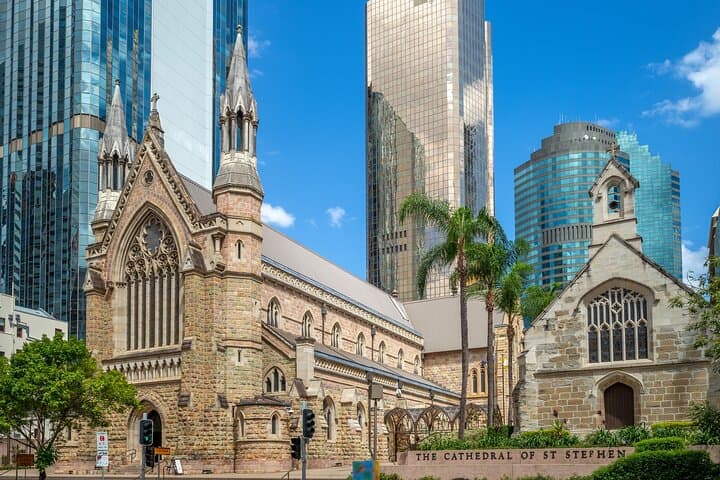

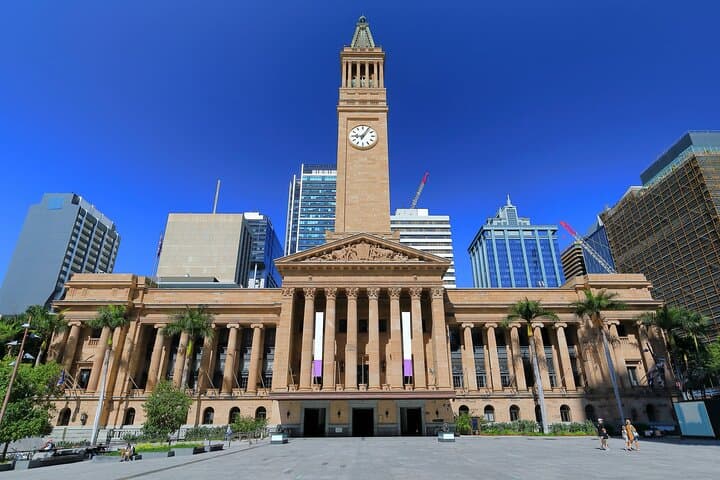
The walk begins in the morning light outside St Stephen's Cathedral, where worn flagstones and stained glass mark the city’s quieter, contemplative heart. Guide in hand, the group threads through civic plazas and shady avenues, the hum of buses and river traffic receding as stories of colonial politics and modern reinvention take the lead.
The walk begins in the morning light outside St Stephen's Cathedral, where worn flagstones and stained glass mark the city’s quieter, contemplative heart. Guide in hand, the group threads through civic plazas and shady avenues, the hum of buses and river traffic receding as stories of colonial politics and modern reinvention take the lead.
Brisbane’s CBD sits on a broad bend of the Brisbane River; its sandstone facades and Victorian civic buildings—Brisbane GPO, City Hall, Old Government House—trace the arc of 19th-century settlement and state governance. The Old Windmill reminds walkers that this city grew from convict-era beginnings, while Parliament House and King George Square show how civic life modernized through the 20th century.
Geologically, the area is built on low-lying alluvial terraces with pockets of remnant eucalypt plantings preserved in the Botanic Gardens. Culturally, the route crosses modern meeting spots—Post Office Square and Brisbane Square—where public art and lunchtime crowds pulse with contemporary energy.
Practical guide: expect mostly flat, paved sidewalks and short stair sections at heritage sites. The full loop with guided stops runs about 2–3 kilometers over three hours, with ample seating breaks. Wear comfortable shoes, bring a refillable water bottle and sun protection; Brisbane’s sun can intensify quickly. Public transport is close—buses and CityCat ferries drop you within easy walking distance—and the tour is accessible to most fitness levels.
A private guide customizes pace and historical depth, making this a good choice for first-time visitors who want context beyond headlines and postcards.