THE ADVENTURE COLLECTIVE® · Independent discovery and booking for outdoor travel

Walk Market Street with a historian to read Wilmington’s past in its mansions, warehouses, and riverfront. This accessible, one-hour tour packs colonial, antebellum, and Gilded Age stories into a concise downtown route.
Walk Market Street with a historian to read Wilmington’s past in its mansions, warehouses, and riverfront. This accessible, one-hour tour packs colonial, antebellum, and Gilded Age stories into a concise downtown route.
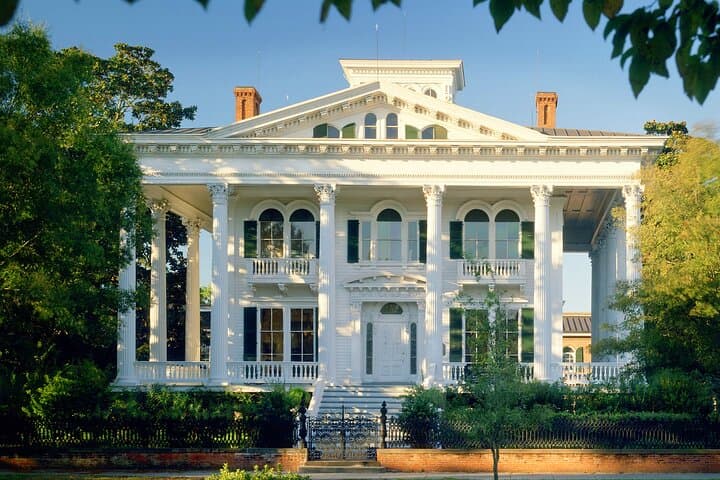
You step onto Market Street as sunlight slices between live oaks and brick facades; salt air drifts in from the Cape Fear River and the city seems to keep its past in its storefronts. A historian leads the group, pausing at a wrought-iron fence to point out a carved lintel, then moving on toward an antebellum mansion whose shadow cools the sidewalk.
Verified experiences and guided adventures in the surrounding area.
Operated by Triangle Walking Tours: Greensboro · Wilmington, North Carolina
You step onto Market Street as sunlight slices between live oaks and brick facades; salt air drifts in from the Cape Fear River and the city seems to keep its past in its storefronts. A historian leads the group, pausing at a wrought-iron fence to point out a carved lintel, then moving on toward an antebellum mansion whose shadow cools the sidewalk.
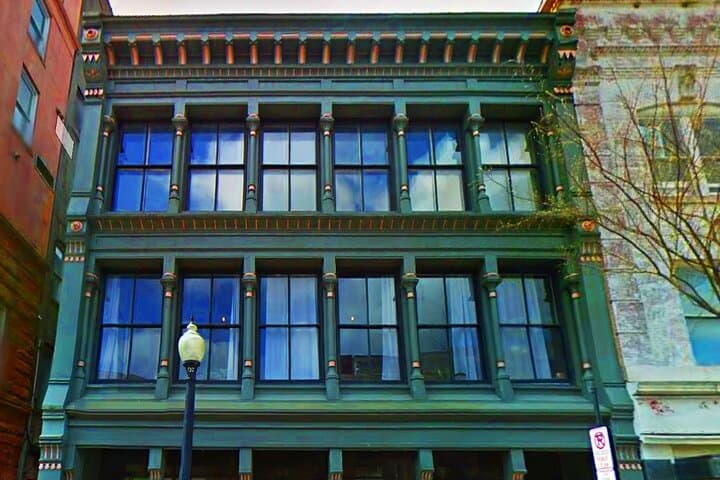
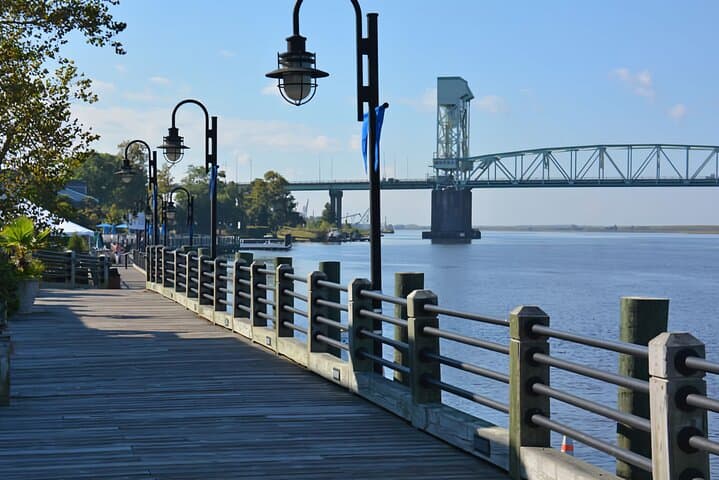
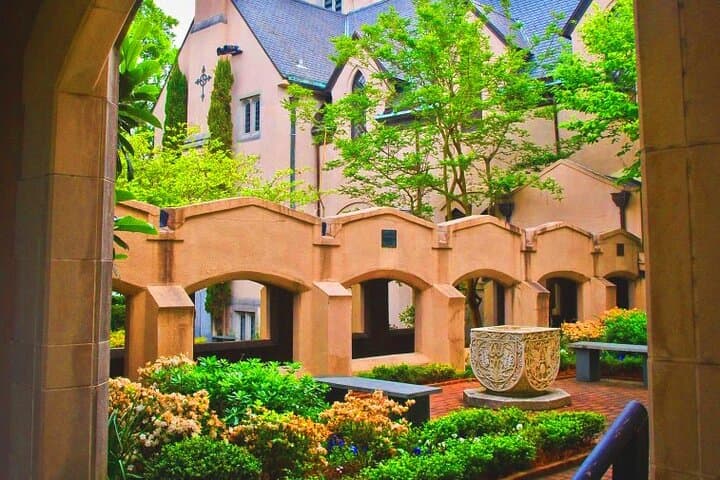
Wilmington grew as a colonial port and later a 19th-century commercial hub; its streets record that arc in preserved manors, Gilded Age commercial blocks, and churches that chart changing styles. Geologically the town sits on the Atlantic coastal plain where the Cape Fear has shaped wharves and mudflats, and the Riverwalk traces that edge. Culturally the downtown mixes maritime commerce, film production, and local preservation efforts—expect stories about shipbuilding, Reconstruction-era politics, and 20th-century downtown renewal.
The tour is pragmatic: one hour, mostly flat, paved routes with frequent stops for interpretation. Guides highlight architectural details, civic history, and how the river made Wilmington a crossroads. Groups are small enough to ask questions, and the meeting point is on Market Street at Slice of Life.
Plan for sun or sudden rain, comfortable footwear, and a refillable water bottle. Mobility accommodations are noted and much of the route is wheelchair accessible. This walk is compact but dense—bring curiosity and a camera, and you’ll leave with a clearer sense of how a coastal port city built its streets and identity.
easy.
1 hour.
Suitable for most fitness levels; light, continuous walking for about 0.5–1.5 miles.
The tour lasts about 60 minutes and covers roughly 0.5–1.5 miles on mostly flat, paved surfaces.
Yes—sites and paths on this route are wheelchair accessible, and strollers are permitted; contact the operator for specific accommodations.
Tours are conducted in English; private or special-language tours may be arranged in advance through the operator.
This tour runs in most weather; check the cancellation policy and contact the operator if conditions are severe—light rain is usually tolerated with appropriate gear.
Wilmington developed as an important Atlantic port in the 18th and 19th centuries; surviving mansions and commercial blocks reflect its maritime economy and postbellum growth.
Downtown preservation efforts balance adaptive reuse with protecting riverfront habitat; visitors are encouraged to stay on paths and respect private property.
Triangle Walking Tours: Greensboro operates guided outdoor trips and adventures with an emphasis on safety, stewardship, and memorable experiences.
You step onto Market Street as sunlight slices between live oaks and brick facades; salt air drifts in from the Cape Fear River and the city seems to keep its past in its storefronts. A historian leads the group, pausing at a wrought-iron fence to point out a carved lintel, then moving on toward an antebellum mansion whose shadow cools the sidewalk.
You step onto Market Street as sunlight slices between live oaks and brick facades; salt air drifts in from the Cape Fear River and the city seems to keep its past in its storefronts. A historian leads the group, pausing at a wrought-iron fence to point out a carved lintel, then moving on toward an antebellum mansion whose shadow cools the sidewalk.
Wilmington grew as a colonial port and later a 19th-century commercial hub; its streets record that arc in preserved manors, Gilded Age commercial blocks, and churches that chart changing styles. Geologically the town sits on the Atlantic coastal plain where the Cape Fear has shaped wharves and mudflats, and the Riverwalk traces that edge. Culturally the downtown mixes maritime commerce, film production, and local preservation efforts—expect stories about shipbuilding, Reconstruction-era politics, and 20th-century downtown renewal.
The tour is pragmatic: one hour, mostly flat, paved routes with frequent stops for interpretation. Guides highlight architectural details, civic history, and how the river made Wilmington a crossroads. Groups are small enough to ask questions, and the meeting point is on Market Street at Slice of Life.
Plan for sun or sudden rain, comfortable footwear, and a refillable water bottle. Mobility accommodations are noted and much of the route is wheelchair accessible. This walk is compact but dense—bring curiosity and a camera, and you’ll leave with a clearer sense of how a coastal port city built its streets and identity.