THE ADVENTURE COLLECTIVE® · Independent discovery and booking for outdoor travel

Spend a full day driving through dramatic desert landscapes to visit Thamudic and Nabatean inscriptions, observe Arabian wildlife in a NEOM reserve, and finish with a desert sunset. Expect off-road trails, short interpretive walks, and guided stops at lookout points.
Spend a full day driving through dramatic desert landscapes to visit Thamudic and Nabatean inscriptions, observe Arabian wildlife in a NEOM reserve, and finish with a desert sunset. Expect off-road trails, short interpretive walks, and guided stops at lookout points.
The vehicle eases to a stop and the silence of open desert floods in — wind shaping sand, stone ribs catching light, a horizon that seems to stretch forever. You move across hard-packed flats toward weathered rock faces where ancient scripts press their stories into stone, and the reserve’s dunes frame a last, luminous hour.
Verified experiences and guided adventures in the surrounding area.
Operated by Sherif Hikes · Tabuk, Tabuk Province
The vehicle eases to a stop and the silence of open desert floods in — wind shaping sand, stone ribs catching light, a horizon that seems to stretch forever. You move across hard-packed flats toward weathered rock faces where ancient scripts press their stories into stone, and the reserve’s dunes frame a last, luminous hour.
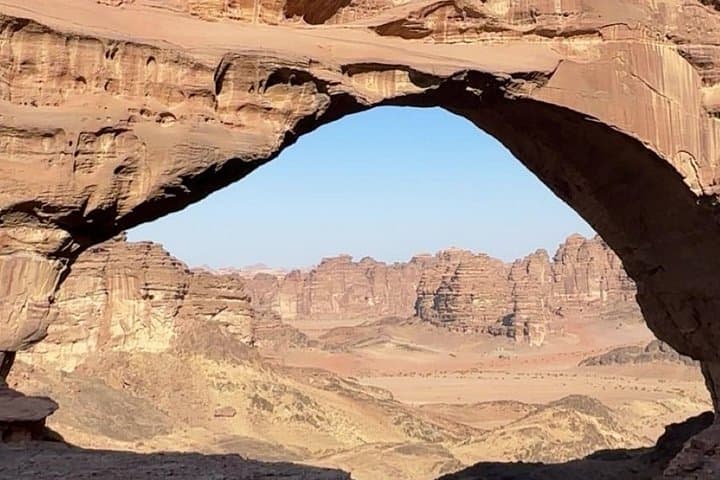
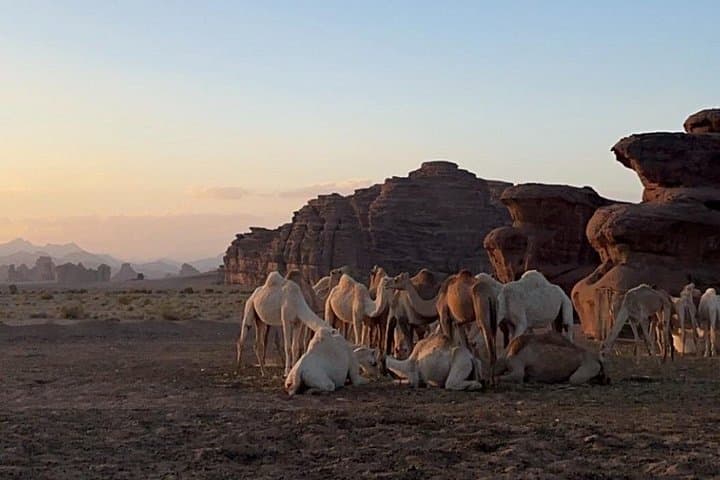
This corridor of northwest Saudi Arabia preserves traces of Thamudic and Nabatean travelers; their inscriptions punctuate sandstone escarpments worn by millennia of wind and rare rain. Geologically, the area is a patchwork of sandstone plates, fossil-bearing layers and aeolian dunes that shift with seasonal winds, offering sharp ridgelines and soft, sweeping valleys. Culturally, the route has long been traversed by Bedouin communities; camps and camel tracks still mark practical routes through the landscape.
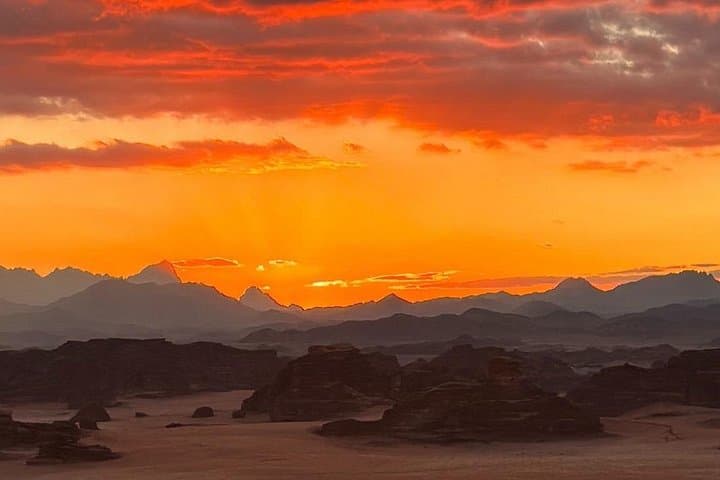
Wildlife is the day’s other focus: the NEOM reserve works to protect Arabian oryx, sand gazelles and ostriches that move like phantoms across the flats. A local guide reads the land — pointing out spoor, explaining rock markings and timing the day to finish with a wide, sun-drenched sunset.
Practical guidance: expect an off-road day of 8–9 hours with frequent vehicle transfers and short walks to viewpoints and inscription panels. Wear sturdy closed-toe shoes, a wide-brim hat and layers for cooling desert afternoons and colder evenings. Carry plenty of water, a camera with a telephoto lens for wildlife, and respect archaeological sites: don’t touch inscriptions and follow your guide’s route. Aim to arrive mid-afternoon to catch the colors of the desert descending into dusk.
easy.
8–9 hours.
Suitable for most fitness levels; requires short, easy walks and getting in/out of a 4x4 several times throughout the day
The tour runs about 8–9 hours (480–540 minutes); exact start times vary by operator but typically begin mid-morning with return by early evening to catch sunset.
Wildlife sightings are common — Arabian oryx, sand gazelles and ostriches live in the reserve — but sightings depend on season, time of day and animal behavior, so sightings are likely but not guaranteed.
The tour is rated easy with short walks; children are allowed but infants must sit on laps. Travelers with significant mobility limitations should consult the operator about vehicle access and walking distances.
Yes — photography is encouraged, but avoid flash on sensitive rock art and keep a respectful distance from wildlife; use a telephoto lens to minimize disturbance.
The area contains visible Thamudic and Nabatean inscriptions that record ancient caravan routes and local names carved into sandstone by desert travelers.
The NEOM reserve aims to protect native species and habitats; visitors are asked to stay on tracks, not feed wildlife, and avoid disturbing archaeological sites to reduce impacts.
Sherif Hikes operates guided outdoor trips and adventures with an emphasis on safety, stewardship, and memorable experiences.
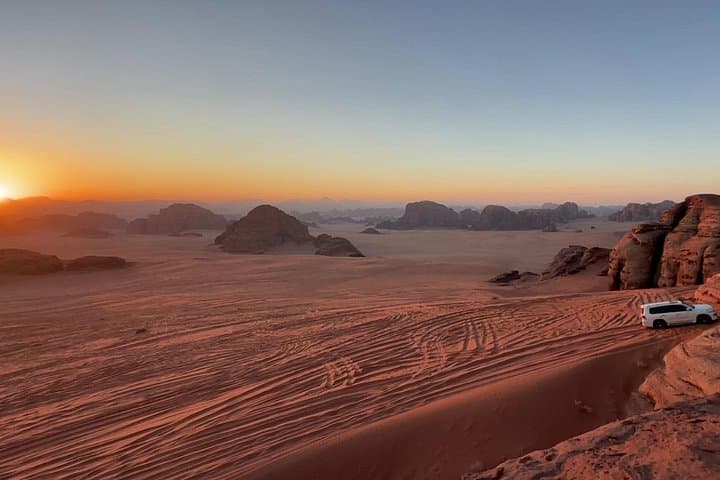
The vehicle eases to a stop and the silence of open desert floods in — wind shaping sand, stone ribs catching light, a horizon that seems to stretch forever. You move across hard-packed flats toward weathered rock faces where ancient scripts press their stories into stone, and the reserve’s dunes frame a last, luminous hour.
The vehicle eases to a stop and the silence of open desert floods in — wind shaping sand, stone ribs catching light, a horizon that seems to stretch forever. You move across hard-packed flats toward weathered rock faces where ancient scripts press their stories into stone, and the reserve’s dunes frame a last, luminous hour.
This corridor of northwest Saudi Arabia preserves traces of Thamudic and Nabatean travelers; their inscriptions punctuate sandstone escarpments worn by millennia of wind and rare rain. Geologically, the area is a patchwork of sandstone plates, fossil-bearing layers and aeolian dunes that shift with seasonal winds, offering sharp ridgelines and soft, sweeping valleys. Culturally, the route has long been traversed by Bedouin communities; camps and camel tracks still mark practical routes through the landscape.
Wildlife is the day’s other focus: the NEOM reserve works to protect Arabian oryx, sand gazelles and ostriches that move like phantoms across the flats. A local guide reads the land — pointing out spoor, explaining rock markings and timing the day to finish with a wide, sun-drenched sunset.
Practical guidance: expect an off-road day of 8–9 hours with frequent vehicle transfers and short walks to viewpoints and inscription panels. Wear sturdy closed-toe shoes, a wide-brim hat and layers for cooling desert afternoons and colder evenings. Carry plenty of water, a camera with a telephoto lens for wildlife, and respect archaeological sites: don’t touch inscriptions and follow your guide’s route. Aim to arrive mid-afternoon to catch the colors of the desert descending into dusk.