THE ADVENTURE COLLECTIVE® · Independent discovery and booking for outdoor travel

Walk Hiroshima’s Peace Memorial Park and cross the Seto Inland Sea to Miyajima with a Spanish-speaking private guide. This full-day tour pairs solemn history at Genbaku Dome with the shrine-lined lanes and floating Torii of Itsukushima.
Walk Hiroshima’s Peace Memorial Park and cross the Seto Inland Sea to Miyajima with a Spanish-speaking private guide. This full-day tour pairs solemn history at Genbaku Dome with the shrine-lined lanes and floating Torii of Itsukushima.
You meet at the Starbucks inside Hiroshima Station at 9 a.m., the city humming with commuters and the distant silhouette of Genbaku Dome already anchoring the skyline. The guide eases the group into the story of 1945 as you move into Peace Memorial Park, where stone and water shape a moment of quiet—museums, reflective pools and the skeletal dome that refuses to be forgotten.
Verified experiences and guided adventures in the surrounding area.
Operated by Toursnippon · Hiroshima, Hiroshima Prefecture
You meet at the Starbucks inside Hiroshima Station at 9 a.m., the city humming with commuters and the distant silhouette of Genbaku Dome already anchoring the skyline. The guide eases the group into the story of 1945 as you move into Peace Memorial Park, where stone and water shape a moment of quiet—museums, reflective pools and the skeletal dome that refuses to be forgotten.
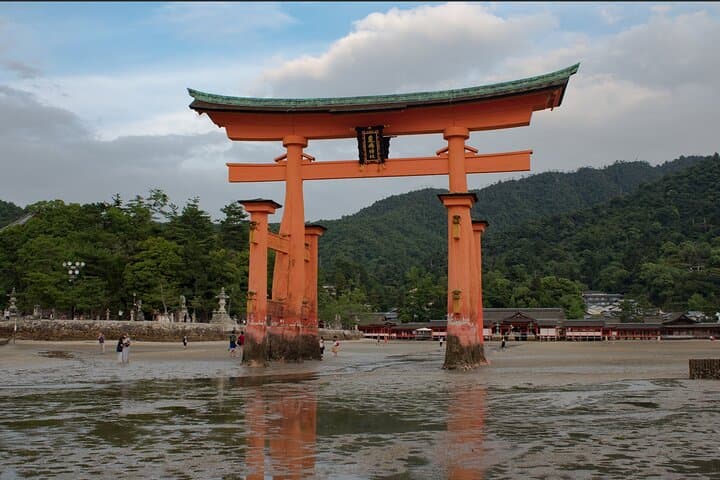
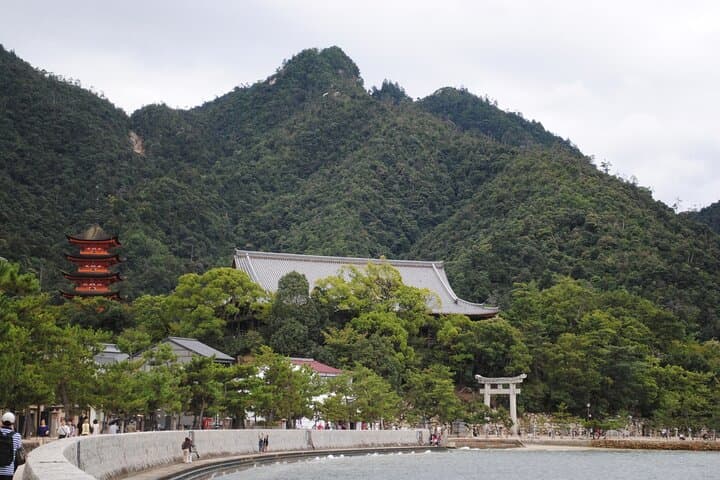
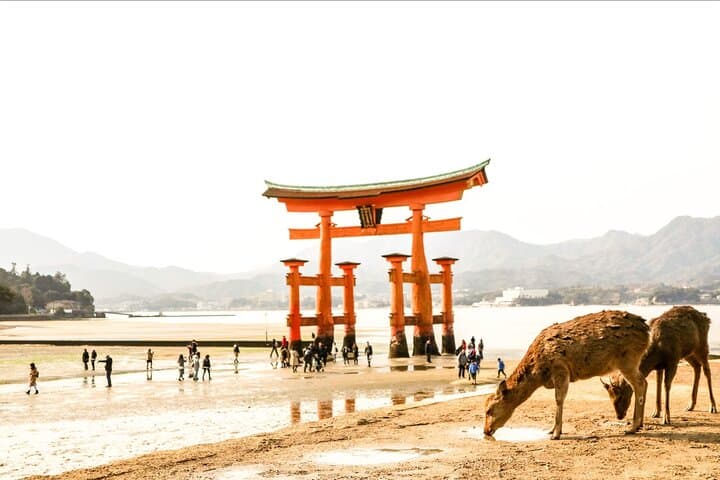
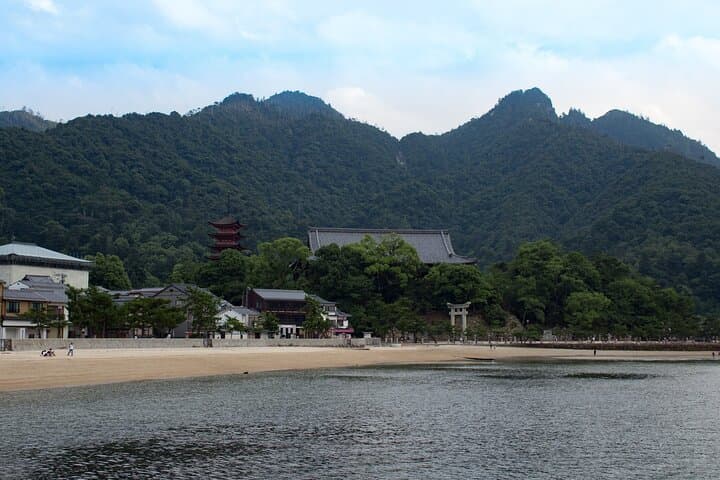
After a pause for a local lunch, the tour moves west to Miyajimaguchi and a short ferry across the Seto Inland Sea. The ferry ride is a breath of salt air and small islands; on clear days Mount Misen watches the crossing. On Itsukushima Island you step into cedar-shaded lanes and shrine boards that creak with history. The Grand Torii appears to float at high tide; at low tide you can walk out to it. Nearby, the crimson Goju-no-to pagoda and Toyokuni Shrine point to samurai-era patronage and Shinto ritual.
Geology here is modest but visible: marine terraces, shell-rich sands and volcanic uplands on Miyajima’s interior. Culturally, the route threads Buddhist and Shinto sites that shaped regional power and pilgrimage.
Practical side: expect roughly 4–6 km of walking on paved and compact dirt paths, minimal elevation overall but short stair sections on Miyajima, and around eight hours total. Bring cash for food and small admissions, a waterproof layer for sudden rain, and comfortable shoes—tides affect how you see the Torii, and ferry timetables govern your timing. The pace is reflective rather than rushed, designed for history and sightlines rather than a strenuous trek.
easy.
8 hours.
Suitable for most fitness levels; requires sustained walking and standing for museum visits and shrine approaches.
The ferry crossing from Miyajimaguchi is short—about 10–15 minutes—so plan minimal transit time between mainland and island.
Admission to the shrine and some temple interiors is not included; the tour provides walking visits and context but you may pay on-site for specific entries.
Yes—it's labeled physically easy, but infants must sit on a lap and you should plan for breaks and slower pacing with young children.
The itinerary includes the Peace Memorial Park and nearby exhibits, but museum admission may be optional and could require additional time if you wish to enter fully.
Hiroshima’s Peace Park preserves the Genbaku Dome and memorials from the 1945 atomic bombing; Itsukushima has been a Shinto pilgrimage site since the 6th century and is UNESCO-listed.
Both sites emphasize preservation—follow signs at memorials and use marked paths on Miyajima to protect vegetation and shrine foundations.
Toursnippon operates guided outdoor trips and adventures with an emphasis on safety, stewardship, and memorable experiences.
You meet at the Starbucks inside Hiroshima Station at 9 a.m., the city humming with commuters and the distant silhouette of Genbaku Dome already anchoring the skyline. The guide eases the group into the story of 1945 as you move into Peace Memorial Park, where stone and water shape a moment of quiet—museums, reflective pools and the skeletal dome that refuses to be forgotten.
You meet at the Starbucks inside Hiroshima Station at 9 a.m., the city humming with commuters and the distant silhouette of Genbaku Dome already anchoring the skyline. The guide eases the group into the story of 1945 as you move into Peace Memorial Park, where stone and water shape a moment of quiet—museums, reflective pools and the skeletal dome that refuses to be forgotten.
After a pause for a local lunch, the tour moves west to Miyajimaguchi and a short ferry across the Seto Inland Sea. The ferry ride is a breath of salt air and small islands; on clear days Mount Misen watches the crossing. On Itsukushima Island you step into cedar-shaded lanes and shrine boards that creak with history. The Grand Torii appears to float at high tide; at low tide you can walk out to it. Nearby, the crimson Goju-no-to pagoda and Toyokuni Shrine point to samurai-era patronage and Shinto ritual.
Geology here is modest but visible: marine terraces, shell-rich sands and volcanic uplands on Miyajima’s interior. Culturally, the route threads Buddhist and Shinto sites that shaped regional power and pilgrimage.
Practical side: expect roughly 4–6 km of walking on paved and compact dirt paths, minimal elevation overall but short stair sections on Miyajima, and around eight hours total. Bring cash for food and small admissions, a waterproof layer for sudden rain, and comfortable shoes—tides affect how you see the Torii, and ferry timetables govern your timing. The pace is reflective rather than rushed, designed for history and sightlines rather than a strenuous trek.