THE ADVENTURE COLLECTIVE® · Independent discovery and booking for outdoor travel

Ride an electric bicycle through Hiroshima’s Peace Memorial Park and surrounding neighborhoods on a focused two-hour tour led by a local guide. Learn first-hand accounts of wartime destruction and the city’s post-war recovery while following riverside lanes and historical sites.
Ride an electric bicycle through Hiroshima’s Peace Memorial Park and surrounding neighborhoods on a focused two-hour tour led by a local guide. Learn first-hand accounts of wartime destruction and the city’s post-war recovery while following riverside lanes and historical sites.
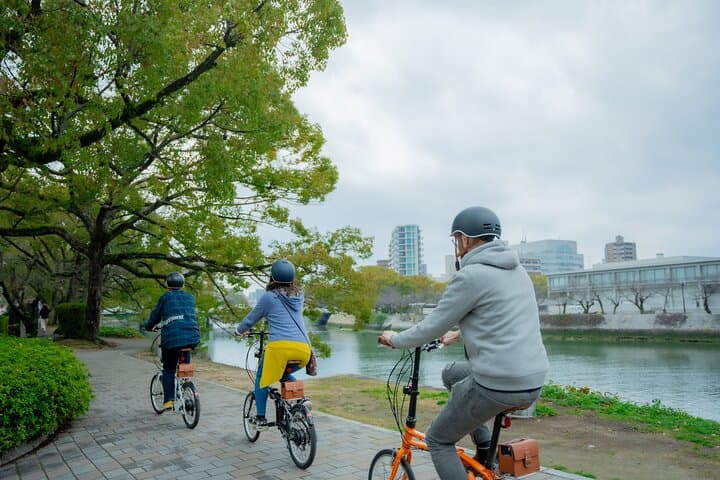
A cool morning on the Ōta River, an electric bike under your hands and the distant silhouette of the Atomic Bomb Dome — that’s the opening frame of this two-hour guided loop through Hiroshima’s recovered urban core.
Verified experiences and guided adventures in the surrounding area.
Operated by Attractive JAPAN · Hiroshima, Hiroshima Prefecture
A cool morning on the Ōta River, an electric bike under your hands and the distant silhouette of the Atomic Bomb Dome — that’s the opening frame of this two-hour guided loop through Hiroshima’s recovered urban core.
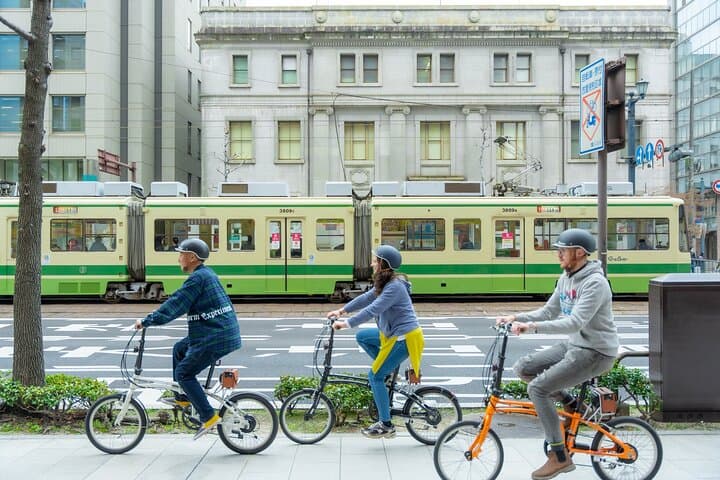
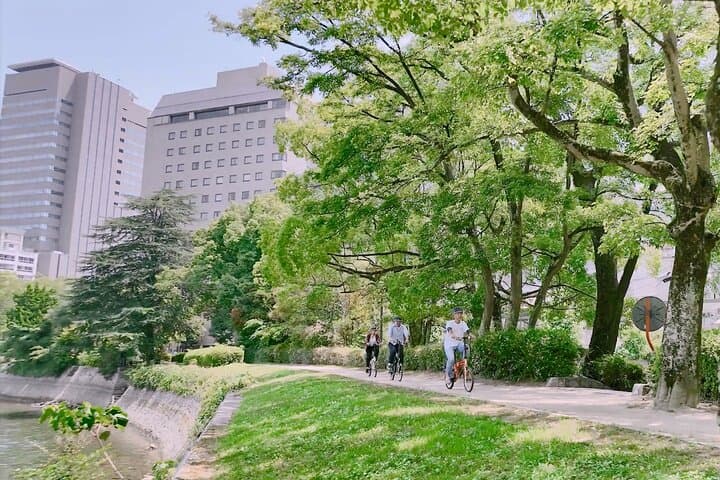
Riders move deliberately along riverside lanes and park paths as the guide lays out the city’s mid-20th-century rupture and its deliberate rebirth. The route focuses on Peace Memorial Park and nearby bombed heritage sites, then pushes into neighborhoods where the A-bombed streetcars still thread the city. The landscape here is flat but full of memory: brick facades scarred by history, schoolyards rebuilt, and monuments that mark both losses and civic resolve.
Geologically plain, Hiroshima’s character comes from its river networks carved across a coastal plain and the human layers that rose after 1945. Culturally, the tour emphasizes local perspectives — how residents commemorate, rebuild, and teach peace. Expect stories tied to the Atomic Bomb Dome, the hypocenter, Fukuromachi Elementary School and the former Bank of Japan site.
Practically, this is an accessible e-bike ride designed for first-time cyclists. Helmets and insurance are included; riders must meet a minimum height (about 145 cm) and follow traffic rules. Tours run rain or shine with a rainy-day walking route option or refund. Bring a charged phone for photos, wear closed-toe shoes, and plan to be punctual — guides keep to tight itineraries to visit multiple sites.
This loop is equal parts urban history lesson and gentle active exploration: immersive, respectful, and easy to fit into a day of broader Hiroshima sightseeing.
easy.
2 hours.
Suitable for most adults comfortable riding an e-bike for short, low-gradient urban distances
Meeting point details are provided at booking; tours start at the scheduled time (e.g., 11:00 or 15:00) — arrive early for bike fitting.
Children can join if they meet height/weight limits; limited infant seats and child bicycles are available and should be requested before booking.
In rain the operator offers a Rainy Day Limited Peace Route (walking) or a refund; the tour may also be rescheduled for safety reasons.
Yes — e-bikes reduce effort, and the pace is adjusted for mixed groups; non-cyclists can opt for the walking rainy-day route if needed.
Hiroshima was the site of the first atomic bombing in 1945; the Peace Memorial Park was created in the years after to honor victims and promote peace education.
Many sites are preserved as protected heritage; visitors are asked to stay on paths, avoid littering and follow guides to minimize impact.
Attractive JAPAN operates guided outdoor trips and adventures with an emphasis on safety, stewardship, and memorable experiences.
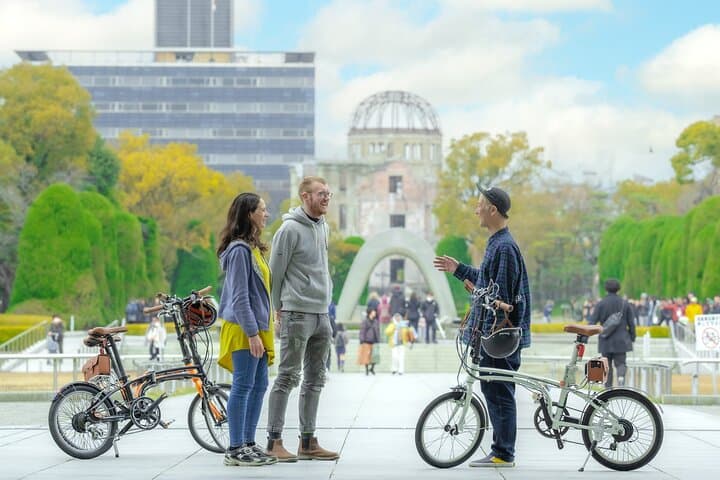
A cool morning on the Ōta River, an electric bike under your hands and the distant silhouette of the Atomic Bomb Dome — that’s the opening frame of this two-hour guided loop through Hiroshima’s recovered urban core.
A cool morning on the Ōta River, an electric bike under your hands and the distant silhouette of the Atomic Bomb Dome — that’s the opening frame of this two-hour guided loop through Hiroshima’s recovered urban core.
Riders move deliberately along riverside lanes and park paths as the guide lays out the city’s mid-20th-century rupture and its deliberate rebirth. The route focuses on Peace Memorial Park and nearby bombed heritage sites, then pushes into neighborhoods where the A-bombed streetcars still thread the city. The landscape here is flat but full of memory: brick facades scarred by history, schoolyards rebuilt, and monuments that mark both losses and civic resolve.
Geologically plain, Hiroshima’s character comes from its river networks carved across a coastal plain and the human layers that rose after 1945. Culturally, the tour emphasizes local perspectives — how residents commemorate, rebuild, and teach peace. Expect stories tied to the Atomic Bomb Dome, the hypocenter, Fukuromachi Elementary School and the former Bank of Japan site.
Practically, this is an accessible e-bike ride designed for first-time cyclists. Helmets and insurance are included; riders must meet a minimum height (about 145 cm) and follow traffic rules. Tours run rain or shine with a rainy-day walking route option or refund. Bring a charged phone for photos, wear closed-toe shoes, and plan to be punctual — guides keep to tight itineraries to visit multiple sites.
This loop is equal parts urban history lesson and gentle active exploration: immersive, respectful, and easy to fit into a day of broader Hiroshima sightseeing.